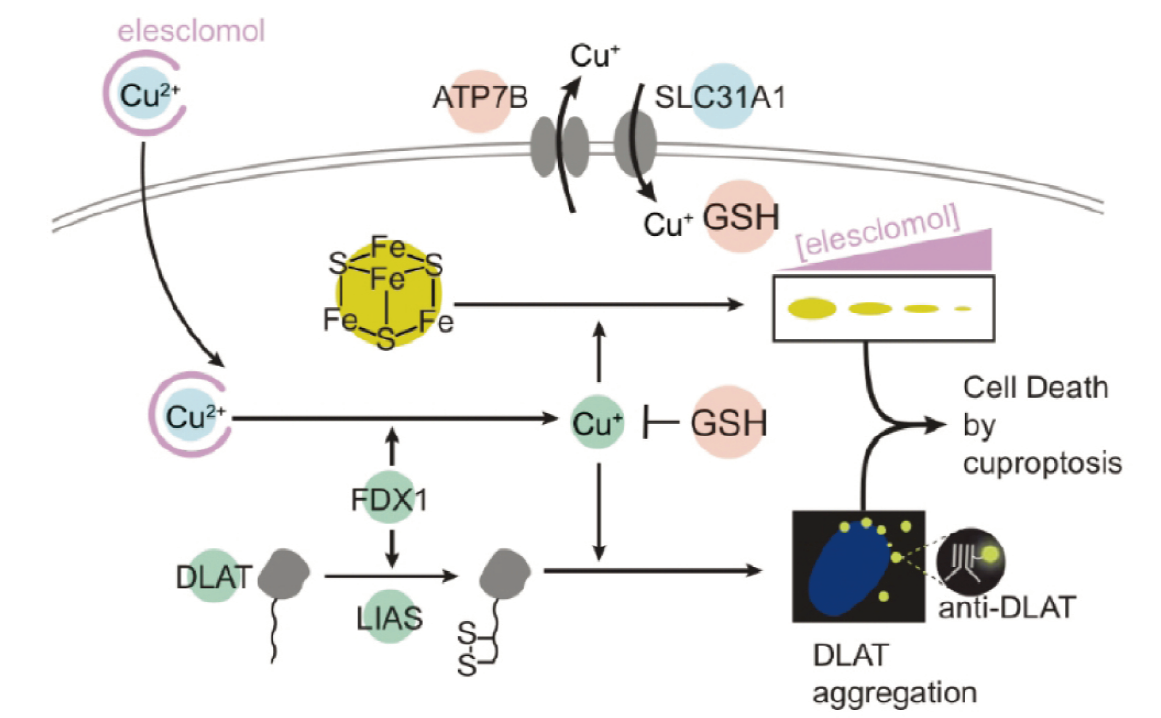
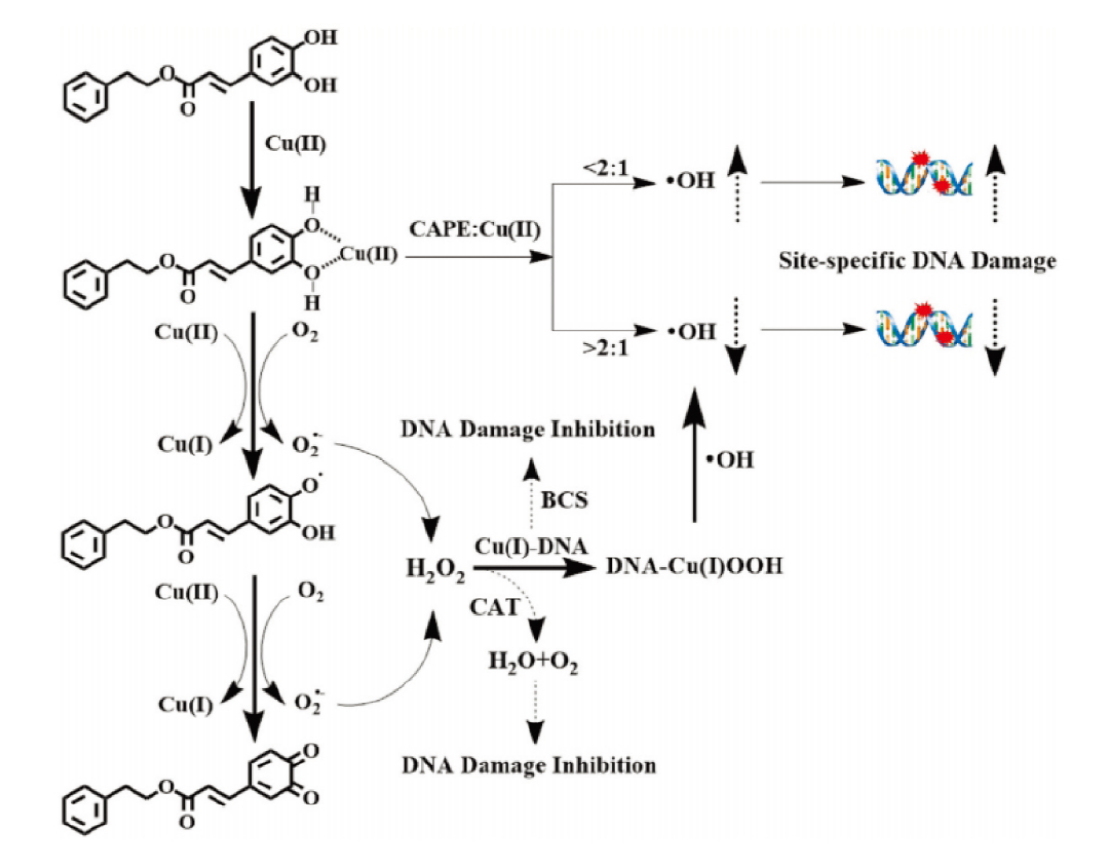
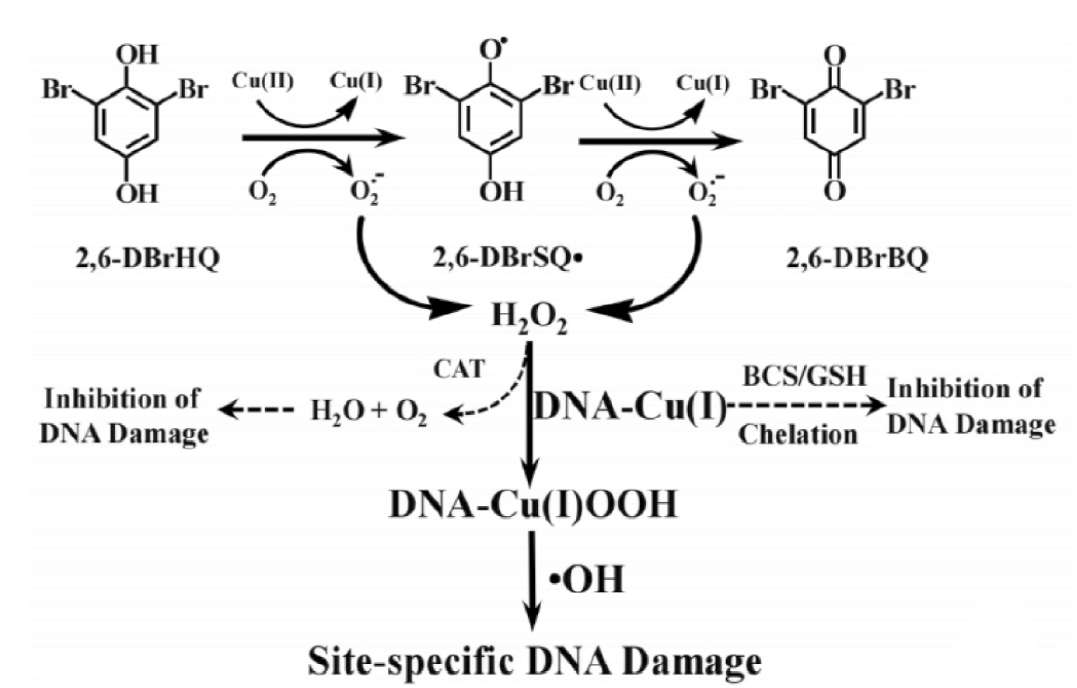
| [1] |
GARZA N M, SWAMINATHAN A B, MAREMANDA K P, et al. Mitochondrial copper in human genetic disorders[J]. Trends Endocrinol Metab, 2023, 34(1):21-33.
DOI
URL
|
| [2] |
TIAN S, LIU J, COWLEY R E, et al. Reversible S-nitrosylation in an engineered azurin[J]. Nat Chem, 2016, 8(7):670-677.
DOI
PMID
|
| [3] |
XIAO T, ACKERMAN C M, CARROLL E C, et al. Copper regulates rest-activity cycles through the locus coeruleus-norepinephrine system[J]. Nat Chem Biol, 2018, 14(7):655-663.
DOI
PMID
|
| [4] |
TANG D, KROEMER G, KANG R. Targeting cuproplasia and cuproptosis in cancer[J]. Nat Rev Clin Oncol, 2024, 21(5):370-388.
DOI
PMID
|
| [5] |
LU K, WIJAYA C S, YAO Q, et al. Cuproplasia and cuproptosis,two sides of the coin[J]. Cancer Commun(Lond), 2025.
|
| [6] |
LUTSENKO S, ROY S, TSVETKOV P. Mammalian copper homeostasis:Physiological roles and molecular mechanisms[J]. Physiol Rev, 2025, 105(1):441-491.
DOI
URL
|
| [7] |
ROSS M, XIE Y, OWYANG R, et al. PTPN2 copper-sensing relays copper level fluctuations into EGFR/CREB activation and associated CTR1 transcriptional repression[J]. Nat Commun, 2024, 15(1):6947.
DOI
PMID
|
| [8] |
TSVETKOV P, COY S, PETROVA B, et al. Copper induces cell death by targeting lipoylated TCA cycle proteins[J]. Science, 2022, 375(6586):1254-1261.
DOI
PMID
|
| [9] |
WU C, TAN J, WANG X, et al. Pan-cancer analyses reveal molecular and clinical characteristics of cuproptosis regulators[J]. Imeta, 2022, 2(1):e68.
DOI
URL
|
| [10] |
XIONG C, LING H, HAO Q, et al. Cuproptosis:p53-regulated metabolic cell death?[J]. Cell Death Differ, 2023, 30(4):876-884.
DOI
|
| [11] |
XUE Q, KANG R, KLIONSKY D, et al. Copper metabolism in cell death and autophagy[J]. Autophagy, 2023, 19(8):2175-2195.
DOI
URL
|
| [12] |
ZHANG C, HUANG T, LI L. Targeting cuproptosis for cancer therapy:Mechanistic insights and clinical perspectives[J]. J Hematol Oncol, 2024, 17(1):68.
DOI
|
| [13] |
QIN M, SHAO B, LIN L, et al. Molecular mechanism of the unusual biphasic effects of the natural compound hinokitiol on iron-induced cellular DNA damage[J]. Free Radic Biol Med, 2023,194:163-171.
|
| [14] |
SHAO B, MAO L, TANG M, et al. Caffeic acid phenyl ester(CAPE) protects against iron-mediated cellular DNA damage through its strong iron-binding ability and high lipophilicity[J]. Antioxidants(Basel), 2021, 10(5):798.
|
| [15] |
WANG X, WANG W. Cu(I)/Cu(II) Released by Cu nanoparticles revealed differential cellular toxicity related to mitochondrial dysfunction[J]. Environ Sci Technol, 2023, 57(26):9548-9558.
DOI
URL
|
| [16] |
LUO Q, SONG Y, KANG J, et al. mtROS-mediated Akt/AMPK/mTOR pathway was involved in Copper-induced autophagy and it attenuates Copper-induced apoptosis in RAW264.7 mouse monocytes[J]. Redox Biol, 2021,41:101912.
|
| [17] |
XIA F, FU Y, XIE H, et al. Suppression of ATG4B by copper inhibits autophagy and involves in Mallory body formation[J]. Redox Biol, 2022, 52:102284.
DOI
URL
|
| [18] |
SHAO B, MAO L, SHAO J, et al. Mechanism of synergistic DNA damage induced by caffeic acid phenethyl ester(CAPE) and Cu(II):Competitive binding between CAPE and DNA with Cu(II)/Cu(I)[J]. Free Radic Biol Med, 2020,159:107-118.
|
| [19] |
SHAO B, MAO L, QU N, et al. Mechanism of synergistic DNA damage induced by the hydroquinone metabolite of brominated phenolic environmental pollutants and Cu(II):Formation of DNA-Cu complex and site-specific production of hydroxyl radicals[J]. Free Radic Biol Med, 2017,104:54-63.
|
| [20] |
MCSTAY N, SLATOR C, SINGH V, et al. Click and cut:A click chemistry approach to developing oxidative DNA damaging agents[J]. Nucleic Acids Res, 2021, 49(18):10289-10308.
DOI
URL
|
| [21] |
LI S R, TAO S Y, LI Q, et al. Harnessing nanomaterials for copper-induced cell death[J]. Biomaterials, 2025,313:122805.
|
| [22] |
DEV S, MUCHENDITSI A, GOTTLIEB A, et al. Oxysterol misbalance critically contributes to Wilson disease pathogenesis[J]. Sci Adv, 2022, 8(42):eadc9022.
|
| [23] |
EINER C, MUNK D E, PARK E, et al. ARBM101(Methanobactin SB2) drains excess liver copper via biliary excretion in wilson's disease rats[J]. Gastroenterology, 2023, 165(1):187-200.
DOI
URL
|
| [24] |
LEE S F, BARIN G F, ACKERMAN C F, et al. Copper capture in a thioether-functionalized porous polymer applied to the detection of wilson's disease[J]. J Am Chem Soc, 2016, 138(24):7603-7609.
DOI
PMID
|
| [25] |
WANDT V K, WINKELBEINER N, BORNHORST J, et al. A matter of concern-Trace element dyshomeostasis and genomic stability in neurons[J]. Redox Biol, 2021,41:101877.
|
| [26] |
YANG Y, WU J, WANG L, et al. Copper homeostasis and cuproptosis in health and disease[J]. Signal Transduct Target Ther, 2022, 7(1):378.
|
| [27] |
WANG M, ZHANG R, DEHAEN W, et al. Specific recognition,intracellular assay and detoxification of fluorescent curcumin derivative for copper ions[J]. Hazard Mater, 2021,420:126490.
|
| [28] |
SUN J, LIN X-M, LU D-H, et al. Midbrain dopamine oxidation links ubiquitination of glutathione peroxidase 4 to ferroptosis of dopaminergic neurons[J]. J Clin Invest, 2023, 133(10):e165228.
DOI
URL
|
| [29] |
HUANG Q, LI J, QI Y, et al. Copper overload exacerbates testicular aging mediated by lncRNA:CR43306 deficiency through ferroptosis in Drosophila[J]. Redox Biol, 2024,76:103315.
|
| [30] |
GUO J, CHENG J, ZHENG N, et al. Copper promotes tumorigenesis by activating the PDK1-AKT oncogenic pathway in a copper transporter 1 dependent manner[J]. Adv Sci(Weinh), 2021, 8(18):e2004303.
|
| [31] |
WU X, BAI Z, WANG H, et al. CRISPR-Cas9 gene editing strengthens cuproptosis/chemodynamic/ferroptosis synergistic cancer therapy[J]. Acta Pharm Sin B, 2024, 14(9):4059-4072.
DOI
PMID
|
| [32] |
REN X, LUO X, WANG F, et al. Recent advances in copper homeostasis-involved tumor theranostics[J]. Pharm Sci, 2024, 19(5):100948.
|
| [33] |
CHEN N, GUO L, WANG L, et al. Sleep fragmentation exacerbates myocardial ischemia-reperfusion injury by promoting copper overload in cardiomyocytes[J]. Nat Commun, 2024, 15(1):3834.
DOI
|
| [34] |
POLISHCHUK E V, MEROLLA A, LICHTMANNEGGER J, et al. Activation of autophagy,observed in liver tissues from patients with wilson disease and from ATP7B-deficient animals,protects hepatocytes from copper-induced apoptosis[J]. Gastroenterology, 2019, 156(4):1173-1189.
DOI
URL
|
| [35] |
LIU S, YAN W, ZHANG W, et al. Nanoenhanced-cuproptosis results from the synergy of calcium overload and GSH depletion with the increasing of intracellular Ca/Mn/Cu ions[J]. Adv Sci(Weinh), 2025, 12(13):e2412067.
|
| [36] |
GAO J, WU X, HUANG S, et al. Novel insights into anticancer mechanisms of elesclomol:More than a prooxidant drug[J]. Redox Biol, 2023, 67:102891.
DOI
URL
|
| [37] |
PARANAWITHANA N N, MARTINS A, CLAVIJO J, et al. A responsive magnetic resonance imaging contrast agent for detection of excess copper(II) in the liver in vivo[J]. J Am Chem Soc, 2019, 141(28):11009-11018.
DOI
PMID
|

 )
)
 津公网安备12010202000831号 津ICP备11005889号-6