

OCCUPATION AND HEALTH ›› 2026, Vol. 42 ›› Issue (8): 1109-1116.
• Treatise • Previous Articles Next Articles
LI Ru1, MA Wenjuan2, XU Yueshu1, LI Li2,3( )
)
Received:2025-10-24
Revised:2025-11-07
Online:2026-04-15
Published:2026-05-18
Contact:
LI Li,E-mail:lili6699@163.com
CLC Number:
LI Ru, MA Wenjuan, XU Yueshu, LI Li. Latent profile analysis of work-family support and thriving at work among operating room nurses. [J]OCCUPATION AND HEALTH, 2026, 42(8): 1109-1116.
| 模型 | Log(L) | AIC | BIC | aBIC | Entropy | P值 | 类别比例 | |
|---|---|---|---|---|---|---|---|---|
| LMRT | BLRT | |||||||
| 模型1 | -9094.311 | 18212.623 | 18262.931 | 18224.843 | 1.000 | |||
| 模型2 | -8573.243 | 17184.486 | 17264.140 | 17203.835 | 0.892 | <0.001 | <0.001 | 0.286/0.714 |
| 模型3 | -8299.816 | 16651.632 | 16760.633 | 16678.110 | 0.911 | <0.001 | <0.001 | 0.538/0.220/0.243 |
| 模型4 | -8209.319 | 16484.638 | 16622.986 | 16518.245 | 0.931 | 0.151 3 | <0.001 | 0.165/0.064/0.2443/0.527 |
| 模型5 | -8144.903 | 16369.807 | 16537.501 | 16410.542 | 0.945 | 0.274 5 | <0.001 | 0.158/0.063/0.246/0.520/0.123 |
| 模型 | Log(L) | AIC | BIC | aBIC | Entropy | P值 | 类别比例 | |
|---|---|---|---|---|---|---|---|---|
| LMRT | BLRT | |||||||
| 模型1 | -9094.311 | 18212.623 | 18262.931 | 18224.843 | 1.000 | |||
| 模型2 | -8573.243 | 17184.486 | 17264.140 | 17203.835 | 0.892 | <0.001 | <0.001 | 0.286/0.714 |
| 模型3 | -8299.816 | 16651.632 | 16760.633 | 16678.110 | 0.911 | <0.001 | <0.001 | 0.538/0.220/0.243 |
| 模型4 | -8209.319 | 16484.638 | 16622.986 | 16518.245 | 0.931 | 0.151 3 | <0.001 | 0.165/0.064/0.2443/0.527 |
| 模型5 | -8144.903 | 16369.807 | 16537.501 | 16410.542 | 0.945 | 0.274 5 | <0.001 | 0.158/0.063/0.246/0.520/0.123 |
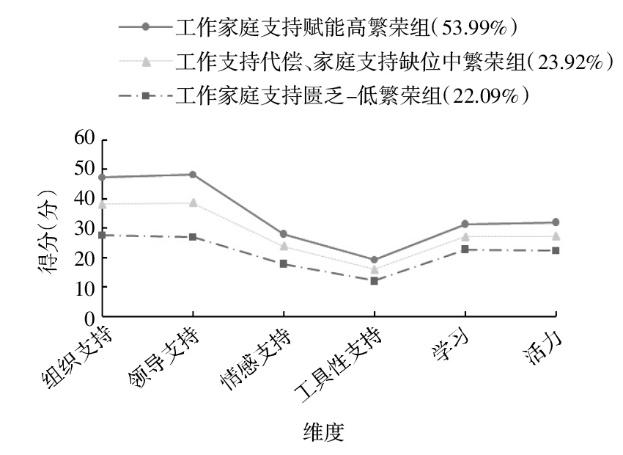
| 分组 | 人数 | 工作-家庭支持 | 工作繁荣 | ||||
|---|---|---|---|---|---|---|---|
| 组织支持 | 领导支持 | 情感支持 | 工具性支持 | 学习 | 活力 | ||
| 工作家庭支持匮乏-低繁荣组 | 108 | 27.78±6.41 | 27.14±6.02 | 18.01±4.09 | 12.31±3.31 | 22.98±4.56 | 22.52±4.96 |
| 工作支持代偿、家庭支持缺位-中繁荣组 | 117 | 38.32±4.34a | 38.79±4.51a | 23.99±2.38a | 16.25±1.92a | 27.21±3.07a | 27.45±3.67a |
| 工作家庭支持赋能-高繁荣组 | 264 | 47.41±3.48ab | 48.36±2.41ab | 28.12±2.76ab | 19.48±1.10ab | 31.59±3.21ab | 32.14±3.27ab |
| F值 | 494.449 | 632.083 | 348.435 | 313.44 | 172.943 | 170.188 | |
| P | <0.01 | <0.01 | <0.01 | <0.01 | <0.01 | <0.01 | |
| 事后检验 | C1<C2<C3 | C1<C2<C3 | C1<C2<C3 | C1<C2<C3 | C1<C2<C3 | C1<C2<C3 | |
| 分组 | 人数 | 工作-家庭支持 | 工作繁荣 | ||||
|---|---|---|---|---|---|---|---|
| 组织支持 | 领导支持 | 情感支持 | 工具性支持 | 学习 | 活力 | ||
| 工作家庭支持匮乏-低繁荣组 | 108 | 27.78±6.41 | 27.14±6.02 | 18.01±4.09 | 12.31±3.31 | 22.98±4.56 | 22.52±4.96 |
| 工作支持代偿、家庭支持缺位-中繁荣组 | 117 | 38.32±4.34a | 38.79±4.51a | 23.99±2.38a | 16.25±1.92a | 27.21±3.07a | 27.45±3.67a |
| 工作家庭支持赋能-高繁荣组 | 264 | 47.41±3.48ab | 48.36±2.41ab | 28.12±2.76ab | 19.48±1.10ab | 31.59±3.21ab | 32.14±3.27ab |
| F值 | 494.449 | 632.083 | 348.435 | 313.44 | 172.943 | 170.188 | |
| P | <0.01 | <0.01 | <0.01 | <0.01 | <0.01 | <0.01 | |
| 事后检验 | C1<C2<C3 | C1<C2<C3 | C1<C2<C3 | C1<C2<C3 | C1<C2<C3 | C1<C2<C3 | |
| 项目 | 人数 | 工作家庭支持匮乏-低繁荣组(n=108) | 工作支持代偿、家庭支持缺位-中繁荣组(n=117) | 工作家庭支持赋能-高繁荣组(n=264) | χ2 /H值 | P |
|---|---|---|---|---|---|---|
| 年龄(岁) | 10.786a | <0.05 | ||||
| 22~<30 | 126(25.8) | 22(20.4) | 41(35.1) | 63(23.9) | ||
| 30~<39 | 271(55.4) | 64(59.3) | 63(53.8) | 144(54.5) | ||
| ≥39 | 92(18.8) | 22(20.3) | 13(11.1) | 57(21.6) | ||
| 性别 | 1.571a | >0.05 | ||||
| 男 | 114(23.3) | 21(19.4) | 31(26.5) | 62(23.5) | ||
| 女 | 375(76.7) | 87(80.6) | 86(73.5) | 202(76.5) | ||
| 是否为独生子女 | 0.161a | >0.05 | ||||
| 是 | 82(16.8) | 18(16.7) | 21(17.9) | 43(16.3) | ||
| 否 | 407(83.2) | 90(83.3) | 96(82.1) | 221(83.7) | ||
| 婚姻状况 | >0.05b | |||||
| 未婚 | 97(19.8) | 20(18.5) | 27(23.1) | 50(18.9) | ||
| 已婚 | 371(75.9) | 84(77.8) | 84(71.8) | 203(76.9) | ||
| 离异或丧偶 | 21(4.3) | 4(3.7) | 6(5.1) | 11(4.2) | ||
| 生育状况 | 1.794a | >0.05 | ||||
| 无子女 | 158(32.3) | 36(33.3) | 43(36.8) | 79(29.9) | ||
| 有子女 | 331(67.7) | 72(66.7) | 74(63.2) | 185(70.1) | ||
| 最高学历(不含在读) | >0.05b | |||||
| 专科 | 219(44.8) | 45(41.6) | 61(52.1) | 113(42.8) | ||
| 本科 | 268(54.8) | 63(58.4) | 56(47.9) | 149(56.4) | ||
| 研究生及以上 | 2(0.4) | 0(0.0) | 0(0.0) | 2(0.8) | ||
| 职称 | 32.687a | <0.01 | ||||
| 护士 | 133(27.2) | 19(17.6) | 50(42.7) | 64(24.2) | ||
| 护师 | 209(42.7) | 48(44.4) | 48(41.0) | 113(42.8) | ||
| 主管护师 | 125(25.6) | 39(36.1) | 18(15.4) | 68(25.8) | ||
| 副主任护师及以上 | 22(4.5) | 2(1.9) | 1(0.9) | 19(7.2) | ||
| 是否带教 | 3.883a | >0.05 | ||||
| 是 | 251(51.3) | 60(55.6) | 51(43.6) | 140(53.0) | ||
| 否 | 238(48.7) | 48(44.4) | 66(56.4) | 124(47.0) | ||
| 手术室护理工作年限(年) | 45.391a | <0.01 | ||||
| 2~<6 | 130(26.6) | 14(13.0) | 47(40.1) | 69(28.1) | ||
| 6~<9 | 122(24.9) | 20(18.5) | 41(35.1) | 61(23.1) | ||
| ≥9 | 237(48.5) | 74(68.5) | 29(24.8) | 134(50.8) | ||
| 平均每日工作时长(h) | 31.086a | <0.01 | ||||
| 8~<11 | 320(65.4) | 49(45.4) | 89(76.1) | 182(68.9) | ||
| 11~<13 | 136(27.8) | 43(39.8) | 23(19.7) | 70(26.5) | ||
| ≥13 | 33(6.8) | 16(14.8) | 5(4.2) | 12(4.6) | ||
| 平均每月值班数量(个) | 6.679a | >0.05 | ||||
| 0 | 62(12.7) | 10(9.3) | 14(12.0) | 38(14.4) | ||
| 1~<3 | 107(21.9) | 23(21.3) | 21(17.9) | 63(23.9) | ||
| 3~<5 | 158(32.3) | 32(29.6) | 45(38.5) | 81(30.7) | ||
| ≥5 | 162(33.1) | 43(39.8) | 37(31.6) | 82(31.0) | ||
| 人事关系 | 14.000a | <0.01 | ||||
| 在编 | 142(29.0) | 41(38.0) | 19(16.2) | 82(31.0) | ||
| 非在编 | 347(71.0) | 67(62.0) | 98(83.8) | 182(69.0) | ||
| 平均月收入(万元) | 193.568a | <0.01 | ||||
| 0~<0.6 | 36(7.4) | 24(22.2) | 2(1.7) | 10(3.8) | ||
| 0.6~<1.0 | 194(39.7) | 64(59.3) | 10(8.5) | 120(45.5) | ||
| 1.0~<1.5 | 171(34.9) | 20(18.5) | 45(38.5) | 106(40.2) | ||
| ≥1.5 | 88(18.0) | 0(0.0) | 60(51.3) | 28(10.5) | ||
| MAAS得分 | 57.30±13.16 | 66.53±10.80 | 78.56±8.29 | 108.671c | <0.01 | |
| CLPAS得分 | 59.70±19.38 | 79.84±13.84 | 97.80±5.82 | 209.411c | <0.01 | |
| CCS得分 | 39.95±8.83 | 48.32±6.16 | 57.32±4.75 | 197.243c | <0.01 |
| 项目 | 人数 | 工作家庭支持匮乏-低繁荣组(n=108) | 工作支持代偿、家庭支持缺位-中繁荣组(n=117) | 工作家庭支持赋能-高繁荣组(n=264) | χ2 /H值 | P |
|---|---|---|---|---|---|---|
| 年龄(岁) | 10.786a | <0.05 | ||||
| 22~<30 | 126(25.8) | 22(20.4) | 41(35.1) | 63(23.9) | ||
| 30~<39 | 271(55.4) | 64(59.3) | 63(53.8) | 144(54.5) | ||
| ≥39 | 92(18.8) | 22(20.3) | 13(11.1) | 57(21.6) | ||
| 性别 | 1.571a | >0.05 | ||||
| 男 | 114(23.3) | 21(19.4) | 31(26.5) | 62(23.5) | ||
| 女 | 375(76.7) | 87(80.6) | 86(73.5) | 202(76.5) | ||
| 是否为独生子女 | 0.161a | >0.05 | ||||
| 是 | 82(16.8) | 18(16.7) | 21(17.9) | 43(16.3) | ||
| 否 | 407(83.2) | 90(83.3) | 96(82.1) | 221(83.7) | ||
| 婚姻状况 | >0.05b | |||||
| 未婚 | 97(19.8) | 20(18.5) | 27(23.1) | 50(18.9) | ||
| 已婚 | 371(75.9) | 84(77.8) | 84(71.8) | 203(76.9) | ||
| 离异或丧偶 | 21(4.3) | 4(3.7) | 6(5.1) | 11(4.2) | ||
| 生育状况 | 1.794a | >0.05 | ||||
| 无子女 | 158(32.3) | 36(33.3) | 43(36.8) | 79(29.9) | ||
| 有子女 | 331(67.7) | 72(66.7) | 74(63.2) | 185(70.1) | ||
| 最高学历(不含在读) | >0.05b | |||||
| 专科 | 219(44.8) | 45(41.6) | 61(52.1) | 113(42.8) | ||
| 本科 | 268(54.8) | 63(58.4) | 56(47.9) | 149(56.4) | ||
| 研究生及以上 | 2(0.4) | 0(0.0) | 0(0.0) | 2(0.8) | ||
| 职称 | 32.687a | <0.01 | ||||
| 护士 | 133(27.2) | 19(17.6) | 50(42.7) | 64(24.2) | ||
| 护师 | 209(42.7) | 48(44.4) | 48(41.0) | 113(42.8) | ||
| 主管护师 | 125(25.6) | 39(36.1) | 18(15.4) | 68(25.8) | ||
| 副主任护师及以上 | 22(4.5) | 2(1.9) | 1(0.9) | 19(7.2) | ||
| 是否带教 | 3.883a | >0.05 | ||||
| 是 | 251(51.3) | 60(55.6) | 51(43.6) | 140(53.0) | ||
| 否 | 238(48.7) | 48(44.4) | 66(56.4) | 124(47.0) | ||
| 手术室护理工作年限(年) | 45.391a | <0.01 | ||||
| 2~<6 | 130(26.6) | 14(13.0) | 47(40.1) | 69(28.1) | ||
| 6~<9 | 122(24.9) | 20(18.5) | 41(35.1) | 61(23.1) | ||
| ≥9 | 237(48.5) | 74(68.5) | 29(24.8) | 134(50.8) | ||
| 平均每日工作时长(h) | 31.086a | <0.01 | ||||
| 8~<11 | 320(65.4) | 49(45.4) | 89(76.1) | 182(68.9) | ||
| 11~<13 | 136(27.8) | 43(39.8) | 23(19.7) | 70(26.5) | ||
| ≥13 | 33(6.8) | 16(14.8) | 5(4.2) | 12(4.6) | ||
| 平均每月值班数量(个) | 6.679a | >0.05 | ||||
| 0 | 62(12.7) | 10(9.3) | 14(12.0) | 38(14.4) | ||
| 1~<3 | 107(21.9) | 23(21.3) | 21(17.9) | 63(23.9) | ||
| 3~<5 | 158(32.3) | 32(29.6) | 45(38.5) | 81(30.7) | ||
| ≥5 | 162(33.1) | 43(39.8) | 37(31.6) | 82(31.0) | ||
| 人事关系 | 14.000a | <0.01 | ||||
| 在编 | 142(29.0) | 41(38.0) | 19(16.2) | 82(31.0) | ||
| 非在编 | 347(71.0) | 67(62.0) | 98(83.8) | 182(69.0) | ||
| 平均月收入(万元) | 193.568a | <0.01 | ||||
| 0~<0.6 | 36(7.4) | 24(22.2) | 2(1.7) | 10(3.8) | ||
| 0.6~<1.0 | 194(39.7) | 64(59.3) | 10(8.5) | 120(45.5) | ||
| 1.0~<1.5 | 171(34.9) | 20(18.5) | 45(38.5) | 106(40.2) | ||
| ≥1.5 | 88(18.0) | 0(0.0) | 60(51.3) | 28(10.5) | ||
| MAAS得分 | 57.30±13.16 | 66.53±10.80 | 78.56±8.29 | 108.671c | <0.01 | |
| CLPAS得分 | 59.70±19.38 | 79.84±13.84 | 97.80±5.82 | 209.411c | <0.01 | |
| CCS得分 | 39.95±8.83 | 48.32±6.16 | 57.32±4.75 | 197.243c | <0.01 |
| 项目 | 正念注意 觉知 | 工作-家庭 支持 | 教练型 领导感知 | 职业 召唤 | 工作 繁荣 |
|---|---|---|---|---|---|
| 正念注意觉知 | 1.000 | ||||
| 工作-家庭支持 | 0.551a | 1.000 | |||
| 教练型领导感知 | 0.437a | 0.675a | 1.000 | ||
| 职业召唤 | 0.508a | 0.637a | 0.625a | 1.000 | |
| 工作繁荣 | 0.535a | 0.649a | 0.600a | 0.735a | 1.000 |
| 项目 | 正念注意 觉知 | 工作-家庭 支持 | 教练型 领导感知 | 职业 召唤 | 工作 繁荣 |
|---|---|---|---|---|---|
| 正念注意觉知 | 1.000 | ||||
| 工作-家庭支持 | 0.551a | 1.000 | |||
| 教练型领导感知 | 0.437a | 0.675a | 1.000 | ||
| 职业召唤 | 0.508a | 0.637a | 0.625a | 1.000 | |
| 工作繁荣 | 0.535a | 0.649a | 0.600a | 0.735a | 1.000 |
| 自变量 | 赋值方式 |
|---|---|
| 年龄(岁) | 22~<30=1;30~<39=2;≥39=3 |
| 职称 | 护士=1;护师=2;主管护师=3;副主任护师及以上=4 |
| 手术室护理工作年限(年) | 2~<6=1;6~<9=2;≥9=3 |
| 平均每日工作时长(h) | 8~<11=1;11~<13=2;≥13=3 |
| 人事关系 | 在编=1;非在编=2 |
| 平均月收入(万元) | 0~<0.6=1;0.6~<1.0=2;1.0~<1.5=3;≥1.5=4 |
| 正念 | 原值输入 |
| 教练型领导感知 | 原值输入 |
| 职业召唤 | 原值输入 |
| 自变量 | 赋值方式 |
|---|---|
| 年龄(岁) | 22~<30=1;30~<39=2;≥39=3 |
| 职称 | 护士=1;护师=2;主管护师=3;副主任护师及以上=4 |
| 手术室护理工作年限(年) | 2~<6=1;6~<9=2;≥9=3 |
| 平均每日工作时长(h) | 8~<11=1;11~<13=2;≥13=3 |
| 人事关系 | 在编=1;非在编=2 |
| 平均月收入(万元) | 0~<0.6=1;0.6~<1.0=2;1.0~<1.5=3;≥1.5=4 |
| 正念 | 原值输入 |
| 教练型领导感知 | 原值输入 |
| 职业召唤 | 原值输入 |
| 项目 | β值 | Wald χ2值 | P | OR(95%CI) | |
|---|---|---|---|---|---|
| C1与C2比较a | |||||
| 常数项 | 8.783 | 1.896 | 21.454 | <0.01 | |
| 平均每日工作时长(8~<11 h) | 1.532 | 0.624 | 6.018 | <0.05 | 4.627(1.361~15.737) |
| 平均月收入(0~<0.6万元) | -18.712 | 0.753 | 616.988 | <0.01 | 0.475(0.408~3.272) |
| 正念注意觉知得分 | 0.04 | 0.014 | 7.752 | <0.05 | 1.040(1.012~1.070) |
| 教练型领导感知得分 | 0.055 | 0.009 | 33.899 | <0.01 | 1.056(1.037~1.076) |
| 职业召唤得分 | 0.078 | 0.024 | 10.735 | <0.05 | 1.081(1.032~1.132) |
| C1与C3比较a | |||||
| 常数项 | -20.400 | 4.090 | 24.874 | <0.01 | |
| 平均每日工作时长(8~<11 h) | 2.134 | 1.029 | 4.301 | <0.05 | 8.449(1.124~63.481) |
| 平均月收入(0~<0.6万元) | -19.432 | 0.647 | 902.541 | <0.01 | 0.638(0.024~1.293) |
| 正念注意觉知得分 | 0.134 | 0.025 | 29.188 | <0.01 | 1.143(1.089~1.200) |
| 教练型领导感知得分 | 0.197 | 0.027 | 52.787 | <0.01 | 1.218(1.155~1.284) |
| 职业召唤得分 | 0.193 | 0.043 | 20.301 | <0.01 | 1.213(1.115~1.319) |
| C2与C3比较b | |||||
| 常数项 | -29.183 | 3.761 | 60.221 | <0.01 | |
| 平均每日工作时长(8~<11 h) | 0.602 | 0.844 | 0.509 | >0.05 | 1.826(0.349~9.550) |
| 平均月收入(0~<0.6万元) | -1.331 | 0.625 | 4.541 | <0.05 | 0.764(0.078~1.899) |
| 正念注意觉知得分 | 0.094 | 0.021 | 21.072 | <0.01 | 1.099(1.055~1.144) |
| 教练型领导感知得分 | 0.142 | 0.026 | 31.211 | <0.01 | 1.153(1.097~1.212) |
| 职业召唤得分 | 0.115 | 0.036 | 10.243 | <0.05 | 1.122(1.046~1.204) |
| 项目 | β值 | Wald χ2值 | P | OR(95%CI) | |
|---|---|---|---|---|---|
| C1与C2比较a | |||||
| 常数项 | 8.783 | 1.896 | 21.454 | <0.01 | |
| 平均每日工作时长(8~<11 h) | 1.532 | 0.624 | 6.018 | <0.05 | 4.627(1.361~15.737) |
| 平均月收入(0~<0.6万元) | -18.712 | 0.753 | 616.988 | <0.01 | 0.475(0.408~3.272) |
| 正念注意觉知得分 | 0.04 | 0.014 | 7.752 | <0.05 | 1.040(1.012~1.070) |
| 教练型领导感知得分 | 0.055 | 0.009 | 33.899 | <0.01 | 1.056(1.037~1.076) |
| 职业召唤得分 | 0.078 | 0.024 | 10.735 | <0.05 | 1.081(1.032~1.132) |
| C1与C3比较a | |||||
| 常数项 | -20.400 | 4.090 | 24.874 | <0.01 | |
| 平均每日工作时长(8~<11 h) | 2.134 | 1.029 | 4.301 | <0.05 | 8.449(1.124~63.481) |
| 平均月收入(0~<0.6万元) | -19.432 | 0.647 | 902.541 | <0.01 | 0.638(0.024~1.293) |
| 正念注意觉知得分 | 0.134 | 0.025 | 29.188 | <0.01 | 1.143(1.089~1.200) |
| 教练型领导感知得分 | 0.197 | 0.027 | 52.787 | <0.01 | 1.218(1.155~1.284) |
| 职业召唤得分 | 0.193 | 0.043 | 20.301 | <0.01 | 1.213(1.115~1.319) |
| C2与C3比较b | |||||
| 常数项 | -29.183 | 3.761 | 60.221 | <0.01 | |
| 平均每日工作时长(8~<11 h) | 0.602 | 0.844 | 0.509 | >0.05 | 1.826(0.349~9.550) |
| 平均月收入(0~<0.6万元) | -1.331 | 0.625 | 4.541 | <0.05 | 0.764(0.078~1.899) |
| 正念注意觉知得分 | 0.094 | 0.021 | 21.072 | <0.01 | 1.099(1.055~1.144) |
| 教练型领导感知得分 | 0.142 | 0.026 | 31.211 | <0.01 | 1.153(1.097~1.212) |
| 职业召唤得分 | 0.115 | 0.036 | 10.243 | <0.05 | 1.122(1.046~1.204) |
| [1] | 国家卫生健康委员会, 国家中医药管理局. 进一步改善护理服务行动计划(2023-2025年)[J]. 中国护理管理, 2023, 23(7):961-963. |
| [2] |
WEI L, GUO Z, ZHANG X, et al. Mental health and job stress of nurses in surgical system:What should we care[J]. BMC Psychiatry, 2023, 23(1):871.
DOI |
| [3] | 李永鑫, 赵娜. 工作-家庭支持的结构与测量及其调节作用[J]. 心理学报, 2009, 41(9):863-874. |
| [4] |
FU H, GENG Y, ZHENG X, et al. Mediating effect of work engagement and career success on work-family support and turnover intention of hemodialysis nurses in China:A cross-section study[J]. BMC Nurs, 2025, 24(1):587.
DOI |
| [5] |
SPREITZER G, SUTCLIFFE K, DUTTON J, et al. A socially embedded model of thriving at work[J]. Organ Sci, 2005, 16(5):537-549.
DOI URL |
| [6] | 陈美旭. 新入职护士工作重塑潜在类别及其与工作繁荣的关系研究[D]. 济南: 山东中医药大学, 2024. |
| [7] | 蒲江锋, 王婉儿, 李格格, 等. 护士组织支持感现状及潜在剖面分析[J]. 中华护理杂志, 2025, 60(3):340-347. |
| [8] |
BROWN K W, RYAN R M. The benefits of being present:Mindfulness and its role in psychological well-being[J]. J Pers Soc Psychol, 2003, 84(4):822-848.
DOI URL |
| [9] | 陈思佚, 崔红, 周仁来, 等. 正念注意觉知量表(MAAS)的修订及信效度检验[J]. 中国临床心理学杂志, 2012, 20(2):148-151. |
| [10] | 杨帆, 魏万宏, 张金燕, 等. 工作繁荣在教练型领导与护士职业成长间的中介效应[J]. 护理学杂志, 2024, 39(4):60-63. |
| [11] | 敖博, 郎玉玲, 林英. 教练型领导感知评价量表的汉化和信度效度检验[J]. 中国护理管理, 2018, 18(2):213-217. |
| [12] |
DOBROW S R, TOSTI-KHARAS J. Calling:The development of a scale measure[J]. Pers Psychol, 2011, 64(4):1001-1049.
DOI URL |
| [13] | 裴宇晶, 赵曙明. 知识型员工职业召唤、职业承诺与工作态度关系研究[J]. 管理科学, 2015,(2):103-114. |
| [14] |
PORATH C, SPREITZER G, GIBSON C, et al. Thriving at work:Toward its measurement,construct validation,and theoretical refinement[J]. J Organ Behav, 2012, 33(2):250-275.
DOI URL |
| [15] | 韩翼, 魏文文. 员工工作繁荣研究述评与展望[J]. 外国经济与管理, 2013, 35(8):46-53,62. |
| [16] | 曾练平, 王语嫣, 曾冬平, 等. 工作繁荣量表在中国员工中的信效度检验[J]. 中国临床心理学杂志, 2020, 28(4):730-733,704. |
| [17] |
谢敏, 漆文凯, 殷玲, 等. 腹膜透析患者恐动症潜在剖面分析及影响因素研究[J]. 中华护理杂志, 2025, 60(9):1080-1086.
DOI |
| [18] |
HUANG Z P, HUANG F, LIANG Q, et al. Socioeconomic factors,perceived stress,and social support effect on neonatal nurse burnout in China:A cross-sectional study[J]. BMC Nurs, 2023, 22(1):218.
DOI |
| [19] | 刘欣, 周利华, 王家红. 恢复体验在手术室护士工作资源与工作旺盛感间的中介效应[J]. 职业与健康, 2024, 40(20):2795-2798,2804. |
| [20] | 余文静. 武汉协和医院手术室护理人员薪酬优化方案研究[D]. 兰州: 兰州大学, 2021. |
| [21] | 国家卫生健康委办公厅. 国家卫生健康委办公厅关于进一步加强医疗机构护理工作的通知[J]. 中国护理管理, 2021, 21(1):1-3. |
| [22] | 李娇悦, 王凤玲, 杨黎, 等. 临沂市某三级甲等医院护士正念、同情能力与职业倦怠的关系研究[J]. 职业与健康, 2025, 41(12):1600-1605. |
| [23] |
ŞAHIN S, ÖZCAN N A, BABAL R A, The mediating role of thriving:Mindfulness and contextual performance among Turkish nurses[J]. J Nurs Manag, 2020, 28(1):175-184.
DOI URL |
| [24] |
韩未来, 胡雨晴, 谭婷, 等. 202名二级甲等医院护士长教练型领导与组织支持感的相关性分析[J]. 护理学报, 2019, 26(5):69-71.
DOI |
| [25] |
HUANG X, CHEN H, GAO Y, et al. Career calling as the mediator and moderator of job demands and job resources for job satisfaction in health workers:A cross-sectional study[J]. Front Psychol, 2022, 13:856997.
DOI URL |
| [26] | 钱雪梅, 顾咏梅, 姚锡玲, 等. 临床一线护士职场精神力和主动性行为在职业召唤与职业高原间的链式中介作用[J]. 职业与健康, 2025, 41(10):1367-1372. |
| [27] | 张申洪, 童川, 曾田勇, 等. 三级甲等医院手术室护士职业召唤现状及影响因素调查[J]. 护理学杂志, 2023, 38(7):6-9. |
| Viewed | ||||||
|
Full text |
|
|||||
|
Abstract |
|
|||||
 津公网安备12010202000831号 津ICP备11005889号-6