


OCCUPATION AND HEALTH ›› 2026, Vol. 42 ›› Issue (22): 3149-3157.
• Treatise—Literature Analysis • Previous Articles Next Articles
GAO Ming1,2, ZHANG Ruixia1, LI Jingyao1
Received:2025-06-17
Revised:2025-11-25
Online:2026-11-15
Published:2026-09-20
CLC Number:
GAO Ming, ZHANG Ruixia, LI Jingyao. Analysis of knowledge graph construction and evolution path of health-information research for the elderly in China based on CiteSpace. [J]OCCUPATION AND HEALTH, 2026, 42(22): 3149-3157.
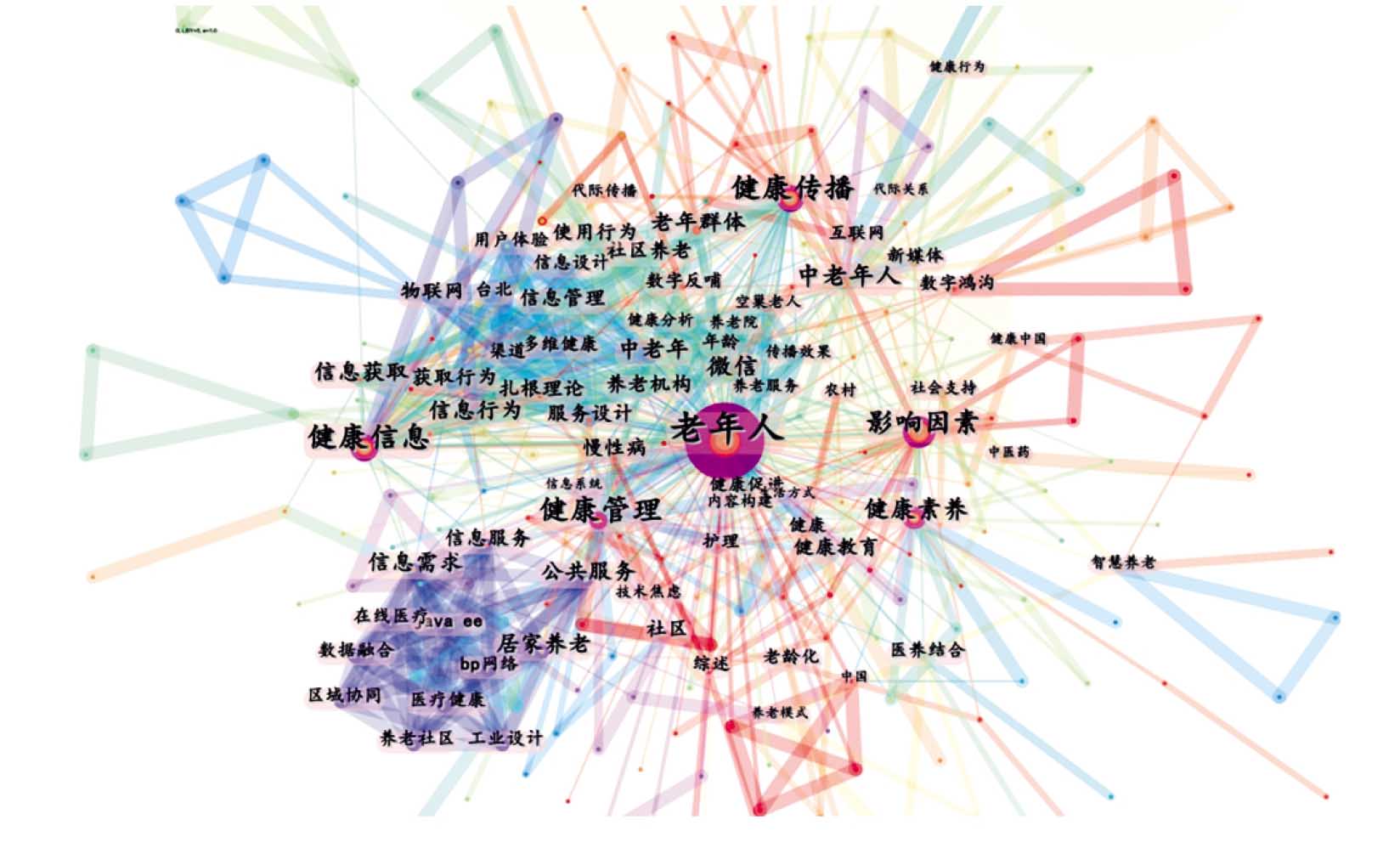
| 序号 | 关键词 | 词频 | 首现年份 | 序号 | 关键词 | 词频 | 首现年份 |
|---|---|---|---|---|---|---|---|
| 1 | 老年人 | 200 | 2014 | 11 | 健康教育 | 13 | 2016 |
| 2 | 影响因素 | 66 | 2015 | 12 | 微信 | 11 | 2018 |
| 3 | 健康信息 | 60 | 2015 | 13 | 农村 | 10 | 2019 |
| 4 | 健康传播 | 42 | 2014 | 14 | 新媒体 | 10 | 2016 |
| 5 | 健康素养 | 40 | 2016 | 15 | 社区 | 10 | 2014 |
| 6 | 健康管理 | 35 | 2014 | 16 | 中老年 | 9 | 2016 |
| 7 | 中老年人 | 26 | 2014 | 17 | 健康 | 9 | 2014 |
| 8 | 慢性病 | 15 | 2014 | 18 | 信息行为 | 8 | 2015 |
| 9 | 老年群体 | 15 | 2018 | 19 | 互联网 | 8 | 2017 |
| 10 | 扎根理论 | 14 | 2020 | 20 | 信息需求 | 8 | 2014 |
| 序号 | 关键词 | 词频 | 首现年份 | 序号 | 关键词 | 词频 | 首现年份 |
|---|---|---|---|---|---|---|---|
| 1 | 老年人 | 200 | 2014 | 11 | 健康教育 | 13 | 2016 |
| 2 | 影响因素 | 66 | 2015 | 12 | 微信 | 11 | 2018 |
| 3 | 健康信息 | 60 | 2015 | 13 | 农村 | 10 | 2019 |
| 4 | 健康传播 | 42 | 2014 | 14 | 新媒体 | 10 | 2016 |
| 5 | 健康素养 | 40 | 2016 | 15 | 社区 | 10 | 2014 |
| 6 | 健康管理 | 35 | 2014 | 16 | 中老年 | 9 | 2016 |
| 7 | 中老年人 | 26 | 2014 | 17 | 健康 | 9 | 2014 |
| 8 | 慢性病 | 15 | 2014 | 18 | 信息行为 | 8 | 2015 |
| 9 | 老年群体 | 15 | 2018 | 19 | 互联网 | 8 | 2017 |
| 10 | 扎根理论 | 14 | 2020 | 20 | 信息需求 | 8 | 2014 |
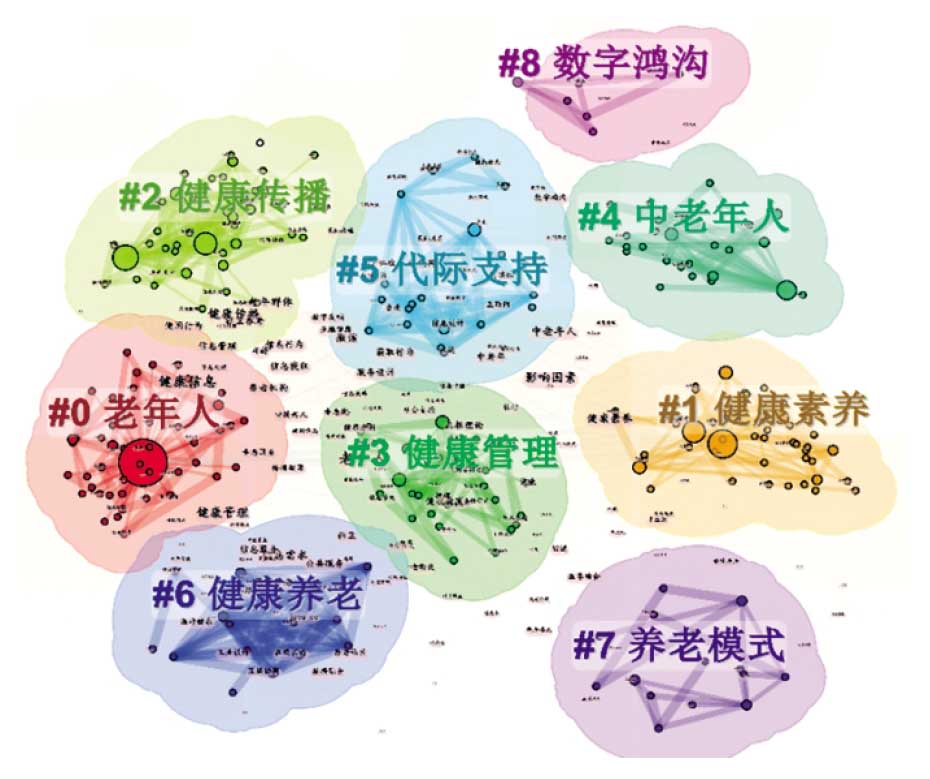
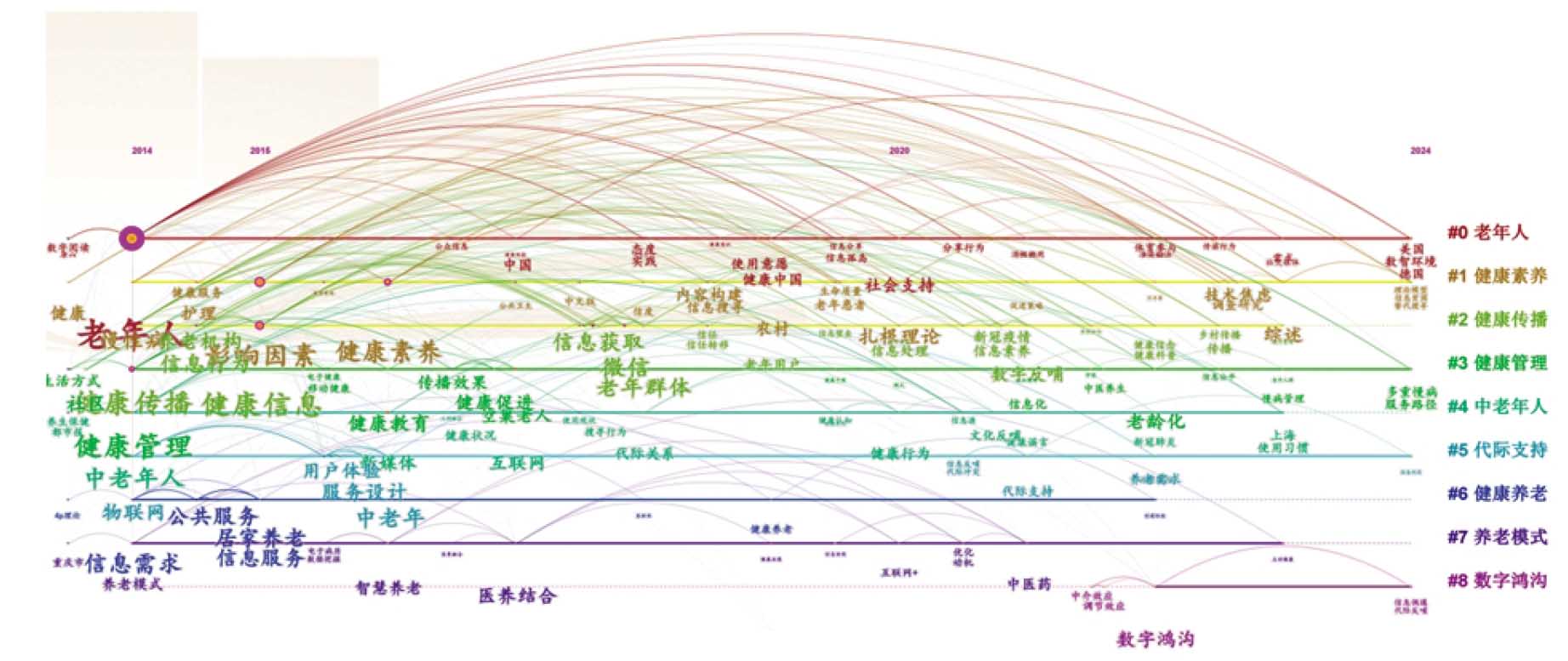
| 聚类号 | 节点数 | 轮廓值 | 生成日期(年) | 主要内容 |
|---|---|---|---|---|
| #0老年人 | 49 | 0.767 | 2019 | 健康信息、社交媒体、大五人格、心理健康、人口动力学、健康中国、公共图书馆、就医数字鸿沟、 治理路径、 人口动力学 |
| #1健康素养 | 46 | 0.714 | 2020 | 影响因素、健康素养、信息生态、健康知识获取行为、技术焦虑、电子健康素养、技术焦虑、质性 研究、护理信息、通径分析 |
| #2健康传播 | 42 | 0.863 | 2019 | 健康传播、健康信息、健康科普、代际沟通、质性研究 、 数字反哺、信息获取、网络健康信息、中老年 人、乡村传播 |
| #3健康管理 | 29 | 0.928 | 2018 | 健康管理、医养结合、中医养生、健康信息获取、信息公平、健康教育、移动健康、电子健康、社区 健康传播、 生活方式 |
| #4中老年人 | 26 | 0.783 | 2019 | 中老年人、健康传播、养生保健、冲突信息、行为意向、 健康信息、社区卫生服务、电子健康素养、 使用习惯、 农村中老年人 |
| #5代际支持 | 19 | 0.844 | 2017 | 代际支持、健康信息回避、代际冲突、信息反哺、获取行为、数据分析、老年人健康、信息预警、居家 养老、 健康信息回避 |
| #6健康养老 | 16 | 0.963 | 2015 | 信息需求、健康养老、乡镇老年人、信息获取、健康传播方式、以人为中心、服务设计、健康管理、 公共服务、 工业设计 |
| #7养老模式 | 14 | 0.880 | 2018 | 医养结合、养老模式、互联网+、主动健康、健康信息传播、智慧养老、电子病历、医养结合、养老 模式、互联网+ |
| #8数字鸿沟 | 6 | 0.994 | 2022 | 数字鸿沟、调节效应、信息媒介、中介效应、自评健康 、 知信行理论、代际反哺、信息偶遇、健康短 视频、调节效应 |
| 聚类号 | 节点数 | 轮廓值 | 生成日期(年) | 主要内容 |
|---|---|---|---|---|
| #0老年人 | 49 | 0.767 | 2019 | 健康信息、社交媒体、大五人格、心理健康、人口动力学、健康中国、公共图书馆、就医数字鸿沟、 治理路径、 人口动力学 |
| #1健康素养 | 46 | 0.714 | 2020 | 影响因素、健康素养、信息生态、健康知识获取行为、技术焦虑、电子健康素养、技术焦虑、质性 研究、护理信息、通径分析 |
| #2健康传播 | 42 | 0.863 | 2019 | 健康传播、健康信息、健康科普、代际沟通、质性研究 、 数字反哺、信息获取、网络健康信息、中老年 人、乡村传播 |
| #3健康管理 | 29 | 0.928 | 2018 | 健康管理、医养结合、中医养生、健康信息获取、信息公平、健康教育、移动健康、电子健康、社区 健康传播、 生活方式 |
| #4中老年人 | 26 | 0.783 | 2019 | 中老年人、健康传播、养生保健、冲突信息、行为意向、 健康信息、社区卫生服务、电子健康素养、 使用习惯、 农村中老年人 |
| #5代际支持 | 19 | 0.844 | 2017 | 代际支持、健康信息回避、代际冲突、信息反哺、获取行为、数据分析、老年人健康、信息预警、居家 养老、 健康信息回避 |
| #6健康养老 | 16 | 0.963 | 2015 | 信息需求、健康养老、乡镇老年人、信息获取、健康传播方式、以人为中心、服务设计、健康管理、 公共服务、 工业设计 |
| #7养老模式 | 14 | 0.880 | 2018 | 医养结合、养老模式、互联网+、主动健康、健康信息传播、智慧养老、电子病历、医养结合、养老 模式、互联网+ |
| #8数字鸿沟 | 6 | 0.994 | 2022 | 数字鸿沟、调节效应、信息媒介、中介效应、自评健康 、 知信行理论、代际反哺、信息偶遇、健康短 视频、调节效应 |
| [1] | 国家卫生健康委员会老龄健康司. 关于印发“十四五”健康老龄化规划的通知[EB/OL]. (2022-03-01)[2024-05-05]. https://www.nhc.gov.cn/lljks/c100157/202203/5e458c7c8fe2432e922a0d07d108d131.shtml. |
| [2] | 韩振燕, 许爱明. 老年数字化健康管理研究脉络与趋势--基于CiteSpace的可视化分析[J]. 中国卫生事业管理, 2024, 41(10):1194-1200. |
| [3] | 中共中央, 国务院. “健康中国2030”规划纲要[EB/OL]. (2016-10-25)[2024-06-01]. http://www.gov.cn/zhengce/2016-10/25/content_5124174.htm. |
| [4] | 杨晓奇. “十四五”时期我国老龄产业发展趋势及思路[J]. 兰州学刊, 2022(10):142-151. |
| [5] | 贺翠, 赵福菓. 近十年我国老年教育研究:概览与前瞻--基于CiteSpace和VOSviewer的可视化分析[J]. 中国成人教育, 2023(21):3-8. |
| [6] | 谢丽香, 雷善言, 杨芳. 基于Citespace知识图谱的国内老年健康素养研究历程与前沿分析[J]. 中国健康教育, 2022, 38(11):996-999,1005. |
| [7] | 南京邮电大学江苏智慧养老研究院[EB/OL]. (2018-05-21)[2025-05-05]. https://sps.njupt.edu.cn/2018/0912/c13440a133122/page.htm. |
| [8] | 钟若曦, 张娜, 蔡春生, 等. 广州市60岁及以上老年人健康问题关注及求证行为研究[J]. 中国公共卫生管理, 2024, 40(1):85-88. |
| [9] | 蒋俏蕾, 黄悦鑫, 张晶. 老年人健康传播研究:热点与趋势--基于1997-2019年中外文献的比较分析[J]. 新闻与写作, 2020(9):45-54. |
| [10] | 陈悦, 陈超美, 刘则渊, 等. CiteSpace知识图谱的方法论功能[J]. 科学学研究, 2015, 33(2):242-253. |
| [11] | 王春燕, 张勰. 2018-2021年我国老年健康服务研究热点及趋势可视化分析[J]. 中国预防医学杂志, 2022, 23(3):196-201. |
| [12] |
朱姝蓓, 邓小昭. 老年人网络健康信息查寻行为影响因素研究[J]. 图书情报工作, 2015, 59(5):60-67,93.
DOI |
| [13] | 崔培荣, 倪雪萍, 宗明灿, 等. 老年慢性病患者健康信息寻求行为现状及影响因素路径分析[J]. 上海交通大学学报(医学版), 2022, 42(6):805-812. |
| [14] | 芮雨欣. 筑壁与破壁:健康传播视角下老年人健康信息回避行为研究[D]. 武汉: 武汉体育学院, 2023. |
| [15] |
熊欢, 罗爱静, 谢文照, 等. 农村老年人健康信息素养现状及影响因素[J]. 农业图书情报学报, 2022, 34(10):44-56.
DOI |
| [16] | 宋允雪, 张荟荟, 陈萍. 上海市普陀区60-69岁居民健康信息素养水平及影响因素分析[J]. 健康教育与健康促进, 2022, 17(3):296-298,301. |
| [17] | 金诗晓, 李小寒. 老年人电子健康素养研究进展[J]. 护理研究, 2024, 38(4):620-623. |
| [18] | 伍麟, 赵利娟. 数字健康素养与老年人焦虑的化解[J]. 华南师范大学学报(社会科学版), 2022(4):72-83,206. |
| [19] | 马月, 陈玉华, 顾浩然. 我国老年人健康素养现状及教育提升策略[J]. 现代职业教育, 2023(20):125-128. |
| [20] | 国务院办公厅关于促进“互联网+医疗健康”发展的意见[EB/OL]. (2018-04-28)[2024-04-25]. https://www.gov.cn/zhengce/content/2018-04/28/content_5286645.htm. |
| [21] | 郑捷. 微信公众号“新老人”的老年健康信息传播研究[D]. 广州: 广州体育学院, 2022. |
| [22] | 刘林曦. 新媒体时代老年人健康传播研究[J]. 老龄科学研究, 2021, 9(11):68-77. |
| [23] | 王秋鹏, 许静, 史宇晖, 等. 互联网适老化改造背景下老年群体健康信息共享行为研究[J]. 中国健康教育, 2023, 39(10):873-878. |
| [24] | 孙欣然, 孙金海, 陈立富, 等. 老年人健康需求特点与健康管理对策[J]. 中国老年学杂志, 2018, 38(21):5364-5367. |
| [25] |
郑晓, 张持晨, 田峰, 等. 社区中老年人多重慢病健康管理服务路径研究[J]. 中国全科医学, 2024, 27(17):2119-2123.
DOI |
| [26] | 闵文慧. 失能老年人健康管理效果评价指标体系之构建[D]. 广州: 广州医科大学, 2023. |
| [27] | 葛振兴, 李晓光, 王慧. 老年数字化健康管理研究进展[J]. 生命科学, 2023, 35(8):984-993. |
| [28] | 杨晶晶, 刘玉锦, 姜旭, 等. 数字技术赋能老年人健康管理现状及提升对策[C]//中国老年学和老年医学学会.新时代积极应对人口老龄化研究文集·2022.长春中医药大学,长春人文学院, 2022:9. |
| [29] | 李雪莲, 谢云, 夏庆利. 双向代际支持对农村老年人健康的影响--基于中国家庭追踪调查数据库数据[J]. 中南农业科技, 2024, 45(3):125-130. |
| [30] | 吴迪, 向菲, 彭咏杰. 代际支持视角下农村老年人网络健康信息利用行为研究[J]. 数字图书馆论坛, 2024, 20(2):34-43. |
| [31] | 中国政府网. 国务院办公厅转发卫生计生委等部门关于推进医疗卫生与养老服务相结合指导意见的通知[EB/OL]. (2015-11-20)[2024-06-30]. https://www.gov.cn/zhengce/content/2015-1/20/content_10328.htm. |
| [32] | 中国政府网. “十四五”国家老龄事业发展和养老服务体系规划_[EB/OL]. (2021-12-30)[2024-04-25]. https://www.gov.cn/zhengce/content/2022-02/21/content_5674844.htm. |
| [33] | 王琳宁, 王思达, 经安琪, 等. 2014-2022年中国养老机构人力资源配置公平性及空间相关性[J]. 中国公共卫生, 2025, 41(7):809-816. |
| [34] | 董雪凡, 马静宜, 耿怡丹, 等. 我国“互联网+医养结合”养老模式实施的研究进展[J]. 职业与健康, 2023, 39(15):2154-2157. |
| [35] | 沈费伟, 曹子薇. 从数字鸿沟到数字包容:老年人参与数字乡村建设的策略选择[J]. 西北农林科技大学学报:社会科学版, 2023, 23(1):21-29. |
| [36] | 唐惠敏, 崔惜舜. 数字中国建设背景下农村代际数字鸿沟弥合路径研究[J]. 西华大学学报(哲学社会科学版), 2023, 42(4):46-55. |
| [37] | 王春彧, 杜世超. 远程监护设备对不同居住安排老年人健康的影响--基于中国老年社会追踪调查的分析[J]. 上海城市规划, 2024(3):37-42. |
| [38] | 冯婉婉. 数字反哺的健康效应及其作用机制研究[J]. 湖南农业大学学报(社会科学版), 2025, 26(2):92-101. |
| [39] | 朱亚茹, 冀赛, 李腾, 等. 老年人就医技术焦虑研究进展[J]. 护理研究, 2024, 38(20):3675-3678. |
| [40] | 陈杰, 马丽华, 黄悦琦. 银发数字鸿沟:影响因素、类型及跨越之策[J]. 成人教育, 2025, 45(3):34-41. |
| [41] | 赵烨, 周国正. 微信与抖音中老年用户健康信息搜寻行为影响因素研究[J]. 数字图书馆论坛, 2024, 20(12):45-55. |
| [42] | 王笑露, 杨巧菊, 王诗雨, 等. 老年人在线医疗健康信息获取能力及影响因素研究进展[J]. 护理学杂志, 2024, 39(11):20-23. |
| Viewed | ||||||
|
Full text |
|
|||||
|
Abstract |
|
|||||
 津公网安备12010202000831号 津ICP备11005889号-6
