职业与健康 ›› 2026, Vol. 42 ›› Issue (20): 2772-2776.

• • 上一篇    下一篇

QuEChERS-UPLC-MS/MS测定水果中农药残留基质效应的评价

陈庆胜, 卓章鹏, 莫栩墁, 刘赐敏, 龙军标, 周金森()   

  1. 广州市黄埔区疾病预防控制中心(广州市黄埔区卫生监督所)广东 广州 510530
  • 收稿日期:2025-07-07 修回日期:2025-11-28 出版日期:2026-10-15 发布日期:2026-09-14
  • 通信作者: 周金森,E-mail:77147702@qq.com
  • 作者简介:陈庆胜,男,主任技师,主要从事理化检验工作。

Evaluation of matrix effects in the determination of pesticide residues in fruits using QuEChERS-UPLC-MS/MS

CHEN Qingsheng, ZHUO Zhangpeng, MO Xuman, LIU Cimin, LONG Junbiao, ZHOU Jinsen()   

  1. Guangzhou Huangpu District Center for Disease Control and Prevention(Guangzhou Huangpu District Health Supervision Institute)GuangzhouGuangdong 510530, China
  • Received:2025-07-07 Revised:2025-11-28 Online:2026-10-15 Published:2026-09-14
  • Contact: ZHOU Jinsen,E-mail:77147702@qq.com

摘要:

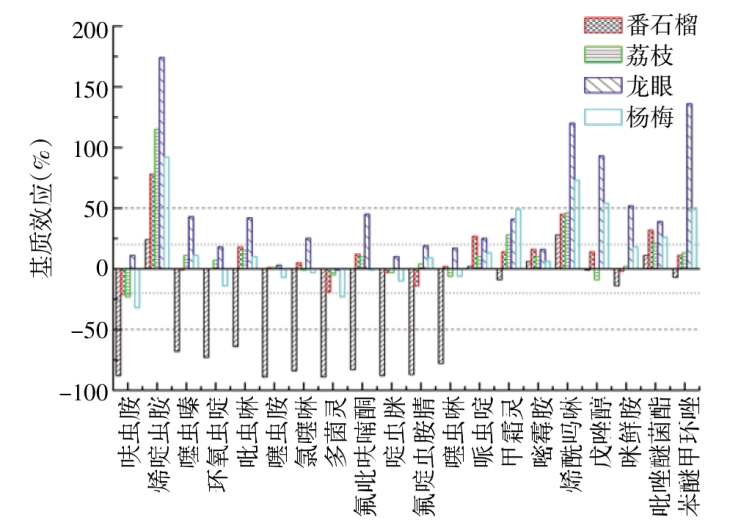
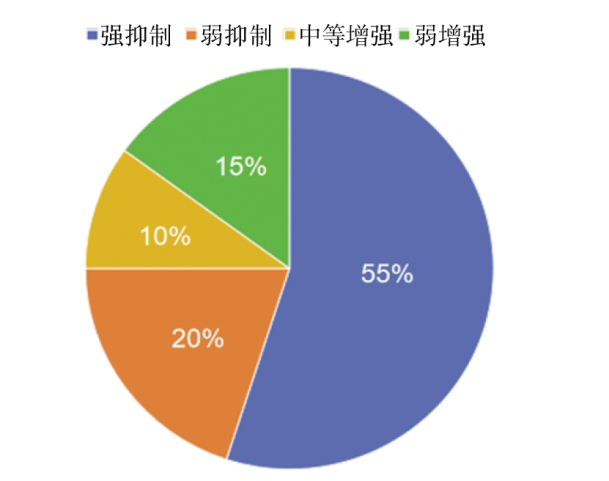
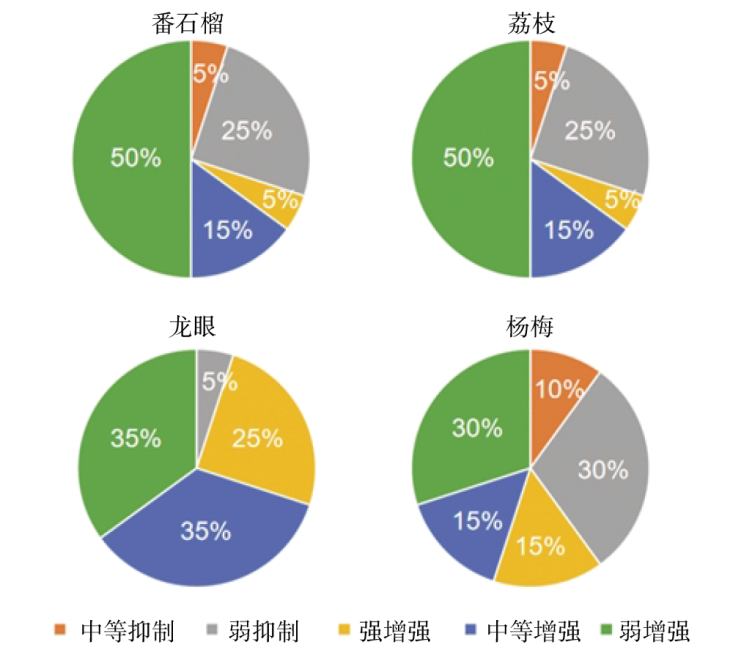
目的 构建基于超高效液相色谱-串联质谱法(ultra-performance liquid chromatography-tandem mass spectrometry,UPLC-MS/MS)的水果农药残留基质效应(matrix effects,ME)评价方法,保证检验结果的准确性。方法 选取李子、番石榴、荔枝、龙眼和杨梅5类水果空白基质,经快速样品前处理(quick,easy,cheap,effective,rugged,safe,QuEChERS)提取净化后,建立乙腈与样品基质匹配6组标准曲线,评估20种有机农药在5~200 μg/L范围内的基质效应。结果 20种有机农药在5~100 μg/L范围内线性关系良好(r>0.998)。基质效应分析显示,李子以抑制效应为主(75%农药受抑制,55%强抑制),可能与高有机酸含量相关;烯酰吗啉等5种农药呈增强效应(2%~28%)。番石榴、荔枝均表现为70%增强效应,ME最高115%,75%效应可忽略;呋虫胺在两者中均呈中等抑制。龙眼95%农药呈增强效应,ME最高174%,40%可忽略。杨梅60%呈增强效应,ME最高92%,呋虫胺和多菌灵呈中等抑制,不同水果基质效应差异显著。结论 5类水果中20类农药基质效应各不相同,不存在全是弱基质效应的水果。建议采用相同或类似空白基质配置标准曲线进行定性定量分析,可解决多农药残留、同时测定时回收率偏差问题。

关键词: 基质效应, 超高效液相色谱-串联质谱法, 水果, 农药残留

Abstract:

Objective To construct a matrix effects(ME) evaluation method for fruit pesticide residues based on ultra-performance liquid chromatography-tandem mass spectrometry(UPLC-MS/MS),ensuring the accuracy of the test results. Methods Blank matrices of five fruits(plum,guava,litchi,longan,and red bayberry) were selected. After extraction and purification using the quick,easy,cheap,effective,rugged,safe(QuEChERS) method,six sets of calibration curves were established using acetonitrile and matrix-matched standards. The matrix effects of 20 organic pesticides were assessed within the concentration range of 5-200 μg/L. Results The 20 pesticides exhibited good linearity(r>0.998) in the range of 5-100 μg/L. Matrix effect analysis revealed that for plum,suppression predominated,with 75% of pesticides suppressed and 55% showing strong suppression,possibly related to high organic acid content;Whereas five pesticides including dimethomorph,showed enhancement effects,ranging from 2% to 28%. Both guava and litchi showed 70% enhancement effects(ME up to 115%),with 75% of effects being negligible;Dinotefuran exhibited moderate suppression in both. In longan,95% of pesticides showed enhancement effects(ME up to 174%),with 40% negligible. In red bayberry,60% showed enhancement effects(ME up to 92%),while dinotefuran and carbendazim exhibited moderate suppression. Matrix effects differed significantly among different fruit types. Conclusion The matrix effects of 20 pesticides vary significantly across five types of fruits,with no fruit exhibiting uniformly weak matrix effects. It is recommended to prepare standard curves using the same or similar blank matrices for qualitative and quantitative analysis. This approach can mitigate recovery rate deviations in multi-pesticide residue analysis.

Key words: Matrix effects, Ultra-performance liquid chromatography-tandem mass spectrometry, Fruits, Pesticide residues

中图分类号: