


OCCUPATION AND HEALTH ›› 2026, Vol. 42 ›› Issue (13): 1817-1821.
• Treatise—Epidemiology and Preventive Health Care • Previous Articles Next Articles
SHI Hengyue1, LI He1, WU Ying1, BAI Jialu2, LIANG Shuang1( )
)
Received:2025-06-12
Revised:2025-07-28
Online:2026-07-01
Published:2026-07-14
Contact:
LIANG Shuang,E-mail:lnfl2022@163.com
CLC Number:
SHI Hengyue, LI He, WU Ying, BAI Jialu, LIANG Shuang. Analysis of influenza surveillance results in Fuxin City of Liaoning Province from 2015 to 2025. [J]OCCUPATION AND HEALTH, 2026, 42(13): 1817-1821.
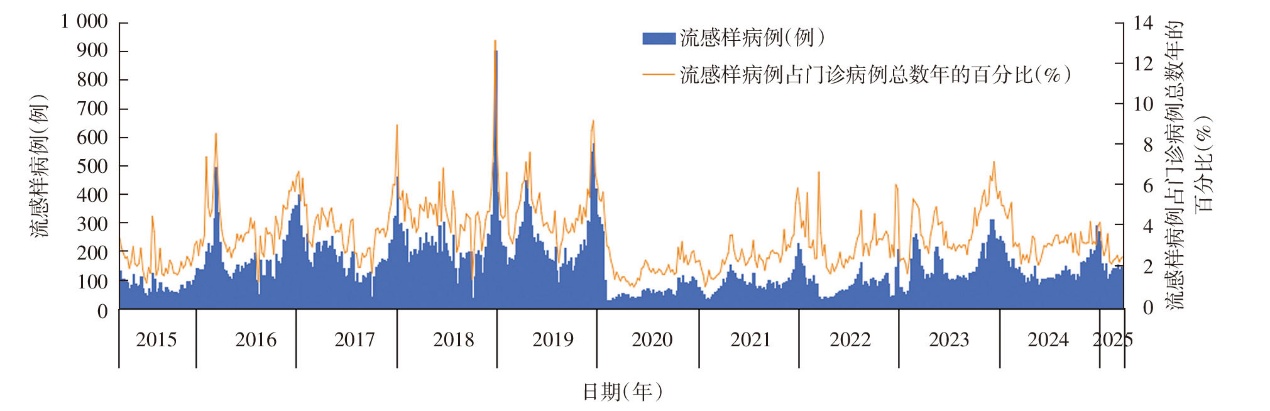
| 监测日期(年) | 0~<5岁 | 5~<15岁 | 15~<25岁 | 25~<60岁 | ≥60岁 | ILI总数 | 门急诊就诊总数 | ILI% |
|---|---|---|---|---|---|---|---|---|
| 2015—2016 | 3 795(61.54) | 2 012(32.63) | 84(1.36) | 231(3.75) | 45(0.73) | 6 167 | 202 024 | 3.05 |
| 2016—2017 | 6 489(66.38) | 3 054(31.24) | 80(0.82) | 126(1.29) | 27(0.28) | 9 776 | 238 981 | 4.09 |
| 2017—2018 | 6 369(64.65) | 3 141(31.89) | 123(1.25) | 175(1.78) | 43(0.44) | 9 851 | 238 126 | 4.14 |
| 2018—2019 | 7 369(61.65) | 4 085(34.18) | 165(1.38) | 284(2.38) | 50(0.42) | 11 953 | 244 810 | 4.88 |
| 2019—2020 | 6 171(54.98) | 4 310(38.40) | 300(2.67) | 377(3.36) | 67(0.60) | 11 225 | 230 598 | 4.87 |
| 2020—2021 | 1 746(50.67) | 1 230(35.69) | 173(5.02) | 254(7.37) | 43(1.25) | 3 446 | 181 723 | 1.90 |
| 2021—2022 | 2 664(49.80) | 2 177(40.70) | 155(2.90) | 296(5.53) | 57(1.07) | 5 349 | 178 999 | 2.99 |
| 2022—2023 | 2 222(42.99) | 1 963(37.98) | 294(5.69) | 495(9.58) | 195(3.77) | 5 169 | 158 055 | 3.27 |
| 2023—2024 | 2 771(32.59) | 3 331(39.18) | 787(9.26) | 1 090(12.82) | 523(6.15) | 8 502 | 207 581 | 4.10 |
| 2024—2025 | 1 068(14.77) | 1 743(24.10) | 565(7.81) | 1 860(25.72) | 1 995(27.59) | 7 231 | 239 813 | 3.02 |
| 合计 | 40 664(51.69) | 27 046(34.38) | 2 726(3.47) | 5 188(6.59) | 3 045(3.87) | 7 866 | 2120 710 | 3.71 |
| 监测日期(年) | 0~<5岁 | 5~<15岁 | 15~<25岁 | 25~<60岁 | ≥60岁 | ILI总数 | 门急诊就诊总数 | ILI% |
|---|---|---|---|---|---|---|---|---|
| 2015—2016 | 3 795(61.54) | 2 012(32.63) | 84(1.36) | 231(3.75) | 45(0.73) | 6 167 | 202 024 | 3.05 |
| 2016—2017 | 6 489(66.38) | 3 054(31.24) | 80(0.82) | 126(1.29) | 27(0.28) | 9 776 | 238 981 | 4.09 |
| 2017—2018 | 6 369(64.65) | 3 141(31.89) | 123(1.25) | 175(1.78) | 43(0.44) | 9 851 | 238 126 | 4.14 |
| 2018—2019 | 7 369(61.65) | 4 085(34.18) | 165(1.38) | 284(2.38) | 50(0.42) | 11 953 | 244 810 | 4.88 |
| 2019—2020 | 6 171(54.98) | 4 310(38.40) | 300(2.67) | 377(3.36) | 67(0.60) | 11 225 | 230 598 | 4.87 |
| 2020—2021 | 1 746(50.67) | 1 230(35.69) | 173(5.02) | 254(7.37) | 43(1.25) | 3 446 | 181 723 | 1.90 |
| 2021—2022 | 2 664(49.80) | 2 177(40.70) | 155(2.90) | 296(5.53) | 57(1.07) | 5 349 | 178 999 | 2.99 |
| 2022—2023 | 2 222(42.99) | 1 963(37.98) | 294(5.69) | 495(9.58) | 195(3.77) | 5 169 | 158 055 | 3.27 |
| 2023—2024 | 2 771(32.59) | 3 331(39.18) | 787(9.26) | 1 090(12.82) | 523(6.15) | 8 502 | 207 581 | 4.10 |
| 2024—2025 | 1 068(14.77) | 1 743(24.10) | 565(7.81) | 1 860(25.72) | 1 995(27.59) | 7 231 | 239 813 | 3.02 |
| 合计 | 40 664(51.69) | 27 046(34.38) | 2 726(3.47) | 5 188(6.59) | 3 045(3.87) | 7 866 | 2120 710 | 3.71 |
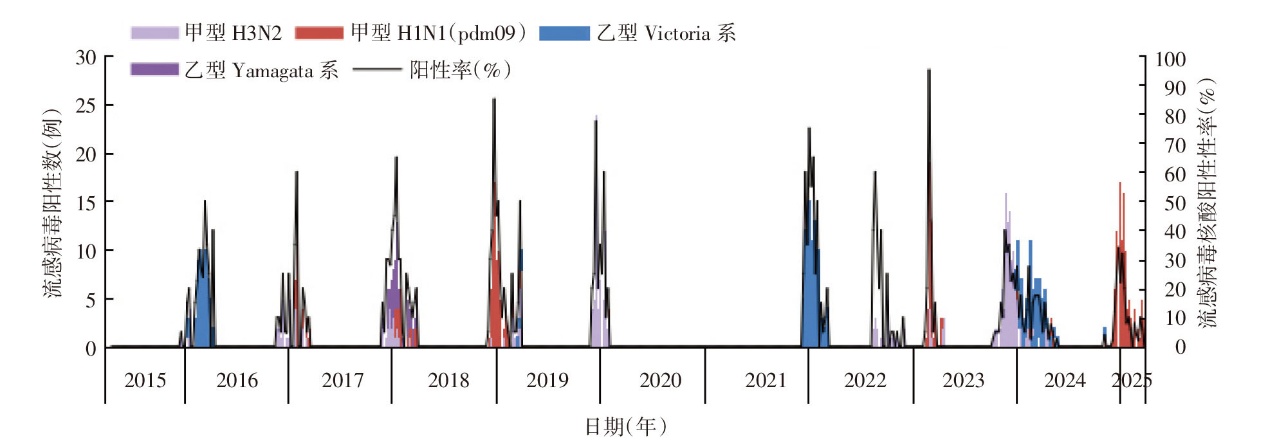
| 监测日期(年) | 检测数(份) | 阳性数(份) | 阳性率(%) | 甲型H3N2 | 甲型H1N1(pdm09) | 乙型Victoria系 | 乙型Yamagata系 |
|---|---|---|---|---|---|---|---|
| 2015—2016 | 719 | 65 | 9.04 | 7(10.77) | 0(0.00) | 58(89.23) | 0(0.00) |
| 2016—2017 | 652 | 48 | 7.36 | 24(50.00) | 22(45.83) | 2(4.17) | 0(0.00) |
| 2017—2018 | 655 | 87 | 13.28 | 19(21.84) | 22(25.29) | 0(0.00) | 46(52.87) |
| 2018—2019 | 660 | 89 | 13.48 | 14(15.73) | 71(79.78) | 4(4.49) | 0(0.00) |
| 2019—2020 | 661 | 67 | 10.14 | 66(98.51) | 1(1.49) | 0(0.00) | 0(0.00) |
| 2020—2021 | 670 | 0 | 0.00 | 0(0.00) | 0(0.00) | 0(0.00) | 0(0.00) |
| 2021—2022 | 655 | 88 | 13.44 | 0(0.00) | 0(0.00) | 88(100.00) | 0(0.00) |
| 2022—2023 | 660 | 61 | 9.24 | 25(40.98) | 36(59.02) | 0(0.00) | 0(0.00) |
| 2023—2024 | 1 640 | 172 | 10.49 | 109(63.37) | 6(3.49) | 57(33.14) | 0(0.00) |
| 2024—2025 | 1 874 | 120 | 6.40 | 4(3.33) | 105(87.50) | 11(9.17) | 0(0.00) |
| 合计 | 8 846 | 797 | 9.01 | 268(33.63) | 263(33.00) | 220(27.60) | 46(5.77) |
| 监测日期(年) | 检测数(份) | 阳性数(份) | 阳性率(%) | 甲型H3N2 | 甲型H1N1(pdm09) | 乙型Victoria系 | 乙型Yamagata系 |
|---|---|---|---|---|---|---|---|
| 2015—2016 | 719 | 65 | 9.04 | 7(10.77) | 0(0.00) | 58(89.23) | 0(0.00) |
| 2016—2017 | 652 | 48 | 7.36 | 24(50.00) | 22(45.83) | 2(4.17) | 0(0.00) |
| 2017—2018 | 655 | 87 | 13.28 | 19(21.84) | 22(25.29) | 0(0.00) | 46(52.87) |
| 2018—2019 | 660 | 89 | 13.48 | 14(15.73) | 71(79.78) | 4(4.49) | 0(0.00) |
| 2019—2020 | 661 | 67 | 10.14 | 66(98.51) | 1(1.49) | 0(0.00) | 0(0.00) |
| 2020—2021 | 670 | 0 | 0.00 | 0(0.00) | 0(0.00) | 0(0.00) | 0(0.00) |
| 2021—2022 | 655 | 88 | 13.44 | 0(0.00) | 0(0.00) | 88(100.00) | 0(0.00) |
| 2022—2023 | 660 | 61 | 9.24 | 25(40.98) | 36(59.02) | 0(0.00) | 0(0.00) |
| 2023—2024 | 1 640 | 172 | 10.49 | 109(63.37) | 6(3.49) | 57(33.14) | 0(0.00) |
| 2024—2025 | 1 874 | 120 | 6.40 | 4(3.33) | 105(87.50) | 11(9.17) | 0(0.00) |
| 合计 | 8 846 | 797 | 9.01 | 268(33.63) | 263(33.00) | 220(27.60) | 46(5.77) |
| 年龄(岁) | 检测数(份) | 阳性数(份) | 构成比(%) | PR(%) |
|---|---|---|---|---|
| 0~<5 | 2 148 | 87 | 10.92 | 4.05 |
| 5~<15 | 2 299 | 339 | 42.53 | 14.74 |
| 15~<25 | 1 162 | 121 | 15.19 | 10.41 |
| 25~<60 | 1 422 | 103 | 12.92 | 7.24 |
| ≥60 | 1 815 | 147 | 18.44 | 8.10 |
| 合计 | 8 846 | 797 | 100.00 | 9.01 |
| 年龄(岁) | 检测数(份) | 阳性数(份) | 构成比(%) | PR(%) |
|---|---|---|---|---|
| 0~<5 | 2 148 | 87 | 10.92 | 4.05 |
| 5~<15 | 2 299 | 339 | 42.53 | 14.74 |
| 15~<25 | 1 162 | 121 | 15.19 | 10.41 |
| 25~<60 | 1 422 | 103 | 12.92 | 7.24 |
| ≥60 | 1 815 | 147 | 18.44 | 8.10 |
| 合计 | 8 846 | 797 | 100.00 | 9.01 |
| [1] | World Health Organization. Influenza(seasonal)[EB/OL].(2023-10-03)[2025-05-15]. https://www.who.int/en/newsroom/fact-sheets/detail/influenza-(seasonal). |
| [2] | World Health Organization. Global Influenza Surveillance and Response System(GISRS)[EB/OL].(2024-03-24)[2025-05-15]. https://www.who.int/initiatives/globalinfluenza-surveillance-and-response-system. |
| [3] |
HAY A J, GREGORY V, DOUGLAS A R, et al. The evolution of human influenza viruses[J]. Philos Trans R Soc Lond B Biol Sci, 2001, 356(1416):1861-1870.
DOI URL |
| [4] | 王哲, 王乙, 陶明勇. 等. 2014—2023年度浙江省杭州市流感样病例流行特征及趋势分析[J]. 疾病监测, 2025, 40(2):176-183. |
| [5] | 杨超, 林强, 赵辉, 等. 2018—2023年北京市延庆区流感流行季流感监测分析[J]. 预防医学情报杂志, 2025, 41(9):1197-1202. |
| [6] | 张冉冉, 姜彩肖, 李岩, 等. 2010—2020年度河北省流感样病例流行特征和趋势分析[J]. 疾病监测, 2022, 37(11):1429-1435. |
| [7] | 马莹, 李文玉, 王秀琴, 等. 2013—2023监测年度宁夏回族自治区流行性感冒病原学特征分析[J]. 疾病监测, 2025, 40(3):321-326. |
| [8] | 文桂欢, 罗朝体, 肖权泉, 等. 2014—2023年宜宾市流感哨点监测结果分析[J]. 预防医学情报杂志, 2025, 41(5):567-574,581. |
| [9] | 黄焦, 余春, 雷明玉, 等. 2018—2022年贵州省流感样病例流行特征分析[J]. 疾病监测, 2024, 39(1):32-37. |
| [10] | 吴迪, 曹蓝, 刘艳慧, 等. 2003—2020年广州市19家市级流感监测哨点医院流感样病例监测分析[J]. 实用预防医学, 2022, 29(1):6-10. |
| [11] | 涂正波, 周坤, 胡茂红. 2016—2023年南昌市流感样病例病原学监测分析[J]. 中国预防医学杂志, 2025, 26(3):315-319. |
| [12] | 雷成江, 马星宇, 赵婧伊, 等. 2019—2024年天水市流感样病例监测病原谱特征分析[J]. 中国初级卫生保健, 2025, 39(1):61-65. |
| [13] | 康宁, 陈华凤, 梁珍丽, 等. 2019—2021年广西流感监测结果分析[J]. 现代预防医学, 2022, 49(18):3440-3445. |
| [14] | 雷娜, 高文慧, 李丽. 中国2018—2022年哨点医院流感样病例流感病毒监测[J]. 中国疫苗和免疫, 2023, 29(4):436-441. |
| [15] |
KORSUN N S, ANGELOVA S G, TRIFONOVA I T, et al. Predominance of influenza B/Yamagata lineage viruses in Bulgaria during the 2017/2018 season[J]. Epidemiol Infect, 2019, 147:e76.
DOI URL |
| [16] | 陈玲, 韩雪, 丛实, 等. 2018—2022年辽宁省沈阳市季节性流感病毒流行特征及乙型流感病毒分子进化分析[J]. 疾病监测, 2024, 39(5):609-615. |
| [17] | 中国流感疫苗预防接种技术指南(2023—2024)[J]. 中国病毒病杂志, 2024, 14(1):1-19. |
| [18] | 刘晓雪, 宋祎凡, 张肇南, 等. 2014—2021年流感季中国流感疫苗估算报告接种覆盖情况分析[J]. 中国病毒病杂志, 2023, 13(3):226-232. |
| [19] | 石睿林, 王传鹏. 厦门市某流感哨点医院2015—2023年流感监测分析[J]. 中国医药指南, 2025, 23(7):133-136. |
| [20] | 辛丽, 王大燕. 乙型流感病毒Yamagata系毒株的消失及其疫苗株更换的思考及讨论[J]. 中国生物制品学杂志, 2024, 37(8):1014-1019. |
| [21] |
PALACHE A, ROCKMAN S, TAYLOR B, et al. Vaccine complacency and dose distribution inequities limit the benefits of seasonal influenza vaccination,despite a positive trend in use[J]. Vaccine, 2021, 39(41):6081-6087.
DOI URL |
| Viewed | ||||||
|
Full text |
|
|||||
|
Abstract |
|
|||||
 津公网安备12010202000831号 津ICP备11005889号-6
