


OCCUPATION AND HEALTH ›› 2026, Vol. 42 ›› Issue (16): 2172-2177.
• Treatise—Occupational Health and Occupational Diseases • Previous Articles Next Articles
LI Jiahui1, HE Ping2, LI Xuedan3, KOU Jiulong1, YANG Chengxin2( )
)
Received:2025-06-17
Revised:2025-09-16
Online:2026-08-15
Published:2026-08-10
Contact:
YANG Chengxin,E-mail:CLC Number:
LI Jiahui, HE Ping, LI Xuedan, KOU Jiulong, YANG Chengxin. Changes in pulmonary function and blood routine indicators in silicosis patients at different stages and their association with inflammatory cytokine levels. [J]OCCUPATION AND HEALTH, 2026, 42(16): 2172-2177.
| 调查对象 | 人数 | 年龄($\bar{x}±s$) | 吸烟[例(%)] | 饮酒[例(%)] | 工龄 [M(P25,P75)年] | ||
|---|---|---|---|---|---|---|---|
| 吸烟 | 不吸烟 | 饮酒 | 不饮酒 | ||||
| 煤矿机关人员 | 57 | 51.18±4.50 | 31(54.40) | 26(45.60) | 31(54.40) | 26(45.60) | 16(13,27) |
| 未确诊接尘人员 | 57 | 52.21±6.24 | 33(57.90) | 24(42.10) | 37(64.90) | 20(35.10) | 13(10,22) |
| 已确诊矽肺人员分期 | |||||||
| Ⅰ期 | 37 | 53.70±5.54 | 17(45.90) | 20(54.10) | 23(62.20) | 14(37.80) | 13(12,20) |
| Ⅱ期 | 10 | 53.20±4.61 | 4(40.00) | 6(60.00) | 3(30.00) | 7(70.00) | 17(13,21) |
| Ⅲ期 | 7 | 56.57±6.88 | 3(42.90) | 4(57.10) | 3(42.90) | 4(57.10) | 20(12,23) |
| F/χ2/H值 | 1.574a | 2.265b | 5.552b | 2.992c | |||
| P值 | 0.109 | 0.687 | 0.238 | 0.559 | |||
| 调查对象 | 人数 | 年龄($\bar{x}±s$) | 吸烟[例(%)] | 饮酒[例(%)] | 工龄 [M(P25,P75)年] | ||
|---|---|---|---|---|---|---|---|
| 吸烟 | 不吸烟 | 饮酒 | 不饮酒 | ||||
| 煤矿机关人员 | 57 | 51.18±4.50 | 31(54.40) | 26(45.60) | 31(54.40) | 26(45.60) | 16(13,27) |
| 未确诊接尘人员 | 57 | 52.21±6.24 | 33(57.90) | 24(42.10) | 37(64.90) | 20(35.10) | 13(10,22) |
| 已确诊矽肺人员分期 | |||||||
| Ⅰ期 | 37 | 53.70±5.54 | 17(45.90) | 20(54.10) | 23(62.20) | 14(37.80) | 13(12,20) |
| Ⅱ期 | 10 | 53.20±4.61 | 4(40.00) | 6(60.00) | 3(30.00) | 7(70.00) | 17(13,21) |
| Ⅲ期 | 7 | 56.57±6.88 | 3(42.90) | 4(57.10) | 3(42.90) | 4(57.10) | 20(12,23) |
| F/χ2/H值 | 1.574a | 2.265b | 5.552b | 2.992c | |||
| P值 | 0.109 | 0.687 | 0.238 | 0.559 | |||
| 调查对象 | 人数 | FVC[M(P25,P75)%] | FEV1[M(P25,P75)%] |
|---|---|---|---|
| 煤矿机关人员 | 57 | 89(84,98) | 87(82,97) |
| 未确诊接尘人员 | 57 | 86(74,95) | 83(65,90) |
| 已确诊矽肺人员分期 | |||
| Ⅰ期 | 37 | 85(74,95) | 90(78,95) |
| Ⅱ期 | 10 | 75(70,83) | 79(65,88) |
| Ш期 | 7 | 52(40,74) | 74(64,85) |
| H值 | 28.053 | 18.723 | |
| P值 | <0.001 | <0.001 |
| 调查对象 | 人数 | FVC[M(P25,P75)%] | FEV1[M(P25,P75)%] |
|---|---|---|---|
| 煤矿机关人员 | 57 | 89(84,98) | 87(82,97) |
| 未确诊接尘人员 | 57 | 86(74,95) | 83(65,90) |
| 已确诊矽肺人员分期 | |||
| Ⅰ期 | 37 | 85(74,95) | 90(78,95) |
| Ⅱ期 | 10 | 75(70,83) | 79(65,88) |
| Ш期 | 7 | 52(40,74) | 74(64,85) |
| H值 | 28.053 | 18.723 | |
| P值 | <0.001 | <0.001 |
| 调查对象 | 人数 | 白细胞 (×109/L) | 中性粒细胞 (%) | 红细胞 (×1012/L) | 淋巴细胞 百分比(%) | 中性粒细胞绝对 值(×109/L) | 血小板 (×109/L) | 中性粒细胞/ 淋巴细胞 | 血小板/ 淋巴细胞 | 血红蛋白 (g/L) |
|---|---|---|---|---|---|---|---|---|---|---|
| 煤矿机关人员 | 57 | 5.88±1.10 | 58.65±8.29 | 5.00±0.45 | 32.98±7.76 | 3.49±0.92 | 258.14±57.46 | 1.95±0.78 | 130.29±41.30 | 151.23±16.52 |
| 未确诊接尘人员 | 57 | 5.50±0.98 | 56.75±8.34 | 5.02±0.41 | 32.13±7.79 | 3.14±0.78 | 217.39±58.92 | 1.93±0.75 | 127.06±54.96 | 155.47±10.78 |
| 已确诊矽肺人员分期 | ||||||||||
| Ⅰ期 | 37 | 6.13±1.51 | 58.61±9.53 | 5.06±0.55 | 30.12±8.52 | 3.66±1.32 | 229.16±46.79 | 2.20±1.01 | 133.78±42.82 | 157.46±12.85 |
| Ⅱ期 | 10 | 6.21±1.09 | 54.18±8.03 | 4.92±0.71 | 34.98±7.18 | 3.39±0.88 | 221.3±52.08 | 1.64±0.53 | 104.28±23.49 | 147.40±15.41 |
| Ⅲ期 | 7 | 6.67±1.50 | 63.53±7.59 | 4.68±0.79 | 24.40±6.36 | 4.21±0.98 | 241.57±71.43 | 2.83±1.08 | 164.90±77.85 | 153.29±11.51 |
| H值 | 8.251 | 6.565 | 2.792 | 10.316 | 9.263 | 18.217 | 8.577 | 9.414 | 7.502 | |
| P值 | 0.083 | 0.161 | 0.593 | 0.035 | 0.055 | <0.001 | 0.073 | 0.052 | 0.112 |
| 调查对象 | 人数 | 白细胞 (×109/L) | 中性粒细胞 (%) | 红细胞 (×1012/L) | 淋巴细胞 百分比(%) | 中性粒细胞绝对 值(×109/L) | 血小板 (×109/L) | 中性粒细胞/ 淋巴细胞 | 血小板/ 淋巴细胞 | 血红蛋白 (g/L) |
|---|---|---|---|---|---|---|---|---|---|---|
| 煤矿机关人员 | 57 | 5.88±1.10 | 58.65±8.29 | 5.00±0.45 | 32.98±7.76 | 3.49±0.92 | 258.14±57.46 | 1.95±0.78 | 130.29±41.30 | 151.23±16.52 |
| 未确诊接尘人员 | 57 | 5.50±0.98 | 56.75±8.34 | 5.02±0.41 | 32.13±7.79 | 3.14±0.78 | 217.39±58.92 | 1.93±0.75 | 127.06±54.96 | 155.47±10.78 |
| 已确诊矽肺人员分期 | ||||||||||
| Ⅰ期 | 37 | 6.13±1.51 | 58.61±9.53 | 5.06±0.55 | 30.12±8.52 | 3.66±1.32 | 229.16±46.79 | 2.20±1.01 | 133.78±42.82 | 157.46±12.85 |
| Ⅱ期 | 10 | 6.21±1.09 | 54.18±8.03 | 4.92±0.71 | 34.98±7.18 | 3.39±0.88 | 221.3±52.08 | 1.64±0.53 | 104.28±23.49 | 147.40±15.41 |
| Ⅲ期 | 7 | 6.67±1.50 | 63.53±7.59 | 4.68±0.79 | 24.40±6.36 | 4.21±0.98 | 241.57±71.43 | 2.83±1.08 | 164.90±77.85 | 153.29±11.51 |
| H值 | 8.251 | 6.565 | 2.792 | 10.316 | 9.263 | 18.217 | 8.577 | 9.414 | 7.502 | |
| P值 | 0.083 | 0.161 | 0.593 | 0.035 | 0.055 | <0.001 | 0.073 | 0.052 | 0.112 |
| 调查对象 | IL-18(pg/mL) | IL-1β(pg/mL) |
|---|---|---|
| 煤矿机关人员 | 136.89(71.65,217.62) | 0.15(0.08,0.47) |
| 未确诊接尘人员 | 150.49(63.65,372.77) | 0.58(0.29,0.82) |
| 已确诊矽肺人员分期 | ||
| Ⅰ期 | 257.25(135.65,420.5) | 2.32(1.79,2.88) |
| Ⅱ期 | 382.76(207.65,608.73) | 3.58(3.11,3.95) |
| Ш期 | 1 187.39(883.65,2106.49) | 7.28(4.90,11.17) |
| H值 | 33.501 | 106.186a |
| P值 | <0.001 | <0.001 |
| 调查对象 | IL-18(pg/mL) | IL-1β(pg/mL) |
|---|---|---|
| 煤矿机关人员 | 136.89(71.65,217.62) | 0.15(0.08,0.47) |
| 未确诊接尘人员 | 150.49(63.65,372.77) | 0.58(0.29,0.82) |
| 已确诊矽肺人员分期 | ||
| Ⅰ期 | 257.25(135.65,420.5) | 2.32(1.79,2.88) |
| Ⅱ期 | 382.76(207.65,608.73) | 3.58(3.11,3.95) |
| Ш期 | 1 187.39(883.65,2106.49) | 7.28(4.90,11.17) |
| H值 | 33.501 | 106.186a |
| P值 | <0.001 | <0.001 |
| 配对变量 | 相关 系数ρ | 原始 P值 | Bonferroni P值 | Holm P值 | BH P值 (FDR) | 效应量解释 |
|---|---|---|---|---|---|---|
| IL-1β vs FVC | -0.192 | <0.001 | <0.001 | <0.001 | <0.001 | 微弱负相关 |
| IL-18 vs FVC | -0.066 | <0.001 | <0.001 | <0.001 | <0.001 | 无实际关联 |
| IL-1β vs FEV1 | -0.037 | 0.001 | 0.003 | 0.002 | 0.001 | 极弱负相关 |
| IL-18 vs FEV1 | 0.004 | 0.746 | 1.000 | 0.746 | 0.746 | 无相关 |
| 配对变量 | 相关 系数ρ | 原始 P值 | Bonferroni P值 | Holm P值 | BH P值 (FDR) | 效应量解释 |
|---|---|---|---|---|---|---|
| IL-1β vs FVC | -0.192 | <0.001 | <0.001 | <0.001 | <0.001 | 微弱负相关 |
| IL-18 vs FVC | -0.066 | <0.001 | <0.001 | <0.001 | <0.001 | 无实际关联 |
| IL-1β vs FEV1 | -0.037 | 0.001 | 0.003 | 0.002 | 0.001 | 极弱负相关 |
| IL-18 vs FEV1 | 0.004 | 0.746 | 1.000 | 0.746 | 0.746 | 无相关 |
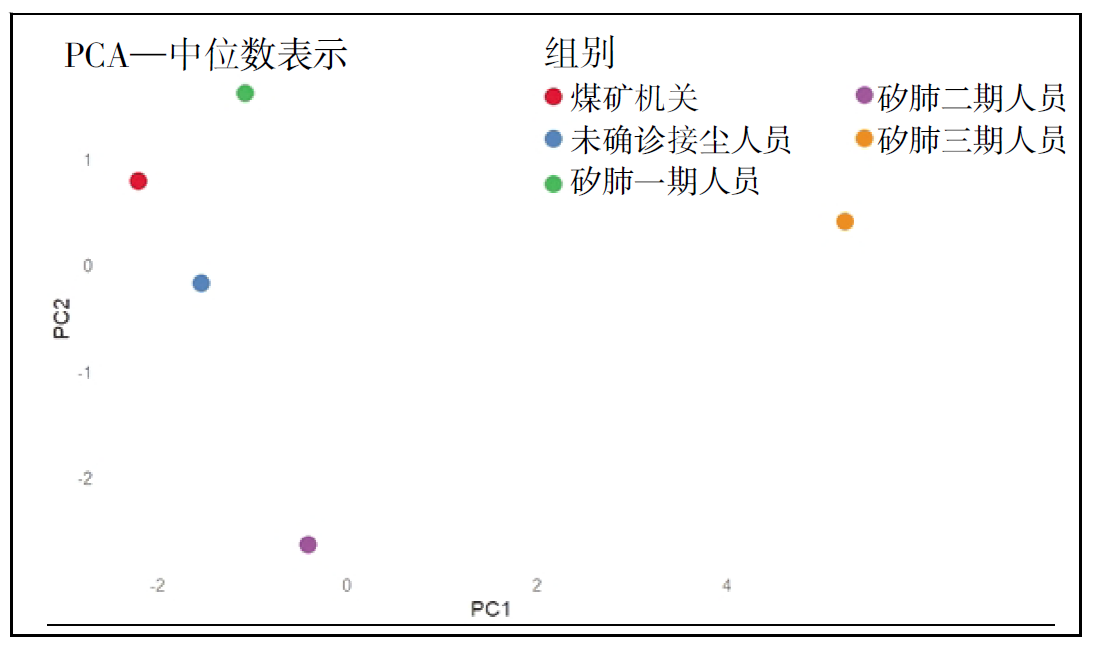
| 主成分 | 特征根(标准差) | 方差贡献率(%) | 累计方差贡献率(%) |
|---|---|---|---|
| PC1 | 3.00 | 69.41 | 69.41 |
| PC2 | 1.61 | 19.86 | 89.27 |
| PC3 | 1.03 | 8.11 | 97.38 |
| PC4 | 0.58 | 2.62 | 100.00 |
| PC5 | 0.00 | 0.00 | 100.00 |
| 主成分 | 特征根(标准差) | 方差贡献率(%) | 累计方差贡献率(%) |
|---|---|---|---|
| PC1 | 3.00 | 69.41 | 69.41 |
| PC2 | 1.61 | 19.86 | 89.27 |
| PC3 | 1.03 | 8.11 | 97.38 |
| PC4 | 0.58 | 2.62 | 100.00 |
| PC5 | 0.00 | 0.00 | 100.00 |
| 指标 | PC1 | PC2 | PC3 | PC4 | PC5 |
|---|---|---|---|---|---|
| 白细胞 | 0.322 | -0.049 | 0.229 | 0.027 | 0.457 |
| 中性粒细胞 | 0.217 | 0.443 | 0.207 | 0.254 | -0.255 |
| 红细胞 | -0.253 | 0.372 | -0.200 | -0.270 | 0.557 |
| 淋巴细胞百分比 | -0.288 | -0.293 | 0.073 | 0.272 | 0.549 |
| 中性粒细胞绝对值 | 0.298 | -0.100 | -0.337 | -0.396 | -0.002 |
| 血小板 | -0.203 | 0.194 | 0.698 | -0.227 | 0.034 |
| 中性粒细胞/淋巴细胞 | 0.292 | 0.284 | -0.012 | -0.254 | 0.177 |
| 血小板/淋巴细胞 | 0.301 | 0.157 | 0.264 | 0.357 | 0.127 |
| 血红蛋白 | 0.034 | 0.555 | -0.394 | 0.302 | 0.105 |
| 第1秒用力呼气容积 | -0.275 | 0.311 | 0.131 | -0.374 | -0.083 |
| 用力肺活量 | -0.328 | 0.102 | -0.044 | 0.020 | -0.196 |
| 白介素-18 | 0.332 | -0.007 | 0.069 | 0.010 | 0.100 |
| 白介素-1β | 0.319 | -0.092 | 0.093 | -0.394 | <0.001 |
| 指标 | PC1 | PC2 | PC3 | PC4 | PC5 |
|---|---|---|---|---|---|
| 白细胞 | 0.322 | -0.049 | 0.229 | 0.027 | 0.457 |
| 中性粒细胞 | 0.217 | 0.443 | 0.207 | 0.254 | -0.255 |
| 红细胞 | -0.253 | 0.372 | -0.200 | -0.270 | 0.557 |
| 淋巴细胞百分比 | -0.288 | -0.293 | 0.073 | 0.272 | 0.549 |
| 中性粒细胞绝对值 | 0.298 | -0.100 | -0.337 | -0.396 | -0.002 |
| 血小板 | -0.203 | 0.194 | 0.698 | -0.227 | 0.034 |
| 中性粒细胞/淋巴细胞 | 0.292 | 0.284 | -0.012 | -0.254 | 0.177 |
| 血小板/淋巴细胞 | 0.301 | 0.157 | 0.264 | 0.357 | 0.127 |
| 血红蛋白 | 0.034 | 0.555 | -0.394 | 0.302 | 0.105 |
| 第1秒用力呼气容积 | -0.275 | 0.311 | 0.131 | -0.374 | -0.083 |
| 用力肺活量 | -0.328 | 0.102 | -0.044 | 0.020 | -0.196 |
| 白介素-18 | 0.332 | -0.007 | 0.069 | 0.010 | 0.100 |
| 白介素-1β | 0.319 | -0.092 | 0.093 | -0.394 | <0.001 |
| [1] | 刘力恒, 万彦军, 张佳琪, 等. T细胞在矽肺发生发展与治疗中的研究进展[J]. 药学学报, 2025, 60(7):2060-2071. |
| [2] |
LIU T T, SUN H F, HAN Y X, et al. The role of inflammation in silicosis[J]. Front Pharmacol, 2024, 15:1362509.
DOI URL |
| [3] |
YANG B, LIU X, PENG C, et al. Silicosis:from pathogenesis to therapeutics[J]. Front Pharmacol, 2025, 16:1516200.
DOI URL |
| [4] |
JAMSHIDI P, DANAEI B, ARBABI M, et al. Silicosis and tuberculosis:A systematic review and meta-analysis[J]. Pulmonology, 2025, 31(1):2416791.
DOI URL |
| [5] |
SOHRABI Y, SABET S, YOUSEFINEJAD S, et al. Pulmonary function and respiratory symptoms in workers exposed to respirable silica dust:A historical cohort study[J]. Heliyon, 2022, 8(11):e11642.
DOI URL |
| [6] |
CHO I S, JO J H, PARK J W. Hematological biomarkers of systemic inflammation in predicting long-term treatment response of temporomandibular disorders[J]. BMC Oral Health, 2024, 24(1):1097.
DOI |
| [7] |
LAM M, MANSELL A, TATE M D. Another one fights the dust:Targeting the NLRP3 inflammasome for the treatment of silicosis[J]. Am J Respir Cell Mol Biol, 2022, 66(6):601-611.
DOI URL |
| [8] |
BORTHWICK L A. The IL-1 cytokine family and its role in inflammation and fibrosis in the lung[J]. Semin Immunopathol, 2016, 38(4):517-534.
DOI PMID |
| [9] |
SHE Y X, YU Q Y, TANG X X. Role of interleukins in the pathogenesis of pulmonary fibrosis[J]. Cell Death Discovery, 2021, 7(1):52.
DOI PMID |
| [10] | 中华人民共和国国家卫生和计划生育委员会. 职业性矽肺的诊断:GBZ 70-2015[S]. 北京: 人民卫生出版社,2015:1-13. |
| [11] | 中华人民共和国国家卫生和计划生育委员会. 职业性健康监护技术规范:GBZ 188-2014[S]. 北京: 中国标准出版社,2014:1. |
| [12] |
ZHANG X, ZHAO L, HE M, et al. Burden of silicosis based on the Global Burden of Disease Study 2021:trend analysis of incidence,mortality,and disability-adjusted life years,and projections for the next 30 years[J]. J Thorac Dis, 2025, 17(2):872-886.
DOI URL |
| [13] |
VIJAYARAJ S L, FELTHAM R, RASHIDI M, et al. The ubiquitylation of IL-1β limits its cleavage by caspase-1 and targets it for proteasomal degradation[J]. Nat Commun, 2021, 12(1):2713.
DOI PMID |
| [14] | RIBEIRO P C, FERREIRA T P T, MARTINS M A, et al. Inflammatory biomarkers in workers exposed to silica dust:integrative review[J]. Rev Bras Med Trab, 2024, 22(3):e20231224. |
| [15] |
SHARMA B R, KARKI R, KANNEGANTI T D. Role of AIM2 inflammasome in inflammatory diseases,cancer and infection[J]. Eur J Immunol, 2019, 49(11):1998-2011.
DOI URL |
| [16] |
XIA S, ZHANG Z, MAGUPALLI V G, et al. Gasdermin D pore structure reveals preferential release of mature interleukin-1[J]. Nature, 2021, 593(7860):607-611.
DOI |
| [17] |
CIMINIERI C, WOEST M E, REYNAERT N L, et al. IL-1β induces a proinflammatory fibroblast microenvironment that impairs lung progenitors' function[J]. Am J Respir Cell Mol Biol, 2023, 68(4):444-455.
DOI URL |
| [18] | 杨少奇, 史晓妮, 成于思, 等. 基于单细胞转录组测序探索FABP5在矽肺纤维化中Ⅱ型肺泡上皮细胞的特异性表达[J]. 环境与职业医学, 2022, 39(3):1089-1094. |
| [19] |
ALOE C A, LEONG T L, WIMALESWARAN H, et al. Excess iron promotes emergence of foamy macrophages that overexpress ferritin in the lungs of silicosis patients[J]. Respirology, 2022, 27(6):427-436.
DOI PMID |
| [20] |
FIDLER T P, DUNBAR A, KIM E, et al. Suppression of IL-1β promotes beneficial accumulation of fibroblast-like cells in atherosclerotic plaques in clonal hematopoiesis[J]. Nat Cardiovasc Res, 2024, 3(1):60-75.
DOI |
| Viewed | ||||||
|
Full text |
|
|||||
|
Abstract |
|
|||||
 津公网安备12010202000831号 津ICP备11005889号-6
