


OCCUPATION AND HEALTH ›› 2026, Vol. 42 ›› Issue (17): 2412-2416.
• Treatise——School Health • Previous Articles Next Articles
WU Jinyao1a, LIU Runhua1b, ZHU Xinyu1a, WU Cuihua1a, LI Dan2, CAO Yu1c( )
)
Received:2025-08-08
Revised:2025-11-13
Online:2026-09-01
Published:2026-08-14
Contact:
CAO Yu E-mail:2692327139@qq.com
CLC Number:
WU Jinyao, LIU Runhua, ZHU Xinyu, WU Cuihua, LI Dan, CAO Yu. Network analysis of depressive symptoms and coping styles among college students in Guizhou Province. [J]OCCUPATION AND HEALTH, 2026, 42(17): 2412-2416.
| 编码 | 条目 | 得分($\bar{x} \pm s$) | 强度 | 桥接强度 |
|---|---|---|---|---|
| P1 | 通过工作学习或其他一些活动解脱 | 1.75±1.15 | 0.58 | 0.06 |
| P2 | 与人交谈,倾诉内心烦恼 | 1.89±1.28 | 0.76 | 0.03 |
| P3 | 尽量看到事物好的一面 | 2.45±1.29 | 1.15 | 0.22 |
| P4 | 改变自己的想法,重新发现生活中什么重要 | 2.27±1.25 | 1.12 | 0.10 |
| P5 | 不把问题看得太严重 | 2.23±1.28 | 0.85 | 0.14 |
| P6 | 坚持自己的立场,为自己得到的斗争 | 2.16±1.22 | 0.71 | 0.02 |
| P7 | 找出几种不同解决问题的方法 | 1.99±1.18 | 0.99 | 0.08 |
| P8 | 向亲戚朋友或同学寻求建议 | 2.01±1.33 | 1.09 | 0.22 |
| P9 | 改变原来的一些做法或自己的一些问题 | 2.08±1.15 | 1.03 | 0.03 |
| P10 | 借鉴他人处理类似困难情景的办法 | 2.26±1.22 | 1.01 | 0.08 |
| P11 | 寻求业余爱好,积极参加文体活动 | 1.89±1.29 | 0.94 | 0.16 |
| P12 | 尽量克制自己的失望、悔恨、悲伤和愤怒 | 2.36±1.28 | 0.82 | 0.11 |
| N1 | 试图休息或休假,暂时把问题(烦恼)抛开 | 2.26±1.31 | 0.72 | 0.26 |
| N2 | 通过吸烟、喝酒、服药和吃东西来解除烦恼 | 0.43±0.92 | 0.56 | 0.26 |
| N3 | 认为时间会改变现状,唯一要做的便是等待 | 1.02±1.04 | 0.86 | 0.11 |
| N4 | 试图忘记整个事情 | 1.05±1.09 | 0.97 | 0.20 |
| N5 | 依靠别人解决问题 | 0.79±0.82 | 0.75 | 0.20 |
| N6 | 接受现实,因为没有其他办法 | 1.32±1.18 | 0.86 | 0.17 |
| N7 | 幻想可能会发生某种奇迹改变现状 | 1.16±1.15 | 0.91 | 0.25 |
| N8 | 自己安慰自己 | 2.59±1.33 | 0.73 | 0.40 |
| PHQ1 | 快感缺失 | 0.96±0.590 | 0.83 | 0.14 |
| PHQ2 | 情绪低落 | 0.83±0.552 | 0.92 | 0.10 |
| PHQ3 | 睡眠困难 | 0.87±0.750 | 0.71 | 0.09 |
| PHQ4 | 乏力 | 0.94±0.606 | 1.03 | 0.10 |
| PHQ5 | 食欲不振 | 0.65±0.680 | 0.75 | 0.09 |
| PHQ6 | 失败感 | 0.73±0.675 | 1.15 | 0.30 |
| PHQ7 | 注意力不集中 | 0.73±0.744 | 0.78 | 0.14 |
| PHQ8 | 行为言语异常 | 0.37±0.591 | 0.74 | 0.07 |
| PHQ9 | 自残或自杀倾向 | 0.16±0.419 | 0.74 | 0.23 |
| 编码 | 条目 | 得分($\bar{x} \pm s$) | 强度 | 桥接强度 |
|---|---|---|---|---|
| P1 | 通过工作学习或其他一些活动解脱 | 1.75±1.15 | 0.58 | 0.06 |
| P2 | 与人交谈,倾诉内心烦恼 | 1.89±1.28 | 0.76 | 0.03 |
| P3 | 尽量看到事物好的一面 | 2.45±1.29 | 1.15 | 0.22 |
| P4 | 改变自己的想法,重新发现生活中什么重要 | 2.27±1.25 | 1.12 | 0.10 |
| P5 | 不把问题看得太严重 | 2.23±1.28 | 0.85 | 0.14 |
| P6 | 坚持自己的立场,为自己得到的斗争 | 2.16±1.22 | 0.71 | 0.02 |
| P7 | 找出几种不同解决问题的方法 | 1.99±1.18 | 0.99 | 0.08 |
| P8 | 向亲戚朋友或同学寻求建议 | 2.01±1.33 | 1.09 | 0.22 |
| P9 | 改变原来的一些做法或自己的一些问题 | 2.08±1.15 | 1.03 | 0.03 |
| P10 | 借鉴他人处理类似困难情景的办法 | 2.26±1.22 | 1.01 | 0.08 |
| P11 | 寻求业余爱好,积极参加文体活动 | 1.89±1.29 | 0.94 | 0.16 |
| P12 | 尽量克制自己的失望、悔恨、悲伤和愤怒 | 2.36±1.28 | 0.82 | 0.11 |
| N1 | 试图休息或休假,暂时把问题(烦恼)抛开 | 2.26±1.31 | 0.72 | 0.26 |
| N2 | 通过吸烟、喝酒、服药和吃东西来解除烦恼 | 0.43±0.92 | 0.56 | 0.26 |
| N3 | 认为时间会改变现状,唯一要做的便是等待 | 1.02±1.04 | 0.86 | 0.11 |
| N4 | 试图忘记整个事情 | 1.05±1.09 | 0.97 | 0.20 |
| N5 | 依靠别人解决问题 | 0.79±0.82 | 0.75 | 0.20 |
| N6 | 接受现实,因为没有其他办法 | 1.32±1.18 | 0.86 | 0.17 |
| N7 | 幻想可能会发生某种奇迹改变现状 | 1.16±1.15 | 0.91 | 0.25 |
| N8 | 自己安慰自己 | 2.59±1.33 | 0.73 | 0.40 |
| PHQ1 | 快感缺失 | 0.96±0.590 | 0.83 | 0.14 |
| PHQ2 | 情绪低落 | 0.83±0.552 | 0.92 | 0.10 |
| PHQ3 | 睡眠困难 | 0.87±0.750 | 0.71 | 0.09 |
| PHQ4 | 乏力 | 0.94±0.606 | 1.03 | 0.10 |
| PHQ5 | 食欲不振 | 0.65±0.680 | 0.75 | 0.09 |
| PHQ6 | 失败感 | 0.73±0.675 | 1.15 | 0.30 |
| PHQ7 | 注意力不集中 | 0.73±0.744 | 0.78 | 0.14 |
| PHQ8 | 行为言语异常 | 0.37±0.591 | 0.74 | 0.07 |
| PHQ9 | 自残或自杀倾向 | 0.16±0.419 | 0.74 | 0.23 |
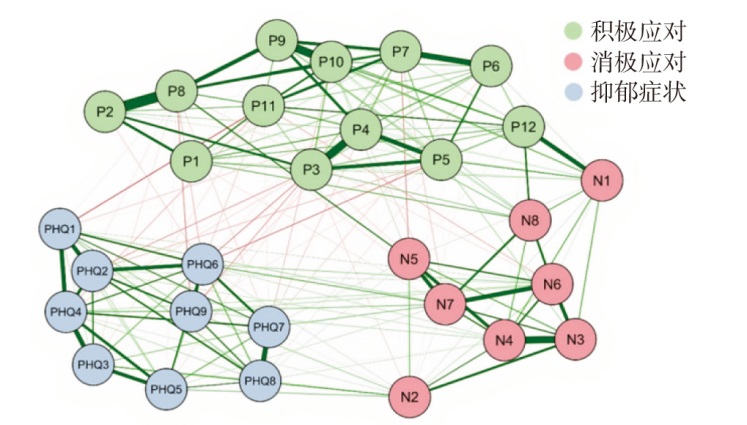
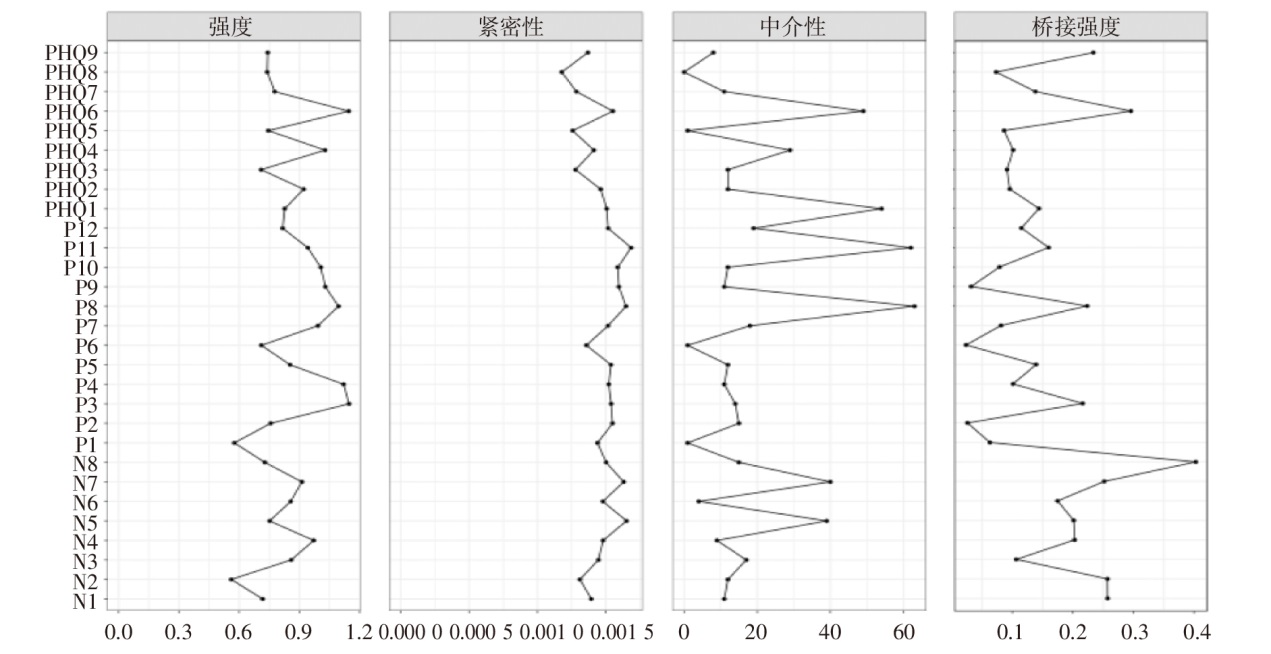
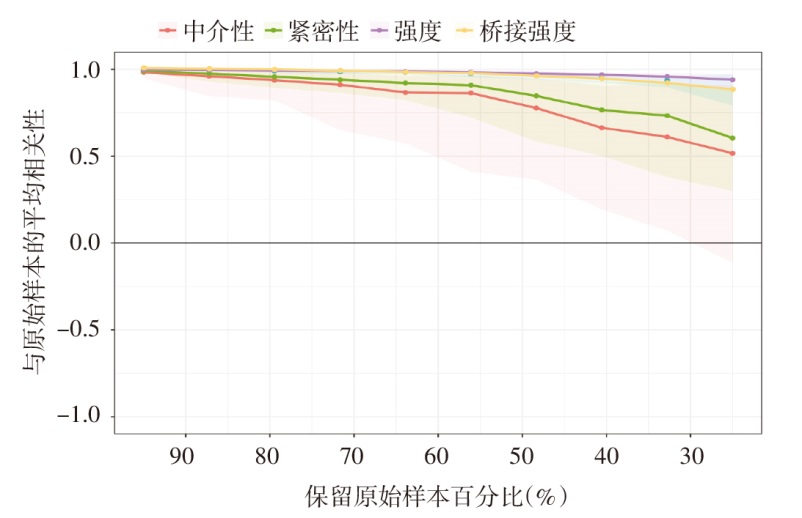
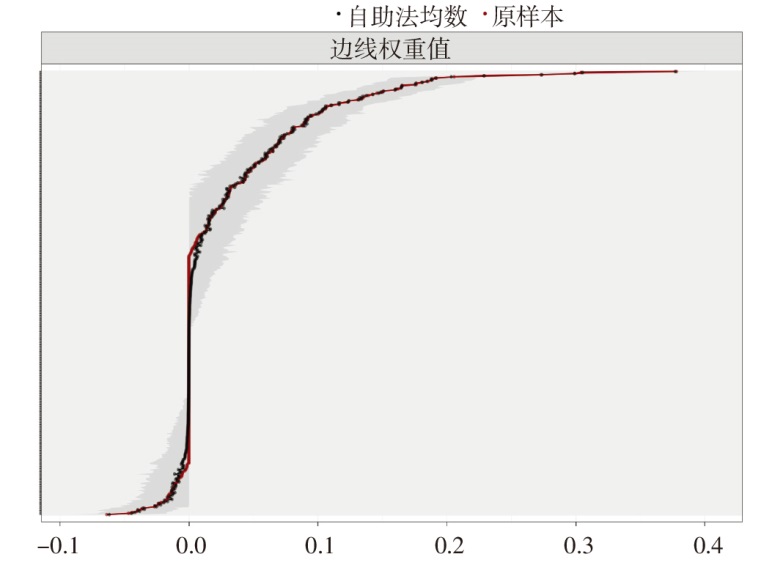
| [1] | CORTÉS A S. Diagnostic and statistical manual of mental disorders,fifth edition,text revision(dsm-5-tr)[J]. Psicooncologia, 2022, 19(2):339. |
| [2] |
DUFFY A, SAUNDERS K E A, MALHI G S, et al. Mental health care for university students:A way forward?[J]. Lancet Psychiat, 2019, 6(11):885-887.
DOI URL |
| [3] | 马慧, 杨超, 刘娜, 等. 大学生抑郁症状与人格特征及应对方式的关系研究[J]. 中国健康教育, 2019, 35(2):179-181,191. |
| [4] |
蔡玉清, 董书阳, 袁帅, 等. 变量间的网络分析模型及其应用[J]. 心理科学进展, 2020, 28(1):178-190.
DOI |
| [5] | KENDALL M G, STUART A, ORD J K. Kendall's advanced theory of statistics[J]. Technometrics, 1994, 31(1):128. |
| [6] | WANG W, BIAN Q, ZHAO Y, et al. Reliability and validity of the Chinese version of the Patient Health Questionnaire(PHQ-9) in the general population[J]. Genl Hosp Psychiat, 2014, 36(5):539-544. |
| [7] | 解亚宁. 简易应对方式量表信度和效度的初步研究[J]. 中国临床心理学杂志, 1998(2):53-54. |
| [8] | COSTANTINI G, EPSKAMP S, BORSBOOM D, et al. State of the aRt personality research:A tutorial on network analysis of personality data in R[J]. J Resn Pers, 2015, 54:13-29. |
| [9] |
EPSKAMP S, BORSBOOM D, FRIED E I. Estimating psychological networks and their accuracy:A tutorial paper[J]. Behav Res Methods, 2018, 50:195-212.
DOI URL |
| [10] |
FRIEDMAN J, HASTIE T, TIBSHIRANI R. Sparse inverse covariance estimation with the graphical lasso[J]. Biostatistics, 2008, 9(3):432-441.
DOI PMID |
| [11] |
OPSAHL T, AGNEESSENS F, SKVORETZ J. Node centrality in weighted networks:Generalizing degree and shortest paths[J]. Soc Networks, 2010, 32(3):245-251.
DOI URL |
| [12] |
JONES P J, MA R, MCNALLY R J. Bridge centrality:A network approach to understanding comorbidity[J]. Multivar Behav Res, 2021, 56(2):353-367.
DOI URL |
| [13] |
HASLBECk J M B, WALDORP L J. How well do network models predict observations? On the importance of predictability in network models[J]. Behav Res Methods, 2018, 50:853-861.
DOI PMID |
| [14] |
WANG Y, FU T, WANG J, et al. The relationship between self-compassion,copying style,sleep quality,and depression among college students[J]. Front Psychol, 2024, 15:1378181.
DOI URL |
| [15] | WEBBER H E, BADAWI J C, SCHMITZ J M, et al. Objective and subjective measurement of sleep in people who use substances:Emerging evidence and recommendations from a systematic review[J]. J Sleep Res, 2024:e14330. |
| [16] | DA LUZ F Q, MOHSIN M, JANA T A, et al. An examination of the relationships between eating-disorder symptoms,difficulties with emotion regulation,and mental health in people with binge eating disorder[J]. Behav Sci, 2023, 13(3):234. |
| [17] |
WANG S, LERI F, RIZVI S J. Anhedonia as a central factor in depression:Neural mechanisms revealed from preclinical to clinical evidence[J]. Prog Neuro-Psychoph, 2021, 110:110289.
DOI URL |
| [18] | 陈文雅, 王海城, 赵民. 儿童期虐待与大学生快感缺失的关系:积极应对方式和压力知觉的链式中介作用[J]. 中国健康心理学杂志, 2023, 31(11):1690-1695. |
| [19] | MUAZZAM A, ALI N, NIAZI Y, et al. Emotion regulation,optimism and quality of life among Gastric Ulcer Patients[J]. Pak J Med Sci, 2021, 37(4):988. |
| [20] |
WASIL A R, VENTURO-CONERLY K E, SHINDE S, et al. Applying network analysis to understand depression and substance use in Indian adolescents[J]. J Affect Disorders, 2020, 265:278-286.
DOI PMID |
| [21] |
ZHENG Z, ZHAO W, ZHOU Q, et al. Sex differences in depression,anxiety and health-promoting lifestyles among community residents:A network approach[J]. J Affect Disorders, 2023, 340:369-378.
DOI URL |
| [22] |
SUN C, ZHU Z, ZHANG P, et al. Exploring the interconnections of anxiety,depression,sleep problems and health-promoting lifestyles among Chinese university students:A comprehensive network approach[J]. Front Psychiat, 2024, 15:1402680.
DOI URL |
| [23] | 黄顺森, 罗玉晗, 来枭雄, 等. 中国青少年抑郁的核心症状及性别、抑郁程度间的比较:基于网络分析方法[J]. 心理科学, 2022, 45(5):1115-1122. |
| [24] | LEUNG J T Y, SHEK D T L. The influence of parental expectations and parental control on adolescent well-being in poor Chinese families[J]. Appl Res Qual Life, 2017(9):1-19. |
| [25] | 马文燕, 高朋, 黄大炜, 等. 家庭社会经济地位和主观社会经济地位对精准扶贫家庭学生抑郁症状的影响[J]. 现代预防医学, 2021, 48(18):3379-3383. |
| [26] | 黄传浩, 王会秋, 王秀珍, 等. 青少年抑郁情绪、抑郁障碍因果信念和自我污名感对求助意愿的影响[J]. 中国健康心理学志, 2021, 29(7):1091-1095. |
| Viewed | ||||||
|
Full text |
|
|||||
|
Abstract |
|
|||||
 津公网安备12010202000831号 津ICP备11005889号-6
