


OCCUPATION AND HEALTH ›› 2026, Vol. 42 ›› Issue (6): 806-811.
• Original article • Previous Articles Next Articles
LI Zongnan1,2, ZHANG Lan3, YANG Pei2, YUAN Jianhui1,2,3( )
)
Received:2025-06-06
Revised:2025-07-12
Online:2026-03-15
Published:2026-04-03
Contact:
YUAN Jianhui
CLC Number:
LI Zongnan, ZHANG Lan, YANG Pei, YUAN Jianhui. Impact of PM2.5 on incidence of influenza among residents in Nanshan District of Shenzhen City. [J]OCCUPATION AND HEALTH, 2026, 42(6): 806-811.
| 指标 | x | s | P0 | P25 | P50 | P75 | P100 | IQR |
|---|---|---|---|---|---|---|---|---|
| 气象条件 | ||||||||
| 平均气温(℃) | 23.65 | 5.28 | 6.73 | 19.76 | 24.67 | 28.21 | 32.08 | 8.46 |
| 风速(m/s) | 2.74 | 1.09 | 0.76 | 1.94 | 2.54 | 3.35 | 9.04 | 1.41 |
| 相对湿度(%) | 75.93 | 11.90 | 25.81 | 70.01 | 78.11 | 84.22 | 97.76 | 14.21 |
| 气压(hPa) | 1 005.63 | 6.34 | 988.29 | 1 000.62 | 1 005.57 | 1 010.40 | 1 023.54 | 9.78 |
| 大气污染物 | ||||||||
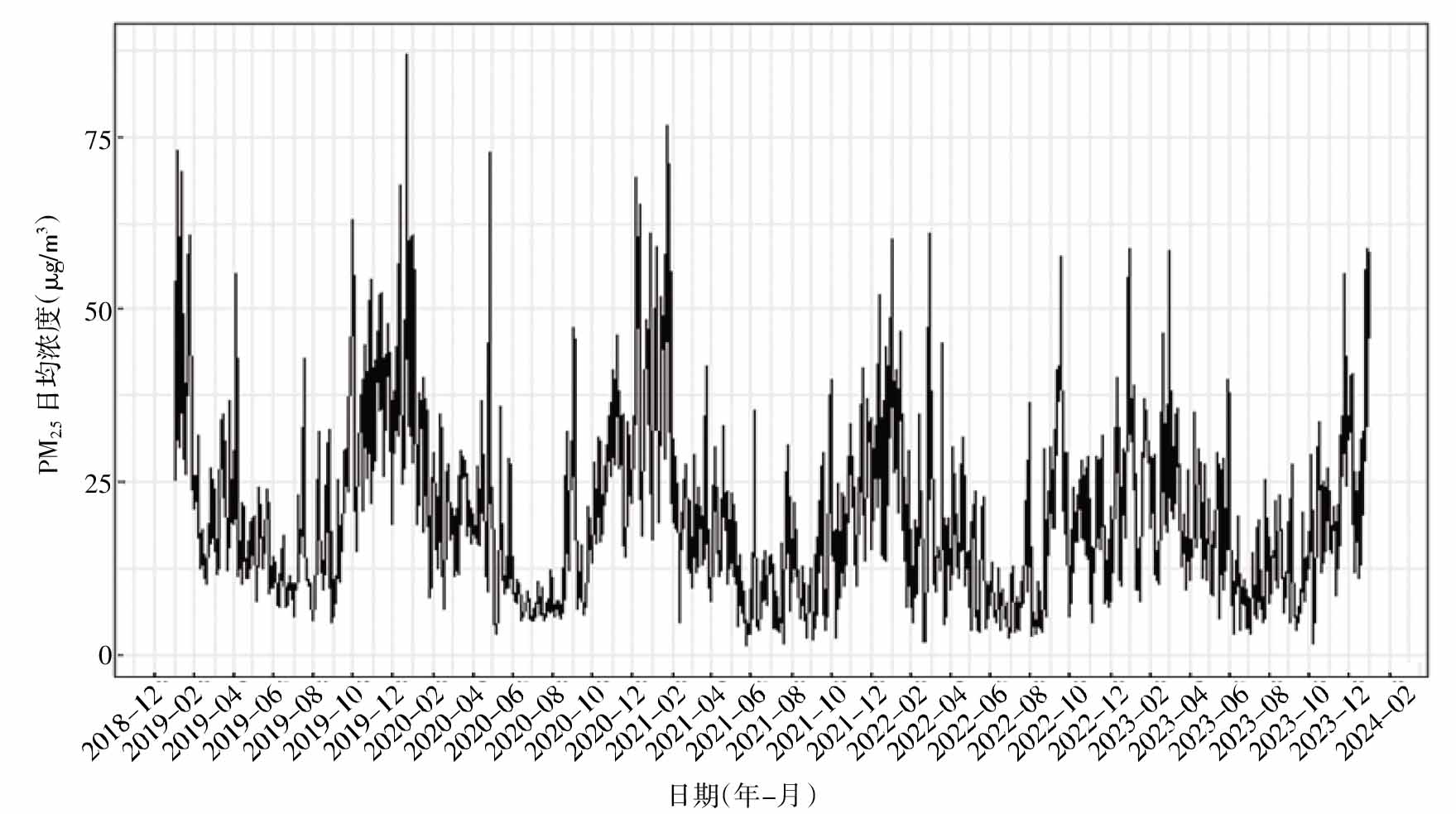
| PM2.5(μg/m3) | 19.96 | 12.46 | 1.15 | 10.46 | 17.44 | 26.90 | 87.06 | 16.44 |
| PM10(μg/m3) | 38.56 | 21.78 | 3.96 | 21.86 | 33.54 | 49.24 | 150.90 | 27.40 |
| NO2(μg/m3) | 26.30 | 14.68 | 3.98 | 16.30 | 22.92 | 31.91 | 126.07 | 15.61 |
| SO2(μg/m3) | 5.25 | 1.35 | 2.00 | 4.50 | 5.02 | 5.90 | 12.50 | 1.40 |
| CO(μg/m3) | 0.62 | 0.14 | 0.19 | 0.53 | 0.61 | 0.71 | 1.27 | 0.18 |
| O3-8h(μg/m3) | 63.95 | 31.83 | 7.06 | 37.69 | 58.55 | 86.25 | 256.61 | 48.56 |
| 指标 | x | s | P0 | P25 | P50 | P75 | P100 | IQR |
|---|---|---|---|---|---|---|---|---|
| 气象条件 | ||||||||
| 平均气温(℃) | 23.65 | 5.28 | 6.73 | 19.76 | 24.67 | 28.21 | 32.08 | 8.46 |
| 风速(m/s) | 2.74 | 1.09 | 0.76 | 1.94 | 2.54 | 3.35 | 9.04 | 1.41 |
| 相对湿度(%) | 75.93 | 11.90 | 25.81 | 70.01 | 78.11 | 84.22 | 97.76 | 14.21 |
| 气压(hPa) | 1 005.63 | 6.34 | 988.29 | 1 000.62 | 1 005.57 | 1 010.40 | 1 023.54 | 9.78 |
| 大气污染物 | ||||||||
| PM2.5(μg/m3) | 19.96 | 12.46 | 1.15 | 10.46 | 17.44 | 26.90 | 87.06 | 16.44 |
| PM10(μg/m3) | 38.56 | 21.78 | 3.96 | 21.86 | 33.54 | 49.24 | 150.90 | 27.40 |
| NO2(μg/m3) | 26.30 | 14.68 | 3.98 | 16.30 | 22.92 | 31.91 | 126.07 | 15.61 |
| SO2(μg/m3) | 5.25 | 1.35 | 2.00 | 4.50 | 5.02 | 5.90 | 12.50 | 1.40 |
| CO(μg/m3) | 0.62 | 0.14 | 0.19 | 0.53 | 0.61 | 0.71 | 1.27 | 0.18 |
| O3-8h(μg/m3) | 63.95 | 31.83 | 7.06 | 37.69 | 58.55 | 86.25 | 256.61 | 48.56 |
| 项目 | x | s | P0 | P25 | P50 | P75 | P100 | IQR |
|---|---|---|---|---|---|---|---|---|
| 性别 | ||||||||
| 男 | 53.16 | 95.92 | 0.00 | 2.00 | 8.00 | 66.00 | 776.00 | 64.00 |
| 女 | 45.14 | 81.73 | 0.00 | 2.00 | 7.00 | 57.00 | 729.00 | 55.00 |
| 年龄(岁) | ||||||||
| 0~<5 | 16.12 | 26.76 | 0.00 | 1.00 | 4.00 | 22.00 | 190.00 | 21.00 |
| 5~<15 | 42.05 | 80.44 | 0.00 | 2.00 | 6.00 | 45.00 | 649.00 | 43.00 |
| 15~<25 | 9.52 | 20.26 | 0.00 | 0.00 | 1.00 | 10.00 | 237.00 | 10.00 |
| 25~<60 | 28.25 | 58.45 | 0.00 | 1.00 | 3.00 | 33.00 | 719.00 | 32.00 |
| ≥60 | 2.37 | 4.53 | 0.00 | 0.00 | 0.00 | 3.00 | 44.00 | 3.00 |
| 日发病人数 (例/天) | ||||||||
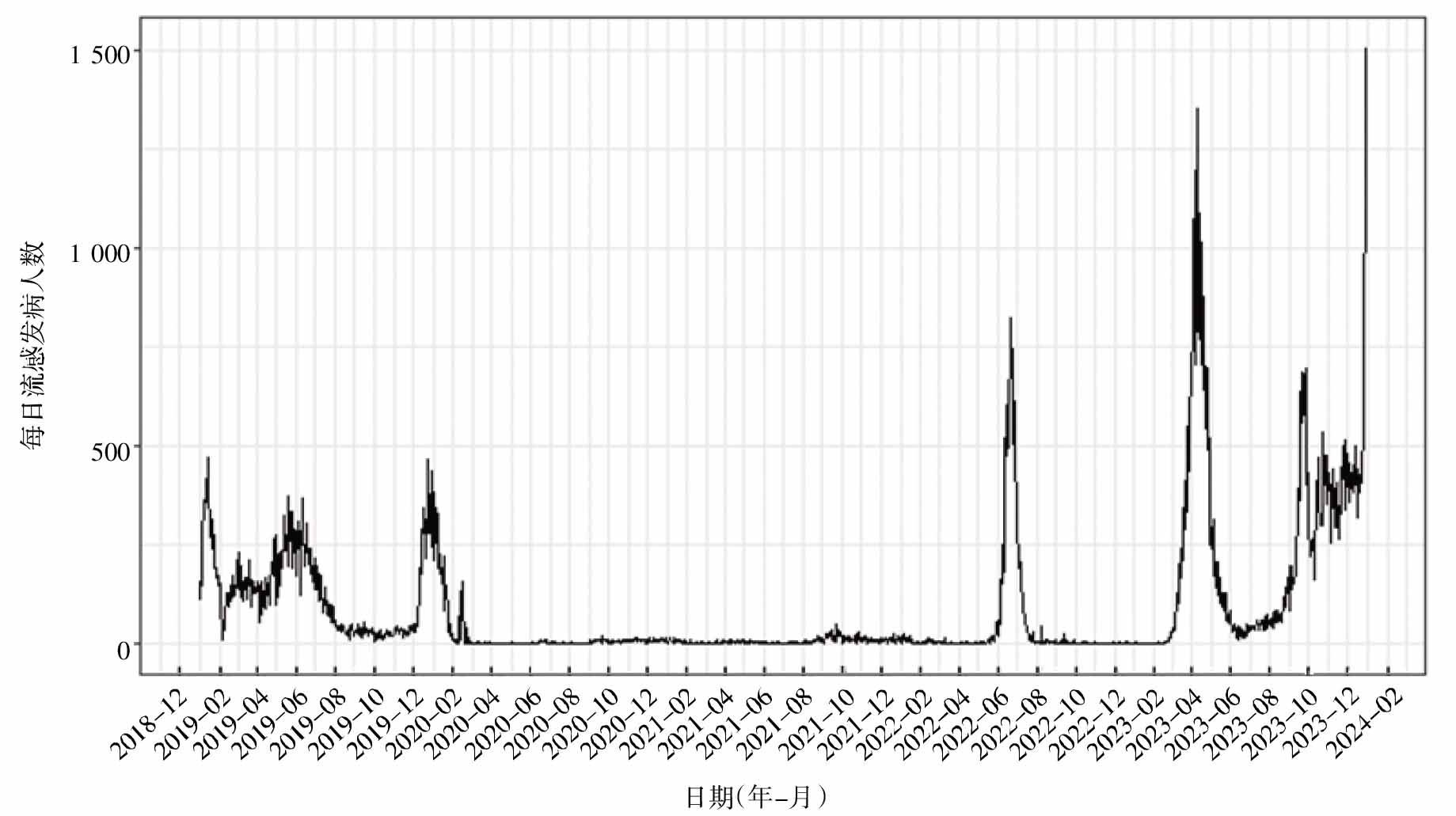
| 总人群 | 98.30 | 177.24 | 1.00 | 4.00 | 14.00 | 123.00 | 1505.00 | 119.00 |
| 项目 | x | s | P0 | P25 | P50 | P75 | P100 | IQR |
|---|---|---|---|---|---|---|---|---|
| 性别 | ||||||||
| 男 | 53.16 | 95.92 | 0.00 | 2.00 | 8.00 | 66.00 | 776.00 | 64.00 |
| 女 | 45.14 | 81.73 | 0.00 | 2.00 | 7.00 | 57.00 | 729.00 | 55.00 |
| 年龄(岁) | ||||||||
| 0~<5 | 16.12 | 26.76 | 0.00 | 1.00 | 4.00 | 22.00 | 190.00 | 21.00 |
| 5~<15 | 42.05 | 80.44 | 0.00 | 2.00 | 6.00 | 45.00 | 649.00 | 43.00 |
| 15~<25 | 9.52 | 20.26 | 0.00 | 0.00 | 1.00 | 10.00 | 237.00 | 10.00 |
| 25~<60 | 28.25 | 58.45 | 0.00 | 1.00 | 3.00 | 33.00 | 719.00 | 32.00 |
| ≥60 | 2.37 | 4.53 | 0.00 | 0.00 | 0.00 | 3.00 | 44.00 | 3.00 |
| 日发病人数 (例/天) | ||||||||
| 总人群 | 98.30 | 177.24 | 1.00 | 4.00 | 14.00 | 123.00 | 1505.00 | 119.00 |
| 项目 | 单日滞后效应 | 累积滞后效应 | ||||
|---|---|---|---|---|---|---|
| RR值 | 95%CI | 滞后 天数 | RR值 | 95%CI | 滞后 天数 | |
| 总人群 | 1.013 | 1.007~1.019a | lag0 | 1.015 | 1.008~1.022a | lag02 |
| 性别 | ||||||
| 男 | 1.012 | 1.006~1.019a | lag0 | 1.014 | 1.007~1.022a | lag02 |
| 女 | 1.014 | 1.008~1.020a | lag0 | 1.017 | 1.010~1.024a | lag02 |
| 年龄(岁) | ||||||
| 0~<5 | 1.012 | 1.007~1.018a | lag0 | 1.017 | 1.011~1.024a | lag03 |
| 5~<15 | 1.014 | 1.007~1.020a | lag0 | 1.014 | 1.014~1.015a | lag01 |
| 15~<25 | 1.008 | 1.003~1.014a | lag0 | 1.009 | 1.007~1.011a | lag01 |
| 25~<60 | 1.010 | 1.003~1.015a | lag0 | 1.010 | 1.009~1.011a | lag02 |
| ≥60 | 1.011 | 1.005~1.016a | lag0 | 1.014 | 1.010~1.018a | lag03 |
| 季节分层 | ||||||
| 暖季 | 0.984 | 0.972~0.995a | lag0 | 0.979 | 0.967~0.991 | lag01 |
| 冷季 | 1.019 | 1.015~1.023a | lag0 | 1.029 | 1.023~1.034a | lag03 |
| 项目 | 单日滞后效应 | 累积滞后效应 | ||||
|---|---|---|---|---|---|---|
| RR值 | 95%CI | 滞后 天数 | RR值 | 95%CI | 滞后 天数 | |
| 总人群 | 1.013 | 1.007~1.019a | lag0 | 1.015 | 1.008~1.022a | lag02 |
| 性别 | ||||||
| 男 | 1.012 | 1.006~1.019a | lag0 | 1.014 | 1.007~1.022a | lag02 |
| 女 | 1.014 | 1.008~1.020a | lag0 | 1.017 | 1.010~1.024a | lag02 |
| 年龄(岁) | ||||||
| 0~<5 | 1.012 | 1.007~1.018a | lag0 | 1.017 | 1.011~1.024a | lag03 |
| 5~<15 | 1.014 | 1.007~1.020a | lag0 | 1.014 | 1.014~1.015a | lag01 |
| 15~<25 | 1.008 | 1.003~1.014a | lag0 | 1.009 | 1.007~1.011a | lag01 |
| 25~<60 | 1.010 | 1.003~1.015a | lag0 | 1.010 | 1.009~1.011a | lag02 |
| ≥60 | 1.011 | 1.005~1.016a | lag0 | 1.014 | 1.010~1.018a | lag03 |
| 季节分层 | ||||||
| 暖季 | 0.984 | 0.972~0.995a | lag0 | 0.979 | 0.967~0.991 | lag01 |
| 冷季 | 1.019 | 1.015~1.023a | lag0 | 1.029 | 1.023~1.034a | lag03 |
| 模型 | RR值 | 95%CI | 滞后天数 |
|---|---|---|---|
| PM2.5 | 1.015 | 1.008~1.022a | lag02 |
| +O3 | 1.017 | 1.009~1.024a | lag02 |
| +NO2 | 1.008 | 1.001~1.016a | lag02 |
| +SO2 | 1.017 | 1.009~1.024a | lag02 |
| +CO | 1.016 | 1.009~1.024a | lag02 |
| 模型 | RR值 | 95%CI | 滞后天数 |
|---|---|---|---|
| PM2.5 | 1.015 | 1.008~1.022a | lag02 |
| +O3 | 1.017 | 1.009~1.024a | lag02 |
| +NO2 | 1.008 | 1.001~1.016a | lag02 |
| +SO2 | 1.017 | 1.009~1.024a | lag02 |
| +CO | 1.016 | 1.009~1.024a | lag02 |
| 自由度 | RR值 | 95%CI | 滞后天数 |
|---|---|---|---|
| 6 | 1.015 | 1.008~1.022a | lag02 |
| 7 | 1.015 | 1.008~1.022a | lag02 |
| 8 | 1.015 | 1.008~1.022a | lag02 |
| 9 | 1.009 | 1.003~1.015a | lag02 |
| 自由度 | RR值 | 95%CI | 滞后天数 |
|---|---|---|---|
| 6 | 1.015 | 1.008~1.022a | lag02 |
| 7 | 1.015 | 1.008~1.022a | lag02 |
| 8 | 1.015 | 1.008~1.022a | lag02 |
| 9 | 1.009 | 1.003~1.015a | lag02 |
| [1] | 吉秀亮, 杨君胜, 谢晓媛, 等. 2018—2020年西宁市城区PM2.5对儿童呼吸系统门诊量影响的时间序列分析[J]. 环境与健康杂志, 2024, 41(1):32-35. |
| [2] | 吴涛. PM2.5诱导肺细胞衰老及其损伤的作用机制研究[D]. 合肥: 中国科学技术大学, 2023. |
| [3] | 黄智峰, 刘晓剑, 杨连朋, 等. 深圳市大气PM2.5质量浓度与流感样病例发病的关联性分析[J]. 环境与职业医学, 2017, 34(5):421-425. |
| [4] | 陆骏铭, 曹礼明, 焦伯旸, 等. 深圳大气中甲酸的季节变化和来源解析[J]. 环境科学学报, 2024, 44(9):1-9. |
| [5] | 曹明华, 徐艳龙, 侯赛, 等. 大气颗粒物浓度对流感样病例发病关联性研究[J]. 安徽预防医学杂志, 2021, 27(3):179-182,195. |
| [6] | 陈诹, 王远萍, 刘丹, 等. 大气颗粒物与上海浦东新区流感确诊病例相关性的时间序列研究[J]. 公共卫生与预防医学, 2021, 32(1):36-39,71. |
| [7] | 郭慧春, 李盛, 朱东升, 等. 2015—2019年武威市空气污染物与流行性感冒发病的关联性[J]. 甘肃科技纵横, 2022, 51(9):70-73,80. |
| [8] | 赵兴, 王思远, 张思慜, 等. PM2.5、PM10短期暴露与流感样病例日门诊量的关联研究[J]. 南京医科大学学报(自然科学版), 2020, 40(11):1718-1724. |
| [9] | 王雪. PM2.5和臭氧对石家庄地区流行性感冒发病的影响[D]. 河北: 河北医科大学, 2023. |
| [10] | 陈玉琪. 南京市某区PM2.5和O3对居民呼吸系统健康影响的研究[D]. 南京: 东南大学, 2022. |
| [11] | 易建华, 吴晓芳, 王丽云, 等. PM2.5对呼吸系统疾病的影响及其机制的研究进展[J]. 西安交通大学学报(医学版), 2019, 40(1):167-172. |
| [12] | 王海涛. 基于医学大数据的山东省传染病流行特征及影响因素研究[D]. 济南: 山东大学, 2022. |
| [13] | CIDDY F, JIAN L, WENJIE S, et al. Impact of ambient fine particulate matter(PM2.5) exposure on the risk of influenza-like-illness:a time-series analysis in Beijing,China[J].Environ health, 2016, 15(1):17. |
| [14] |
NAZELLE D A, NIEUWENHUIJSEN J M, ANTO M J, et al. Improving health through policies that promote active travel:A review of evidence to support integrated health impact assessment[J]. Environ Intern, 2011, 37(4):766-777.
DOI URL |
| [15] |
ZUURBIER M, HOEK G, OLDENWENING M, et al. Commuters' exposure to particulate matter air pollution is affected by mode of transport, fuel type,and route[J]. Environ Health Perspect, 2010, 118(6):783-789.
DOI URL |
| [16] | 胡亚琪. 家庭视角下人口老龄化对居民消费碳排放的影响研究[D]. 长春: 吉林大学, 2024. |
| [17] | 杜芳, 王蒲生, 黄琇棠, 等. 深圳市65岁以上老年人群接种流感疫苗的成本-效果分析[J]. 中国卫生经济, 2021, 40(10):74-78. |
| [18] | 陈一迪, 武继磊. PM2.5暴露对中国老年人抑郁症状患病情况影响分析[J]. 中国公共卫生, 2024, 40(5):598-601. |
| [19] | 马晓璐, 杨杨, 黄悦, 等. 气态污染物浓度对流感暴发风险的影响[J]. 自然科学, 2023, 11(6):1003-1014. |
| [20] | YANG J, YANG Z, QI L, et al. Influence of air pollution on influenza-like illness in China:A nationwide time-series analysis[J]. EBio Medicine, 2023, 87:104421. |
| [21] | 吴善正, 崔亮亮, 于秋燕, 等. 基于DLNM模型评估大气污染物对济南市2015—2019年流感样病例发病影响[J]. 国际病毒学杂志, 2024, 31(1):58-62. |
| Viewed | ||||||
|
Full text |
|
|||||
|
Abstract |
|
|||||
 津公网安备12010202000831号 津ICP备11005889号-6
