


OCCUPATION AND HEALTH ›› 2026, Vol. 42 ›› Issue (20): 2742-2746.
• Treatise—Occupational Health and Occupational Diseases • Previous Articles Next Articles
YANG Wensheng, LI Shan, SHI Qin, CHEN Xi, SUN Yunfei
Received:2025-08-15
Revised:2025-09-28
Online:2026-10-15
Published:2026-09-14
CLC Number:
YANG Wensheng, LI Shan, SHI Qin, CHEN Xi, SUN Yunfei. Investigation and mediation analysis of emotion regulation,self-denial tendency and job burnout among internal medicine nurses. [J]OCCUPATION AND HEALTH, 2026, 42(20): 2742-2746.
| 变量 | 条目数 | 得分范围 | 总分($\bar{x}±s$) |
|---|---|---|---|
| 情绪调节 | 10 | 10~70 | 41.62±9.85 |
| 认知重评 | 6 | 6~42 | 25.28±5.36 |
| 表达抑制 | 4 | 4~28 | 16.34±3.84 |
| 自我能力否定倾向 | 18 | 18~90 | 49.86±9.64 |
| 自我怀疑 | 8 | 8~40 | 22.28±3.32 |
| 外界归因 | 6 | 6~30 | 15.44±2.46 |
| 被动伪装 | 4 | 4~20 | 12.14±2.23 |
| 职业倦怠 | 22 | 0~132 | 60.46±12.52 |
| 情绪耗竭 | 9 | 0~54 | 30.82±5.82 |
| 去个性化 | 5 | 0~30 | 11.48±3.14 |
| 个人成就感降低 | 8 | 0~40 | 18.16±3.86 |
| 变量 | 条目数 | 得分范围 | 总分($\bar{x}±s$) |
|---|---|---|---|
| 情绪调节 | 10 | 10~70 | 41.62±9.85 |
| 认知重评 | 6 | 6~42 | 25.28±5.36 |
| 表达抑制 | 4 | 4~28 | 16.34±3.84 |
| 自我能力否定倾向 | 18 | 18~90 | 49.86±9.64 |
| 自我怀疑 | 8 | 8~40 | 22.28±3.32 |
| 外界归因 | 6 | 6~30 | 15.44±2.46 |
| 被动伪装 | 4 | 4~20 | 12.14±2.23 |
| 职业倦怠 | 22 | 0~132 | 60.46±12.52 |
| 情绪耗竭 | 9 | 0~54 | 30.82±5.82 |
| 去个性化 | 5 | 0~30 | 11.48±3.14 |
| 个人成就感降低 | 8 | 0~40 | 18.16±3.86 |
| 项目 | 人数 [人(%)] | 情绪调节 | 自我能力 否定倾向 | 职业倦怠 |
|---|---|---|---|---|
| 性别 | ||||
| 男 | 12(6.74) | 44.36±10.24 | 35.22±8.82 | 57.18±12.28 |
| 女 | 166(93.26) | 41.42±9.72 | 41.27±9.78 | 60.70±12.64 |
| t值 | 1.008 | 2.082 | 0.933 | |
| P值 | 0.315 | 0.039 | 0.352 | |
| 年龄(岁) | ||||
| 22~<30 | 59(33.15) | 43.85±10.26 | 44.15±9.85 | 63.53±12.73 |
| 30~<40 | 84(47.19) | 41.37±9.79 | 39.77±9.42 | 59.68±12.47 |
| ≥40 | 35(19.66) | 38.45±9.62 | 37.93±9.48 | 57.05±12.36 |
| F值 | 3.307 | 5.664 | 3.297 | |
| P值 | 0.039 | 0.004 | 0.039 | |
| 婚姻状况 | ||||
| 未婚 | 69(38.76) | 38.08±9.68 | 44.36±9.93 | 63.34±12.84 |
| 已婚(离异) | 109(61.24) | 43.86±10.13 | 38.64±9.52 | 58.64±12.46 |
| t值 | 3.773 | 3.841 | 2.423 | |
| P值 | <0.001 | <0.001 | 0.016 | |
| 文化程度 | ||||
| 中专 | 16(8.99) | 40.29±9.67 | 41.64±9.85 | 61.38±12.64 |
| 大学专科 | 80(44.94) | 41.26±9.71 | 41.15±9.72 | 61.29±12.58 |
| 本科及以上 | 82(46.07) | 42.23±9.88 | 40.42±9.53 | 59.47±12.36 |
| F值 | 0.361 | 0.174 | 0.478 | |
| P值 | 0.697 | 0.841 | 0.621 | |
| 临床护理职称等级 | ||||
| 初级 | 84(47.19) | 39.77±9.58 | 43.27±9.85 | 63.15±12.83 |
| 中级 | 78(43.82) | 42.75±9.93 | 39.11±9.43 | 58.51±12.36 |
| 高级 | 16(8.99) | 45.85±10.14 | 36.74±9.37 | 55.82±11.84 |
| F值 | 3.517 | 5.387 | 3.970 | |
| P值 | 0.032 | 0.005 | 0.021 | |
| 临床护理工作年限(年) | ||||
| 1~<5 | 73(41.01) | 39.51±9.63 | 42.73±9.88 | 63.14±12.83 |
| 5~<10 | 64(35.96) | 42.58±9.88 | 41.52±9.73 | 59.77±12.37 |
| ≥10 | 41(23.03) | 44.34±10.11 | 36.50±9.42 | 56.76±12.41 |
| F值 | 3.394 | 5.620 | 3.529 | |
| P值 | 0.036 | 0.004 | 0.031 | |
| 平均月薪(万元) | ||||
| 0.5~<1.0 | 57(32.02) | 38.84±9.64 | 44.76±10.15 | 63.87±12.74 |
| 1.0~<1.5 | 92(51.69) | 41.19±9.79 | 39.68±9.47 | 59.53±12.48 |
| ≥1.5 | 29(16.29) | 45.72±10.43 | 36.94±9.53 | 56.68±12.42 |
| F值 | 4.691 | 7.652 | 3.670 | |
| P值 | 0.010 | <0.001 | 0.027 | |
| 平均周工作时长(h) | ||||
| 0~<50 | 68(38.20) | 44.76±10.18 | 37.01±9.48 | 57.05±12.41 |
| ≥50 | 110(61.80) | 39.68±9.64 | 43.24±9.85 | 62.57±12.74 |
| t值 | 3.344 | 4.159 | 2.836 | |
| P值 | 0.001 | <0.001 | 0.005 | |
| 编制情况 | ||||
| 有编制 | 59(33.15) | 40.81±9.74 | 39.25±9.52 | 58.94±12.37 |
| 无编制 | 119(66.85) | 42.02±9.91 | 41.66±9.84 | 61.21±12.72 |
| t值 | 0.771 | 1.555 | 1.131 | |
| P值 | 0.442 | 0.122 | 0.260 |
| 项目 | 人数 [人(%)] | 情绪调节 | 自我能力 否定倾向 | 职业倦怠 |
|---|---|---|---|---|
| 性别 | ||||
| 男 | 12(6.74) | 44.36±10.24 | 35.22±8.82 | 57.18±12.28 |
| 女 | 166(93.26) | 41.42±9.72 | 41.27±9.78 | 60.70±12.64 |
| t值 | 1.008 | 2.082 | 0.933 | |
| P值 | 0.315 | 0.039 | 0.352 | |
| 年龄(岁) | ||||
| 22~<30 | 59(33.15) | 43.85±10.26 | 44.15±9.85 | 63.53±12.73 |
| 30~<40 | 84(47.19) | 41.37±9.79 | 39.77±9.42 | 59.68±12.47 |
| ≥40 | 35(19.66) | 38.45±9.62 | 37.93±9.48 | 57.05±12.36 |
| F值 | 3.307 | 5.664 | 3.297 | |
| P值 | 0.039 | 0.004 | 0.039 | |
| 婚姻状况 | ||||
| 未婚 | 69(38.76) | 38.08±9.68 | 44.36±9.93 | 63.34±12.84 |
| 已婚(离异) | 109(61.24) | 43.86±10.13 | 38.64±9.52 | 58.64±12.46 |
| t值 | 3.773 | 3.841 | 2.423 | |
| P值 | <0.001 | <0.001 | 0.016 | |
| 文化程度 | ||||
| 中专 | 16(8.99) | 40.29±9.67 | 41.64±9.85 | 61.38±12.64 |
| 大学专科 | 80(44.94) | 41.26±9.71 | 41.15±9.72 | 61.29±12.58 |
| 本科及以上 | 82(46.07) | 42.23±9.88 | 40.42±9.53 | 59.47±12.36 |
| F值 | 0.361 | 0.174 | 0.478 | |
| P值 | 0.697 | 0.841 | 0.621 | |
| 临床护理职称等级 | ||||
| 初级 | 84(47.19) | 39.77±9.58 | 43.27±9.85 | 63.15±12.83 |
| 中级 | 78(43.82) | 42.75±9.93 | 39.11±9.43 | 58.51±12.36 |
| 高级 | 16(8.99) | 45.85±10.14 | 36.74±9.37 | 55.82±11.84 |
| F值 | 3.517 | 5.387 | 3.970 | |
| P值 | 0.032 | 0.005 | 0.021 | |
| 临床护理工作年限(年) | ||||
| 1~<5 | 73(41.01) | 39.51±9.63 | 42.73±9.88 | 63.14±12.83 |
| 5~<10 | 64(35.96) | 42.58±9.88 | 41.52±9.73 | 59.77±12.37 |
| ≥10 | 41(23.03) | 44.34±10.11 | 36.50±9.42 | 56.76±12.41 |
| F值 | 3.394 | 5.620 | 3.529 | |
| P值 | 0.036 | 0.004 | 0.031 | |
| 平均月薪(万元) | ||||
| 0.5~<1.0 | 57(32.02) | 38.84±9.64 | 44.76±10.15 | 63.87±12.74 |
| 1.0~<1.5 | 92(51.69) | 41.19±9.79 | 39.68±9.47 | 59.53±12.48 |
| ≥1.5 | 29(16.29) | 45.72±10.43 | 36.94±9.53 | 56.68±12.42 |
| F值 | 4.691 | 7.652 | 3.670 | |
| P值 | 0.010 | <0.001 | 0.027 | |
| 平均周工作时长(h) | ||||
| 0~<50 | 68(38.20) | 44.76±10.18 | 37.01±9.48 | 57.05±12.41 |
| ≥50 | 110(61.80) | 39.68±9.64 | 43.24±9.85 | 62.57±12.74 |
| t值 | 3.344 | 4.159 | 2.836 | |
| P值 | 0.001 | <0.001 | 0.005 | |
| 编制情况 | ||||
| 有编制 | 59(33.15) | 40.81±9.74 | 39.25±9.52 | 58.94±12.37 |
| 无编制 | 119(66.85) | 42.02±9.91 | 41.66±9.84 | 61.21±12.72 |
| t值 | 0.771 | 1.555 | 1.131 | |
| P值 | 0.442 | 0.122 | 0.260 |
| 变量 | 情绪调节 | 自我能力否定倾向 | 职业倦怠 |
|---|---|---|---|
| 情绪调节 | 1.000 | ||
| 自我能力否定倾向 | -0.536a | 1.000 | |
| 职业倦怠 | -0.489a | 0.582a | 1.000 |
| 变量 | 情绪调节 | 自我能力否定倾向 | 职业倦怠 |
|---|---|---|---|
| 情绪调节 | 1.000 | ||
| 自我能力否定倾向 | -0.536a | 1.000 | |
| 职业倦怠 | -0.489a | 0.582a | 1.000 |
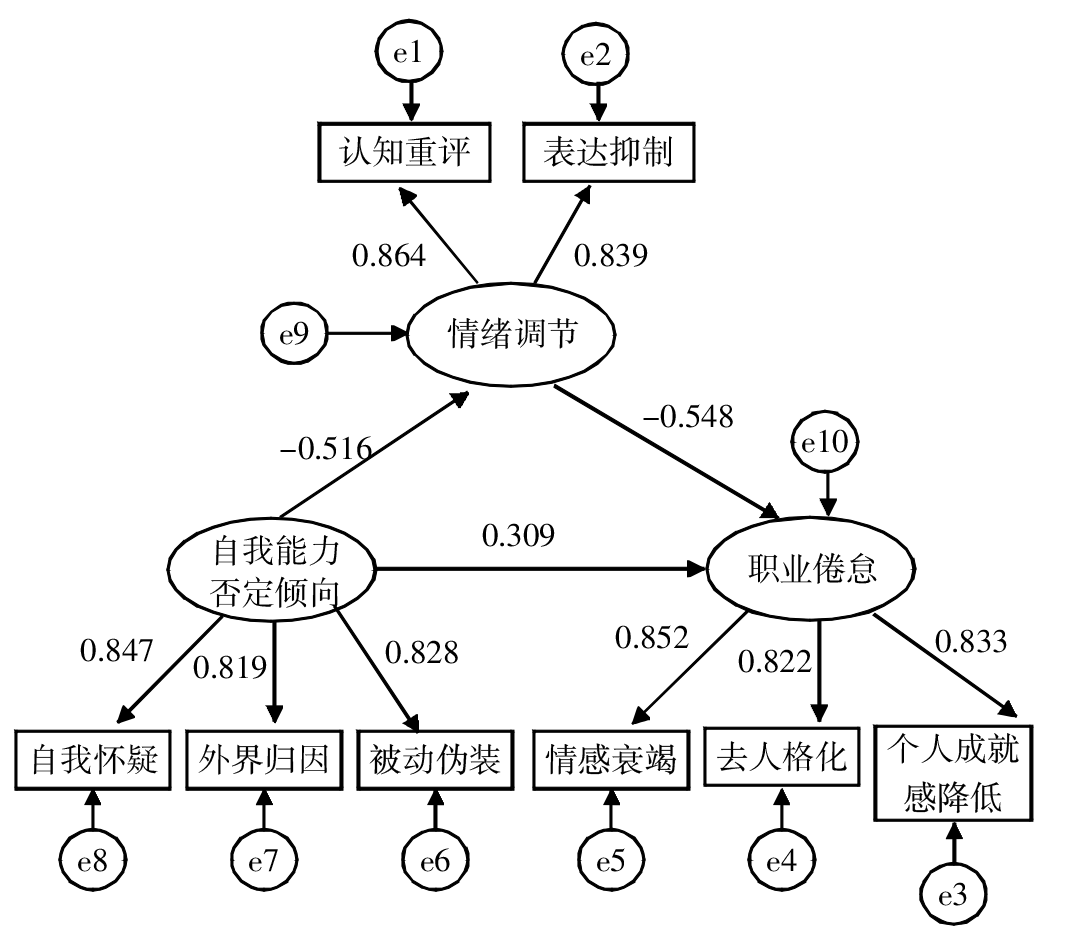
| 方程 | 因变量 | 自变量 | 标准化回归方程(回归系数) | sx | t值 | P值 |
|---|---|---|---|---|---|---|
| 方程1 | 职业倦怠(Y) | 自我能力否定倾向(X) | Y=0.592X(c=0.592) | 0.038 | 15.579 | <0.001 |
| 方程2 | 情绪调节(M) | 自我能力否定倾向(X) | M=-0.516X(a=-0.516) | 0.034 | 15.176 | <0.001 |
| 方程3 | 职业倦怠(Y) | 情绪调节(M) | Y=-0.548M+0.309X | 0.028 | 19.571 | <0.001 |
| 自我能力否定倾向(X) | (b=-0.548,c’=0.309) | 0.028 | 11.036 | <0.001 |
| 方程 | 因变量 | 自变量 | 标准化回归方程(回归系数) | sx | t值 | P值 |
|---|---|---|---|---|---|---|
| 方程1 | 职业倦怠(Y) | 自我能力否定倾向(X) | Y=0.592X(c=0.592) | 0.038 | 15.579 | <0.001 |
| 方程2 | 情绪调节(M) | 自我能力否定倾向(X) | M=-0.516X(a=-0.516) | 0.034 | 15.176 | <0.001 |
| 方程3 | 职业倦怠(Y) | 情绪调节(M) | Y=-0.548M+0.309X | 0.028 | 19.571 | <0.001 |
| 自我能力否定倾向(X) | (b=-0.548,c’=0.309) | 0.028 | 11.036 | <0.001 |
| [1] |
LI Y, ZHENG X, YANG Z, et al. The mediating effect of job burnout on the relationship between practice environment and workplace deviance behavior of nurses in China:A cross-sectional study[J]. BMC Nurs, 2025, 24(1):19.
DOI |
| [2] |
ZHANG W, MIAO R, TANG J, et al. Burnout in nurses working in China:A national questionnaire survey[J]. Int J Nurs Pract, 2021, 27(6):e12908.
DOI URL |
| [3] | 何凤. 绵阳市三级公立医院麻醉科护士的专业自我概念、工作嵌入与职业倦怠[J]. 职业与健康, 2024, 40(1):9-13. |
| [4] | 樊琴, 苏小花, 李佳, 等. 心理资本对妇科护士自我能力否定倾向和职业倦怠的中介作用[J]. 职业与健康, 2025, 41(12):1585-1589,1594. |
| [5] |
TAKAOKA A J W, JACCHERI L, SHARMA K. Exploring self-care,anxiety,depression,and the gender gap in the software engineering pipeline[J]. Int J Environ Res Public Health, 2024, 21(11):1468.
DOI URL |
| [6] | 于潇, 毛旭, 马艳梅. 临床护士自我能力否定倾向与职业倦怠的相关性研究[J]. 军事护理, 2023, 40(9):18-21. |
| [7] | 史宏睿, 赵华, 陕柏峰, 等. 情绪调节在肿瘤和安宁疗护护士共情与共情疲劳间的中介作用[J]. 军事护理, 2023, 40(9):5-9. |
| [8] | 张俊冷, 陆爱红, 李国娟, 等. 情绪调节在急诊科护士自我能力否定倾向和职业倦怠间的中介作用研究[J]. 职业与健康, 2025, 41(10):1330-1334. |
| [9] | BORDOAGNI G, FINO E, AGOSTINI A. Burnout,attachment and mentalization in nursing students and nurse professionals[J]. Healthcare(Basel), 2021, 9(11):21-34. |
| [10] | 高文娟, 刘艳, 张海蓉. 心内科护士自我能力否定倾向、心理资本和职业倦怠的相关性分析[J]. 职业与健康, 2024, 40(6):739-743. |
| [11] |
YI L, CHEN Z, JIMÉNEZ-HERRERA M F, et al. The impact of moral resilience on nurse turnover intentions:The mediating role of job burnout in a cross-sectional study[J]. BMC Nurs, 2024, 23(1):687.
DOI |
| [12] |
张莹莹, 孙莉莉, 鲍月月, 等. 急诊科护士抑郁、社会支持、情绪调节与睡眠质量的相关研究[J]. 心理月刊, 2024, 19(13):44-47.
DOI |
| [13] | 张云竹, 李露露, 汤娟娟, 等. 情绪调节在肝胆外科护士灵性健康和职业倦怠间的中介作用[J]. 职业与健康, 2024, 40(22):3031-3035. |
| [14] |
张艳, 刘立芳, 李月娥, 等. 临床护士自我能力否定倾向现状及影响因素研究[J]. 中华护理杂志, 2024, 59(24):3025-3031.
DOI |
| [15] | 彭莹, 涂惠, 李冬英, 等. 重症专科护士自我能力否定倾向与角色压力的相关性研究[J]. 中华护理教育, 2025, 22(2):219-223. |
| [16] | 姚绵绵. 自我效能感和认知情绪调节对麻醉科护士职业倦怠的影响[J]. 中国卫生标准管理, 2021, 12(1):147-149. |
| [17] | 何凤. 绵阳市三级公立医院麻醉科护士的专业自我概念、工作嵌入与职业倦怠[J]. 职业与健康, 2024, 40(1):9-13. |
| [18] | 武云婷, 郑瑞双, 郭晴. 肿瘤科护士自我同情与情绪调节对职业倦怠的影响研究[J]. 天津护理, 2024, 32(6):658-663. |
| [19] |
陈荣玲, 任彩娟. 护士自我能力否定倾向与职业倦怠的相关性研究[J]. 心理月刊, 2024, 19(5):34-36.
DOI |
| [20] | 夏雨, 安晓, 薛雅婷, 等. 自我能力否定倾向相关评估工具的研究进展[J]. 中华现代护理杂志, 2024, 30(6):832-836. |
| [21] | 孙诗涵, 卜秀梅, 王凌雯, 等. 护士情绪调节自我效能感的研究进展[J]. 全科护理, 2023, 21(30):4241-4244. |
| Viewed | ||||||
|
Full text |
|
|||||
|
Abstract |
|
|||||
 津公网安备12010202000831号 津ICP备11005889号-6
