
职业与健康 ›› 2026, Vol. 42 ›› Issue (9): 1238-1243.
马雪1, 韩小云2( ), 史珣瑜2, 黄钰雯1, 熊亚玲1
收稿日期:2025-08-05
修回日期:2025-08-25
出版日期:2026-05-01
发布日期:2026-05-22
通信作者:
韩小云,E-mail:hxy1427@qq.com
作者简介:马雪,女,在读硕士研究生,研究方向为老年护理。
基金资助:
MA Xue1, HAN Xiaoyun2(), SHI Xunyu2, HUANG Yuwen1, XIONG Yaling1
Received:2025-08-05
Revised:2025-08-25
Online:2026-05-01
Published:2026-05-22
Contact:
HAN Xiaoyun,E-mail:hxy1427@qq.com
摘要:
目的 探讨社区老年人抑郁症状在久坐行为与认知衰弱间的中介作用,为减缓认知衰弱的发生发展及相应干预措施的制定提供思路和依据。方法 采用便利抽样法,于2023年2—7月选取常州市2所社区内居住的504名老年人作为研究对象,采用一般资料调查问卷、国际体力活动问卷短卷、5条目老年抑郁量表、衰弱表型和蒙特利尔认知评估量表进行调查,采用多因素Logistic回归和Z检验探究抑郁症状在老年人久坐行为与认知衰弱间的中介效应是否显著,使用AMOS 26.0软件探究久坐行为、抑郁症状与认知衰弱三者间的作用路径及各路径效应值的95%CI。结果 504名老年人中存在久坐行为、抑郁症状和认知衰弱的分别为282例(56.0%)、156例(31.0%)和89例(17.7%),久坐行为(OR=4.464,95%CI:1.822~10.940)、抑郁症状(OR=6.497,95%CI:2.871~14.700)均与社区老年人认知衰弱的发生显著相关。抑郁症状在久坐行为与认知衰弱间的中介效应显著(Z=2.413,P<0.05),效应值为0.082(P<0.05),效应占比24.19%。结论 社区老年人抑郁症状在久坐行为与认知衰弱间发挥部分中介作用。提示社区工作者及医务人员不仅要干预老年人久坐的生活方式,还应重视久坐老年人抑郁症状的筛查,从两方面着手以最大程度地预防和减缓认知衰弱的发生与进展。
中图分类号:
马雪, 韩小云, 史珣瑜, 黄钰雯, 熊亚玲. 抑郁症状在社区老年人久坐行为与认知衰弱间的中介效应. [J]职业与健康, 2026, 42(9): 1238-1243.
MA Xue, HAN Xiaoyun, SHI Xunyu, HUANG Yuwen, XIONG Yaling. Mediating effects of depressive symptoms between sedentary behavior and cognitive frailty in community-dwelling older adults. [J]OCCUPATION AND HEALTH, 2026, 42(9): 1238-1243.
| 项目 | 非认知 衰弱组 | 认知 衰弱组 | t/χ2值 | P值 |
|---|---|---|---|---|
| 年龄(岁) | 61.668a | <0.001 | ||
| 60~<70 | 176(42.4) | 9(10.1) | ||
| 70~<80 | 201(48.4) | 47(52.8) | ||
| ≥80 | 38(9.2) | 33(37.1) | ||
| 性别 | 4.005a | 0.045 | ||
| 男 | 207(49.9) | 34(38.2) | ||
| 女 | 208(50.1) | 55(61.8) | ||
| BMI(kg/m2) | 24.40±3.07 | 23.86±3.28 | 1.507b | 0.132 |
| 婚姻状况 | 22.210a | <0.001 | ||
| 已婚 | 375(90.4) | 64(71.9) | ||
| 离异或丧偶 | 40(9.6) | 25(28.1) | ||
| 月收入(元) | 10.298a | 0.016 | ||
| 0~<1 000 | 43(10.4) | 17(19.1) | ||
| 1 000~<3 000 | 131(31.6) | 28(31.5) | ||
| 3 000~<5 000 | 155(37.3) | 36(40.4) | ||
| ≥5 000 | 86(20.7) | 8(9.0) | ||
| 文化程度 | 29.648a | <0.001 | ||
| 小学及以下 | 58(14.0) | 34(38.2) | ||
| 初中 | 165(39.8) | 28(31.5) | ||
| 高中/中专 | 105(25.3) | 17(19.1) | ||
| 大专及以上 | 87(21.0) | 10(11.2) | ||
| 居住方式 | 1.873a | 0.171 | ||
| 独居 | 48(11.6) | 15(16.9) | ||
| 非独居 | 367(88.4) | 74(83.1) | ||
| 是否吸烟 | 1.062a | 0.303 | ||
| 是 | 80(19.3) | 13(14.6) | ||
| 否 | 335(80.7) | 76(85.4) | ||
| 是否饮酒 | 9.710a | 0.002 | ||
| 是 | 73(17.6) | 4(4.5) | ||
| 否 | 342(82.4) | 85(95.5) | ||
| 日常锻炼情况 | 54.390a | <0.001 | ||
| 经常锻炼 | 231(55.7) | 15(16.9) | ||
| 偶尔锻炼 | 136(32.8) | 42(47.2) | ||
| 几乎不锻炼 | 48(11.6) | 32(36.0) | ||
| 自评睡眠质量 | 24.976a | <0.001 | ||
| 好 | 162(39.0) | 12(13.5) | ||
| 一般 | 193(46.5) | 51(57.3) | ||
| 差 | 60(14.5) | 26(29.2) | ||
| 多重用药 | 13.293a | <0.001 | ||
| 是 | 56(13.5) | 26(29.2) | ||
| 否 | 359(86.5) | 63(70.8) | ||
| 慢性病数量 | 1.30±0.88 | 2.44±1.14 | 9.042b | <0.001 |
| 近1年跌倒史 | 4.113a | 0.043 | ||
| 有 | 43(10.4) | 16(18.0) | ||
| 无 | 372(89.6) | 73(82.0) | ||
| ADL量表评分 | 14.09±0.43 | 15.87±2.86 | 5.858b | <0.001 |
| 久坐行为 | 29.807a | <0.001 | ||
| 是 | 209(50.4) | 73(82.0) | ||
| 否 | 206(49.6) | 16(18.0) | ||
| 抑郁症状 | 94.405a | <0.001 | ||
| 是 | 90(21.7) | 66(74.2) | ||
| 否 | 325(78.3) | 23(25.8) |
表1 2023年常州市社区认知衰弱与非认知衰弱老年人的特征[人(%)/$\bar{x}\pm s$]
| 项目 | 非认知 衰弱组 | 认知 衰弱组 | t/χ2值 | P值 |
|---|---|---|---|---|
| 年龄(岁) | 61.668a | <0.001 | ||
| 60~<70 | 176(42.4) | 9(10.1) | ||
| 70~<80 | 201(48.4) | 47(52.8) | ||
| ≥80 | 38(9.2) | 33(37.1) | ||
| 性别 | 4.005a | 0.045 | ||
| 男 | 207(49.9) | 34(38.2) | ||
| 女 | 208(50.1) | 55(61.8) | ||
| BMI(kg/m2) | 24.40±3.07 | 23.86±3.28 | 1.507b | 0.132 |
| 婚姻状况 | 22.210a | <0.001 | ||
| 已婚 | 375(90.4) | 64(71.9) | ||
| 离异或丧偶 | 40(9.6) | 25(28.1) | ||
| 月收入(元) | 10.298a | 0.016 | ||
| 0~<1 000 | 43(10.4) | 17(19.1) | ||
| 1 000~<3 000 | 131(31.6) | 28(31.5) | ||
| 3 000~<5 000 | 155(37.3) | 36(40.4) | ||
| ≥5 000 | 86(20.7) | 8(9.0) | ||
| 文化程度 | 29.648a | <0.001 | ||
| 小学及以下 | 58(14.0) | 34(38.2) | ||
| 初中 | 165(39.8) | 28(31.5) | ||
| 高中/中专 | 105(25.3) | 17(19.1) | ||
| 大专及以上 | 87(21.0) | 10(11.2) | ||
| 居住方式 | 1.873a | 0.171 | ||
| 独居 | 48(11.6) | 15(16.9) | ||
| 非独居 | 367(88.4) | 74(83.1) | ||
| 是否吸烟 | 1.062a | 0.303 | ||
| 是 | 80(19.3) | 13(14.6) | ||
| 否 | 335(80.7) | 76(85.4) | ||
| 是否饮酒 | 9.710a | 0.002 | ||
| 是 | 73(17.6) | 4(4.5) | ||
| 否 | 342(82.4) | 85(95.5) | ||
| 日常锻炼情况 | 54.390a | <0.001 | ||
| 经常锻炼 | 231(55.7) | 15(16.9) | ||
| 偶尔锻炼 | 136(32.8) | 42(47.2) | ||
| 几乎不锻炼 | 48(11.6) | 32(36.0) | ||
| 自评睡眠质量 | 24.976a | <0.001 | ||
| 好 | 162(39.0) | 12(13.5) | ||
| 一般 | 193(46.5) | 51(57.3) | ||
| 差 | 60(14.5) | 26(29.2) | ||
| 多重用药 | 13.293a | <0.001 | ||
| 是 | 56(13.5) | 26(29.2) | ||
| 否 | 359(86.5) | 63(70.8) | ||
| 慢性病数量 | 1.30±0.88 | 2.44±1.14 | 9.042b | <0.001 |
| 近1年跌倒史 | 4.113a | 0.043 | ||
| 有 | 43(10.4) | 16(18.0) | ||
| 无 | 372(89.6) | 73(82.0) | ||
| ADL量表评分 | 14.09±0.43 | 15.87±2.86 | 5.858b | <0.001 |
| 久坐行为 | 29.807a | <0.001 | ||
| 是 | 209(50.4) | 73(82.0) | ||
| 否 | 206(49.6) | 16(18.0) | ||
| 抑郁症状 | 94.405a | <0.001 | ||
| 是 | 90(21.7) | 66(74.2) | ||
| 否 | 325(78.3) | 23(25.8) |
| 变量 | 赋值说明 |
|---|---|
| 年龄(岁) | 60~<70=0;70~<80=1;≥80=2 |
| 性别 | 男=0;女=1 |
| 婚姻状况 | 离异或丧偶=0;已婚=1 |
| 月收入(元) | 0~<1 000=0;1 000~<3 000=1;3 000~<5 000=2;≥5 000=3 |
| 文化程度 | 小学及以下=0;初中=1;高中/中专=2;大专及以上=3 |
| 是否饮酒 | 否=0;是=1 |
| 日常锻炼情况 | 几乎不锻炼=0;偶尔锻炼=1;经常锻炼=2 |
| 自评睡眠质量 | 差=0;一般=1;好=2 |
| 多重用药 | 否=0;是=1 |
| 慢性病数量,ADL量表评分 | 原值输入 |
| 近1年跌倒史(次) | 无=0;有=1 |
| 久坐行为 | 否=0;是=1 |
| 抑郁症状 | 否=0;是=1 |
表2 变量赋值说明
| 变量 | 赋值说明 |
|---|---|
| 年龄(岁) | 60~<70=0;70~<80=1;≥80=2 |
| 性别 | 男=0;女=1 |
| 婚姻状况 | 离异或丧偶=0;已婚=1 |
| 月收入(元) | 0~<1 000=0;1 000~<3 000=1;3 000~<5 000=2;≥5 000=3 |
| 文化程度 | 小学及以下=0;初中=1;高中/中专=2;大专及以上=3 |
| 是否饮酒 | 否=0;是=1 |
| 日常锻炼情况 | 几乎不锻炼=0;偶尔锻炼=1;经常锻炼=2 |
| 自评睡眠质量 | 差=0;一般=1;好=2 |
| 多重用药 | 否=0;是=1 |
| 慢性病数量,ADL量表评分 | 原值输入 |
| 近1年跌倒史(次) | 无=0;有=1 |
| 久坐行为 | 否=0;是=1 |
| 抑郁症状 | 否=0;是=1 |
| 项目 | β值 | sx | Wald χ2值 | OR(95%CI) | P值 |
|---|---|---|---|---|---|
| 年龄(岁) | 7.293 | 0.026 | |||
| 70~<80 | 1.274 | 0.512 | 6.188 | 3.576(1.310~9.761) | 0.013 |
| ≥80 | 1.666 | 0.706 | 5.576 | 5.293(1.327~21.106) | 0.018 |
| 文化程度 | 14.800 | 0.002 | |||
| 初中 | -1.656 | 0.543 | 9.313 | 0.191(0.066~0.553) | 0.002 |
| 高中/中专 | -1.206 | 0.631 | 3.654 | 0.299(0.087~1.031) | 0.056 |
| 大专及以上 | -3.226 | 0.913 | 12.493 | 0.040(0.007~0.238) | <0.001 |
| 日常锻炼情况 | 8.758 | 0.013 | |||
| 偶尔锻炼 | -0.070 | 0.457 | 0.023 | 0.933(0.381~2.285) | 0.879 |
| 经常锻炼 | -1.284 | 0.501 | 6.553 | 0.277(0.104~0.740) | 0.010 |
| 慢性病数量 | 0.802 | 0.247 | 10.538 | 2.231(1.374~3.621) | 0.001 |
| ADL量表评分 | 1.215 | 0.278 | 19.045 | 3.369(1.953~5.814) | <0.001 |
| 久坐行为 | 1.496 | 0.457 | 10.701 | 4.464(1.822~10.940) | 0.001 |
| 抑郁症状 | 1.871 | 0.417 | 20.178 | 6.497(2.871~14.700) | <0.001 |
表3 常州市社区老年人认知衰弱影响因素的二元Logistic回归分析
| 项目 | β值 | sx | Wald χ2值 | OR(95%CI) | P值 |
|---|---|---|---|---|---|
| 年龄(岁) | 7.293 | 0.026 | |||
| 70~<80 | 1.274 | 0.512 | 6.188 | 3.576(1.310~9.761) | 0.013 |
| ≥80 | 1.666 | 0.706 | 5.576 | 5.293(1.327~21.106) | 0.018 |
| 文化程度 | 14.800 | 0.002 | |||
| 初中 | -1.656 | 0.543 | 9.313 | 0.191(0.066~0.553) | 0.002 |
| 高中/中专 | -1.206 | 0.631 | 3.654 | 0.299(0.087~1.031) | 0.056 |
| 大专及以上 | -3.226 | 0.913 | 12.493 | 0.040(0.007~0.238) | <0.001 |
| 日常锻炼情况 | 8.758 | 0.013 | |||
| 偶尔锻炼 | -0.070 | 0.457 | 0.023 | 0.933(0.381~2.285) | 0.879 |
| 经常锻炼 | -1.284 | 0.501 | 6.553 | 0.277(0.104~0.740) | 0.010 |
| 慢性病数量 | 0.802 | 0.247 | 10.538 | 2.231(1.374~3.621) | 0.001 |
| ADL量表评分 | 1.215 | 0.278 | 19.045 | 3.369(1.953~5.814) | <0.001 |
| 久坐行为 | 1.496 | 0.457 | 10.701 | 4.464(1.822~10.940) | 0.001 |
| 抑郁症状 | 1.871 | 0.417 | 20.178 | 6.497(2.871~14.700) | <0.001 |
| 项目 | β值 | sx | Wald χ2值 | OR(95%CI) | P值 |
|---|---|---|---|---|---|
| 文化程度 | 14.440 | 0.002 | |||
| 初中 | -0.465 | 0.302 | 2.374 | 0.628(0.348~1.135) | 0.123 |
| 高中/中专 | -1.103 | 0.343 | 10.338 | 0.332(0.169~0.650) | 0.001 |
| 大专及以上 | -1.146 | 0.368 | 9.714 | 0.318(0.155~0.653) | 0.002 |
| 日常锻炼情况 | 19.715 | <0.001 | |||
| 偶尔锻炼 | -0.763 | 0.308 | 6.161 | 0.466(0.255~0.852) | 0.013 |
| 经常锻炼 | -1.378 | 0.314 | 19.273 | 0.252(0.136~0.466) | <0.001 |
| 自评睡眠情况 | 8.037 | 0.018 | |||
| 一般 | -0.490 | 0.287 | 2.909 | 0.613(0.349~1.076) | 0.088 |
| 好 | -0.949 | 0.335 | 8.030 | 0.387(0.201~0.746) | 0.005 |
| 慢性病数量 | 0.530 | 0.143 | 13.707 | 1.698(1.283~2.248) | <0.001 |
| 久坐行为 | 0.686 | 0.234 | 8.616 | 1.985(1.256~3.137) | 0.003 |
表4 常州市社区老年人久坐行为与抑郁症状关系的多因素Logistic回归分析
| 项目 | β值 | sx | Wald χ2值 | OR(95%CI) | P值 |
|---|---|---|---|---|---|
| 文化程度 | 14.440 | 0.002 | |||
| 初中 | -0.465 | 0.302 | 2.374 | 0.628(0.348~1.135) | 0.123 |
| 高中/中专 | -1.103 | 0.343 | 10.338 | 0.332(0.169~0.650) | 0.001 |
| 大专及以上 | -1.146 | 0.368 | 9.714 | 0.318(0.155~0.653) | 0.002 |
| 日常锻炼情况 | 19.715 | <0.001 | |||
| 偶尔锻炼 | -0.763 | 0.308 | 6.161 | 0.466(0.255~0.852) | 0.013 |
| 经常锻炼 | -1.378 | 0.314 | 19.273 | 0.252(0.136~0.466) | <0.001 |
| 自评睡眠情况 | 8.037 | 0.018 | |||
| 一般 | -0.490 | 0.287 | 2.909 | 0.613(0.349~1.076) | 0.088 |
| 好 | -0.949 | 0.335 | 8.030 | 0.387(0.201~0.746) | 0.005 |
| 慢性病数量 | 0.530 | 0.143 | 13.707 | 1.698(1.283~2.248) | <0.001 |
| 久坐行为 | 0.686 | 0.234 | 8.616 | 1.985(1.256~3.137) | 0.003 |
| 自变量 | 因变量 | β值 | sx | 95%CI | P值 |
|---|---|---|---|---|---|
| 久坐行为 | →认知衰弱 | 0.257 | 0.040 | 0.180~0.337 | <0.001 |
| 久坐行为 | →抑郁症状 | 0.261 | 0.043 | 0.173~0.344 | <0.001 |
| 抑郁症状 | →认知衰弱 | 0.315 | 0.043 | 0.232~0.401 | <0.001 |
表5 常州市社区老年人久坐行为、抑郁症状对认知衰弱的影响效应
| 自变量 | 因变量 | β值 | sx | 95%CI | P值 |
|---|---|---|---|---|---|
| 久坐行为 | →认知衰弱 | 0.257 | 0.040 | 0.180~0.337 | <0.001 |
| 久坐行为 | →抑郁症状 | 0.261 | 0.043 | 0.173~0.344 | <0.001 |
| 抑郁症状 | →认知衰弱 | 0.315 | 0.043 | 0.232~0.401 | <0.001 |
| 自变量 | 效应 | β值 | sx | Bootstrap 95%CI | P值 | 中介效应 占比(%) |
|---|---|---|---|---|---|---|
| 久坐行为 | 总效应 | 0.339 | 0.040 | 0.261~0.417 | <0.001 | |
| 直接效应 | 0.257 | 0.040 | 0.180~0.337 | <0.001 | ||
| 间接/中介效应 | 0.082 | 0.018 | 0.052~0.121 | <0.001 | 24.19 |
表6 常州市社区老年人久坐行为通过抑郁症状对认知衰弱影响的效应分解
| 自变量 | 效应 | β值 | sx | Bootstrap 95%CI | P值 | 中介效应 占比(%) |
|---|---|---|---|---|---|---|
| 久坐行为 | 总效应 | 0.339 | 0.040 | 0.261~0.417 | <0.001 | |
| 直接效应 | 0.257 | 0.040 | 0.180~0.337 | <0.001 | ||
| 间接/中介效应 | 0.082 | 0.018 | 0.052~0.121 | <0.001 | 24.19 |
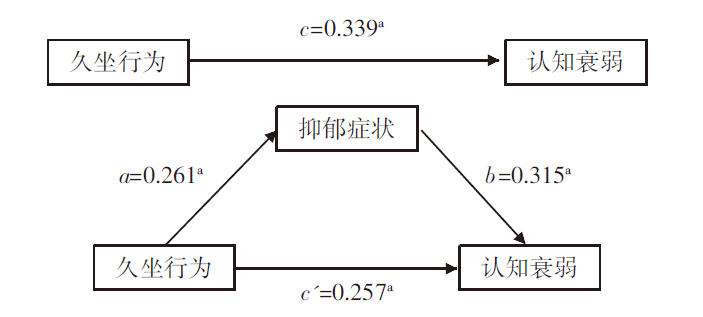
图1 中介效应路径 注:aP<0.01。
| [1] |
KELAIDITI E, CESARI M, CANEVELLI M, et al. Cognitive frailty:Rational and definition from an(I.A.N.A./I.A.G.G.) international consensus group[J]. J Nutr Health Aging, 2013, 17(9):726-734.
DOI URL |
| [2] | QIU Y, LI G, WANG X, et al. Prevalence of cognitive frailty among community-dwelling older adults:A systematic review and meta-analysis[J]. Int J Nurs Stud, 2022,125:104112. |
| [3] |
RIVAN N F M, SINGH D K A, SHAHAR S, et al. Cognitive frailty is a robust predictor of falls,injuries,and disability among community-dwelling older adults[J]. BMC Geriatr, 2021, 21(1):593.
DOI |
| [4] |
FAULKNER K M, UCHMANOWICZ I, LISIAK M, et al. Cognition and frailty in patients with heart failure:A systematic review of the association between frailty and cognitive impairment[J]. Front Psychiatry, 2021, 12:713386.
DOI URL |
| [5] | 陈近近, 蒋秋焕, 陈超然, 等. 老年人认知衰弱的研究进展[J]. 护理研究, 2020, 34(4):669-672. |
| [6] |
崔光辉, 李少杰, 尹永田, 等. 老年人偏颇体质在久坐行为与认知衰弱间的中介效应研究[J]. 中国全科医学, 2021, 24(18):2297-2302.
DOI |
| [7] | 孙凯旋, 史宏灿, 周涛, 等. 社区老年人衰弱状况与久坐行为关系的研究[J]. 实用临床医药杂志, 2022, 26(14):70-74. |
| [8] | LUO Y, LI Y, XIE J, et al. Symptoms of depression are related to sedentary behavior and sleep duration in elderly individuals:A cross-sectional study of 49,317 older Chinese adults[J]. J Affect Disord, 2022,308:407-412. |
| [9] | 蒋燕, 储爱琴, 张海玲, 等. 社区老年人久坐行为、社会参与度与抑郁的关系研究[J]. 现代预防医学, 2021, 48(17):3141-3145. |
| [10] | 林丽玉, 许丽春, 张鑫, 等. 老年认知衰弱的危险因素Meta分析[J]. 现代预防医学, 2022, 49(9):1653-1658. |
| [11] |
RIVAN N F M, SHAHAR S, RAJAB N F, et al. Incidence and predictors of cognitive frailty among older adults:A community-based longitudinal study[J]. Int J Environ Res Public Health, 2020, 17(5):1547.
DOI URL |
| [12] |
FRIED L P, TANGEN C M, WALSTON J, et al. Frailty in older adults:Evidence for a phenotype[J]. J Gerontol A Biol Sci Med Sci, 2001, 56(3):M146-156.
DOI URL |
| [13] | 霍晓鹏, 赖小星, 朱宏伟, 等. 老年认知衰弱评估工具的研究进展[J]. 北京医学, 2022, 44(3):257-260. |
| [14] |
杨卉, 崔云婧, 张少景, 等. 步速和握力对住院老年患者全因死亡和跌倒的预测价值研究[J]. 中国全科医学, 2022, 25(32):4010-4017.
DOI |
| [15] |
NASREDDINE Z S, PHILLIPS N A, B?DIRIAN V, et al. The montreal cognitive assessment,MoCA:A brief screening tool for mild cognitive impairment[J]. J Am Geriatr Soc, 2005, 53(4):695-699.
DOI URL |
| [16] | 张立秀, 刘雪琴. 蒙特利尔认知评估量表中文版的信效度研究[J]. 护理研究, 2007, 21(31):2906-2907. |
| [17] | 王慧敏, 孙建萍, 吴红霞. 老年慢性病病人久坐行为的研究进展[J]. 护理研究, 2021, 35(1):110-114. |
| [18] | 屈宁宁, 李可基. 国际体力活动问卷中文版的信度和效度研究[J]. 中华流行病学杂志, 2004, 25(3):87-90. |
| [19] | VAINSHELBOIM B, BRENNAN G M, LORUSSO S, et al. Sedentary behavior and physiological health determinants in male and female college students[J]. Physiol Behav, 2019,204:277-282. |
| [20] | 周丹丹, 钮美娥, 韩燕霞, 等. 稳定期慢性阻塞性肺疾病患者久坐行为现状及影响因素分析[J]. 护理学杂志, 2022, 37(18):29-32,36. |
| [21] |
RINALDI P, MECOCCI P, BENEDETTI C, et al. Validation of the five-item geriatric depression scale in elderly subjects in three different settings[J]. J Am Geriatr Soc, 2003, 51(5):694-698.
DOI PMID |
| [22] |
QIAO X, JI L, SI H, et al. Validation and comparison of three short depression screening tools among Chinese community-dwelling older adults[J]. Res Gerontol Nurs, 2022, 15(6):283-291.
DOI PMID |
| [23] |
XIE B, MA C, CHEN Y, et al. Prevalence and risk factors of the co-occurrence of physical frailty and cognitive impairment in Chinese community-dwelling older adults[J]. Health Soc Care Community, 2021, 29(1):294-303.
DOI URL |
| [24] | 郭雁飞, 施燕, 阮晔, 等. 50岁及以上人群每日静坐时间与衰弱的关联研究[J]. 中华流行病学杂志, 2019, 40(10):1257-1261. |
| [25] |
ENGEROFF T, FÜZÉKI E, VOGT L, et al. Is objectively assessed sedentary behavior,physical activity and cardiorespiratory fitness linked to brain plasticity outcomes in old age?[J]. Neuroscience, 2018, 388:384-392.
DOI URL |
| [26] | BAI W, ZHANG J, SMITH R D, et al. Inter-relationship between cognitive performance and depressive symptoms and their association with quality of life in older adults:A network analysis based on the 2017-2018 wave of Chinese Longitudinal Healthy Longevity Survey(CLHLS)[J]. J Affect Disord, 2023,320:621-627. |
| [27] |
MUHAMMAD T, MEHER T. Association of late-life depression with cognitive impairment:Evidence from a cross-sectional study among older adults in India[J]. BMC Geriatr, 2021, 21(1):364.
DOI |
| [28] | ZHANG T, REN Y, SHEN P, et al. Prevalence and associated risk factors of cognitive frailty:A systematic review and meta-analysis[J]. Front Aging Neurosci, 2022,13:755926. |
| [29] | 岳敏, 寇京莉, 周凤月, 等. 内科老年住院患者认知衰弱现状调查及影响因素研究[J]. 中国临床医生杂志, 2022, 50(9):1051-1054. |
| [30] | 揭金花, 向建军, 李丹, 等. 福州市社区老年2型糖尿病患者抑郁状况及影响因素研究[J]. 现代预防医学, 2022, 49(13):2381-2387. |
| [31] | AMARAL GOMES E S, RAMSEY K A, ROJER A G M, et al. The association of objectively measured physical activity and sedentary behavior with(Instrumental) activities of daily living in community-dwelling older adults:A systematic review[J]. Clin Interv Aging, 2021,16:1877-1915. |
| [32] | 何昱铮, 佟岩, 蔡雨彤, 等. 社交活跃度对老年人抑郁症状的影响[J]. 护理学杂志, 2023, 38(3):82-86. |
| [33] | WERNECK A O, KANDOLA A, TEBAR W R, et al. Does physical activity moderate the association between device-measured sedentary time patterns and depressive symptoms in adults?[J]. Braz J Psychiatry, 2022, 44(6):584-589. |
| [34] |
LIU J J, WEI Y B, STRAWBRIDGE R, et al. Peripheral cytokine levels and response to antidepressant treatment in depression:A systematic review and meta-analysis[J]. Mol Psychiatry, 2020, 25(2):339-350.
DOI |
| [35] |
LIU T, LEUNG D K Y, LU S, et al. Collaborative community mental health and aged care services with peer support to prevent late-life depression:Study protocol for a non-randomised controlled trial[J]. Trials, 2022, 23(1):280.
DOI |
| [36] | WANG J, LEUNG K S, CHOW S K H, et al. Inflammation and age-associated skeletal muscle deterioration(sarcopaenia)[J]. J Orthop Translat, 2017,10:94-101. |
| [37] |
ERRISURIZ V L, DELFAUSSE L, VILLATORO A P, et al. Depression and physical activity affect diet quality of foreign-born latina women living on the U.S.-Mexico Border[J]. Nutrients, 2019, 11(6):1254.
DOI URL |
| [38] |
BU Z, HUANG A, XUE M, et al. Cognitive frailty as a predictor of adverse outcomes among older adults:A systematic review and meta-analysis[J]. Brain Behav, 2021, 11(1):e01926.
DOI URL |
| [1] | 张世晴, 杨秀木, 邓曼, 徐雪君. 社区老年慢性病患者自我管理积极度现状及影响因素分析[J]. 职业与健康, 2026, 42(9): 1225-1230. |
| [2] | 林静雯, 朱洁, 张伊柠, 付海燕, 刘永兵. 老年人内在能力健康素养量表的编制及信效度检验[J]. 职业与健康, 2026, 42(9): 1231-1237. |
| [3] | 房娟, 景珂, 梁铭轩, 方文浩. 消防救援人员自我效能感与心理健康的关系及职业倦怠的中介作用[J]. 职业与健康, 2026, 42(8): 1009-1012. |
| [4] | 宿威, 高阿阳, 王皓月, 张建慧. 职业韧性在临床护士工作旺盛感与创新行为间的中介效应[J]. 职业与健康, 2026, 42(6): 766-771. |
| [5] | 杨思敏, 杨璐, 王翠, 彭雪萍. 规范化培训护士心理韧性在工作环境与职业生涯成功的中介效应[J]. 职业与健康, 2026, 42(6): 796-800. |
| [6] | 贾燕, 黄晶, 卢红, 王丽琴, 姚汶君. 组织承诺在ICU护士职业疲劳与心盛间的中介效应[J]. 职业与健康, 2026, 42(4): 506-511. |
| [7] | 陆莹, 李莉, 张琴. 苏州市2所三级医院临床医师应对方式在职业尊重与职业疲劳间的中介效应分析[J]. 职业与健康, 2026, 42(4): 512-517. |
| [8] | 张琦, 张勇勤, 王贺, 江英婵, 朱天顺, 周一帆. 老年人对健康监测工具接受度的影响因素研究进展[J]. 职业与健康, 2026, 42(4): 554-560. |
| [9] | 陆萍, 戴雪榕, 徐美红, 左燕玉, 张涵. 急诊抢救室护士工作家庭冲突在组织氛围感与工作倦怠间的中介效应分析[J]. 职业与健康, 2026, 42(3): 307-311. |
| [10] | 邱雨菲, 杨芬, 刘佳丽, 陈小烁. 数智化干预在老年人心理健康中的应用进展[J]. 职业与健康, 2026, 42(3): 428-432. |
| [11] | 曹睿睿, 赵怡霖, 张镇. 社交媒体自我呈现量表在中国中老年人中的信效度检验[J]. 职业与健康, 2026, 42(2): 196-201. |
| [12] | 冀婉倩, 陈喆, 李卫, 王冬华. 精神幸福感在农村老年慢性病患者主观社会隔离和存在无意义焦虑间的中介作用[J]. 职业与健康, 2026, 42(2): 202-207. |
| [13] | 饶爱燕. 北京市三级医院肿瘤内科护士工作投入在精神气候与职业倦怠间的中介作用[J]. 职业与健康, 2026, 42(1): 1-5. |
| [14] | 周海燕, 李敏, 程亚萍, 王倩, 管兰兰. 心理弹性在爆震性耳聋军人患者自我管理与听力功能恢复的中介效应分析[J]. 职业与健康, 2026, 42(1): 95-99. |
| [15] | 张晨, 于萍, 赵艳, 杨琼, 王西歌. 咸阳市公立三级甲等医院护士积极心理资本在职业倦怠与生存质量间的中介效应[J]. 职业与健康, 2025, 41(9): 1162-1167. |
| 阅读次数 | ||||||
|
全文 |
|
|||||
|
摘要 |
|
|||||
 津公网安备12010202000831号 津ICP备11005889号-6