


职业与健康 ›› 2026, Vol. 42 ›› Issue (20): 2839-2845.
狄玉静, 陈雪莲, 马頔, 程呈( )
)
收稿日期:2025-08-20
修回日期:2026-01-23
出版日期:2026-10-15
发布日期:2026-09-14
通信作者:
程呈,E-mail:作者简介:狄玉静,女,在读硕士研究生,研究方向为社会保障。
基金资助:
DI Yujing, CHEN Xuelian, MA Di, CHENG Cheng()
Received:2025-08-20
Revised:2026-01-23
Online:2026-10-15
Published:2026-09-14
Contact:
CHENG Cheng,E-mail:摘要:
目的 基于健康生态学模型,从个人特征层、行为特征层、人际网络层、生活和工作条件层以及政策环境层面分析我国中老年人生活满意度的影响因素,旨在全面提升中老年人的生活质量和幸福感。方法 以2020年第5次中国健康与养老追踪调查数据(China health and retirement longitudinal study,CHARLS)中≥45岁人群为研究对象,采用χ2检验、非条件二元Logistic回归分析我国中老年人生活满意度的影响因素,运用shapely分解法探析各层面、各变量对生活满意度的贡献程度,针对非条件二元Logistic回归分析与shapely分解法的共性因素建模获取强关联规则。结果 非条件二元Logistic回归结果显示,性别、年龄、夜晚睡眠、自评健康、是否患慢性病、是否社交、婚姻状况、户口类型、子女关系满意度、受教育程度、家庭收入情况和医疗保险是中老年人生活满意度的影响因素(均P<0.05);shapely分解结果显示,人际网络层贡献最大为64.03%、单一变量中子女关系满意是核心变量为59.76%,是否社交贡献最小为0.75%。关联规则结果显示,未患慢性病、自评健康好、已婚、子女关系满意、有医疗保险与中老年人生活满意的相关程度最高,其中支持度为42.09%,置信度为95.06%,是不具备这些特征者的1.07倍。结论 我国中老年人生活满意度较高,但仍有提升空间。应从健康生态学模型5个层面入手加强健康教育,树立积极老龄观;完善文娱设施,丰富社交形式。倡导子女多与父母交流,提升家庭互动质量;强化中老年继续教育,完善医疗保险制度,实现健康福祉全覆盖。
中图分类号:
狄玉静, 陈雪莲, 马頔, 程呈. 基于健康生态学模型的我国中老年人生活满意度关联规则挖掘分析. [J]职业与健康, 2026, 42(20): 2839-2845.
DI Yujing, CHEN Xuelian, MA Di, CHENG Cheng. Analysis of association rule mining of life satisfaction among middle-aged and elderly individuals in China based on a health ecology model. [J]OCCUPATION AND HEALTH, 2026, 42(20): 2839-2845.
| 项目 | 人数 | 生活满意 | χ2值 | P值 | ||
|---|---|---|---|---|---|---|
| 个人特征层 | ||||||
| 性别 | 31.525 | <0.001 | ||||
| 男 | 1 722(17.30) | 1 592(92.45) | ||||
| 女 | 8 234(82.70) | 7 222(87.71) | ||||
| 年龄(岁) | 13.627 | 0.003 | ||||
| 45~<60 | 4 828(48.49) | 4 258(88.19) | ||||
| 60~<70 | 3 309(33.24) | 2 941(88.88) | ||||
| 70~<80 | 1 505(15.12) | 1 318(87.57) | ||||
| ≥80 | 314(3.15) | 297(94.59) | ||||
| 行为特征层 | ||||||
| 是否吸烟 | 1.577 | 0.209 | ||||
| 否 | 9 681(97.24) | 8 564(88.46) | ||||
| 是 | 275(2.76) | 250(90.91) | ||||
| 是否饮酒 | 5.338 | 0.021 | ||||
| 否 | 7 682(77.16) | 6 770(88.13) | ||||
| 是 | 2 274(22.84) | 2 044(89.89) | ||||
| 夜晚睡眠(h) | 89.233 | <0.001 | ||||
| 0~<7 | 6 215(62.42) | 5 368(86.37) | ||||
| 7~<9 | 3 432(34.47) | 3 181(92.69) | ||||
| ≥9 | 309(3.11) | 265(85.76) | ||||
| 午间睡眠(min) | 18.340 | 0.001 | ||||
| 不午休 | 3 869(38.86) | 3 389(87.59) | ||||
| <30 | 707(7.10) | 602(85.15) | ||||
| 30~<60 | 1 541(15.48) | 1 387(90.01) | ||||
| 60~<90 | 2 351(23.61) | 2 108(89.67) | ||||
| ≥90 | 1 488(14.95) | 1 328(89.25) | ||||
| 是否运动 | 15.061 | <0.001 | ||||
| 否 | 918(9.22) | 777(84.64) | ||||
| 是 | 9 038(90.78) | 8 037(88.92) | ||||
| 自评健康 | 372.790 | <0.001 | ||||
| 不健康 | 2 567(25.78) | 2 004(78.07) | ||||
| 健康 | 7 389(74.22) | 6 810(92.16) | ||||
| 是否患慢性病 | 57.161 | <0.001 | ||||
| 否 | 6 458(64.87) | 5 832(90.31) | ||||
| 是 | 3 498(35.13) | 2 982(85.25) | ||||
| 人际交往层 | ||||||
| 是否社交 | 12.615 | <0.001 | ||||
| 否 | 5 035(50.57) | 4 401(87.41) | ||||
| 是 | 4 921(49.43) | 4 413(89.68) | ||||
| 婚姻状况 | 37.865 | <0.001 | ||||
| 离异/丧偶/未婚 | 1 665(16.72) | 1 401(84.14) | ||||
| 已婚 | 8 291(83.28) | 7 413(89.41) | ||||
| 户口类型 | 28.624 | <0.001 | ||||
| 农村 | 7 475(75.08) | 6 544(87.55) | ||||
| 城市 | 2 481(24.92) | 2 270(91.50) | ||||
| 子女关系满意度 | 1 300.000 | <0.001 | ||||
| 不满意 | 514(5.16) | 205(39.88) | ||||
| 满意 | 9 442(94.84) | 8 609(91.12) | ||||
| 是否上网 | 12.274 | <0.001 | ||||
| 否 | 5 869(58.95) | 5 141(87.60) | ||||
| 是 | 4 087(41.05) | 3 673(89.87) | ||||
| 生活和工作条件层 | ||||||
| 是否与子女居住 | 0.688 | 0.407 | ||||
| 否 | 3466(34.81) | 3081(88.89) | ||||
| 是 | 6 490(65.19) | 5 733(88.34) | ||||
| 受教育程度 | 68.977 | <0.001 | ||||
| 小学及以下 | 6 864(68.94) | 5 961(86.84) | ||||
| 初中 | 1 946(19.55) | 1 774(91.16) | ||||
| 高中或中专 | 946(9.50) | 887(93.76) | ||||
| 大专或本科及以上 | 200(2.01) | 192(96.00) | ||||
| 家庭收入情况(万元) | 30.158 | <0.001 | ||||
| 0~<2 | 6 304(63.32) | 5 498(87.21) | ||||
| 2~<5 | 1 222(12.27) | 1 101(90.10) | ||||
| ≥5 | 2 430(24.41) | 2 215(91.15) | ||||
| 政策环境层 | ||||||
| 养老保险 | 3.155 | 0.076 | ||||
| 未参保 | 3 222(32.36) | 2 826(88.71) | ||||
| 参保 | 6 734(67.64) | 5 988(88.92) | ||||
| 医疗保险 | 19.592 | <0.001 | ||||
| 未参保 | 451(4.53) | 370(82.04) | ||||
| 参保 | 9 505(95.47) | 8 444(88.84) | ||||
表1 不同人口学特征的中老年人生活满意度[人(%)]
| 项目 | 人数 | 生活满意 | χ2值 | P值 | ||
|---|---|---|---|---|---|---|
| 个人特征层 | ||||||
| 性别 | 31.525 | <0.001 | ||||
| 男 | 1 722(17.30) | 1 592(92.45) | ||||
| 女 | 8 234(82.70) | 7 222(87.71) | ||||
| 年龄(岁) | 13.627 | 0.003 | ||||
| 45~<60 | 4 828(48.49) | 4 258(88.19) | ||||
| 60~<70 | 3 309(33.24) | 2 941(88.88) | ||||
| 70~<80 | 1 505(15.12) | 1 318(87.57) | ||||
| ≥80 | 314(3.15) | 297(94.59) | ||||
| 行为特征层 | ||||||
| 是否吸烟 | 1.577 | 0.209 | ||||
| 否 | 9 681(97.24) | 8 564(88.46) | ||||
| 是 | 275(2.76) | 250(90.91) | ||||
| 是否饮酒 | 5.338 | 0.021 | ||||
| 否 | 7 682(77.16) | 6 770(88.13) | ||||
| 是 | 2 274(22.84) | 2 044(89.89) | ||||
| 夜晚睡眠(h) | 89.233 | <0.001 | ||||
| 0~<7 | 6 215(62.42) | 5 368(86.37) | ||||
| 7~<9 | 3 432(34.47) | 3 181(92.69) | ||||
| ≥9 | 309(3.11) | 265(85.76) | ||||
| 午间睡眠(min) | 18.340 | 0.001 | ||||
| 不午休 | 3 869(38.86) | 3 389(87.59) | ||||
| <30 | 707(7.10) | 602(85.15) | ||||
| 30~<60 | 1 541(15.48) | 1 387(90.01) | ||||
| 60~<90 | 2 351(23.61) | 2 108(89.67) | ||||
| ≥90 | 1 488(14.95) | 1 328(89.25) | ||||
| 是否运动 | 15.061 | <0.001 | ||||
| 否 | 918(9.22) | 777(84.64) | ||||
| 是 | 9 038(90.78) | 8 037(88.92) | ||||
| 自评健康 | 372.790 | <0.001 | ||||
| 不健康 | 2 567(25.78) | 2 004(78.07) | ||||
| 健康 | 7 389(74.22) | 6 810(92.16) | ||||
| 是否患慢性病 | 57.161 | <0.001 | ||||
| 否 | 6 458(64.87) | 5 832(90.31) | ||||
| 是 | 3 498(35.13) | 2 982(85.25) | ||||
| 人际交往层 | ||||||
| 是否社交 | 12.615 | <0.001 | ||||
| 否 | 5 035(50.57) | 4 401(87.41) | ||||
| 是 | 4 921(49.43) | 4 413(89.68) | ||||
| 婚姻状况 | 37.865 | <0.001 | ||||
| 离异/丧偶/未婚 | 1 665(16.72) | 1 401(84.14) | ||||
| 已婚 | 8 291(83.28) | 7 413(89.41) | ||||
| 户口类型 | 28.624 | <0.001 | ||||
| 农村 | 7 475(75.08) | 6 544(87.55) | ||||
| 城市 | 2 481(24.92) | 2 270(91.50) | ||||
| 子女关系满意度 | 1 300.000 | <0.001 | ||||
| 不满意 | 514(5.16) | 205(39.88) | ||||
| 满意 | 9 442(94.84) | 8 609(91.12) | ||||
| 是否上网 | 12.274 | <0.001 | ||||
| 否 | 5 869(58.95) | 5 141(87.60) | ||||
| 是 | 4 087(41.05) | 3 673(89.87) | ||||
| 生活和工作条件层 | ||||||
| 是否与子女居住 | 0.688 | 0.407 | ||||
| 否 | 3466(34.81) | 3081(88.89) | ||||
| 是 | 6 490(65.19) | 5 733(88.34) | ||||
| 受教育程度 | 68.977 | <0.001 | ||||
| 小学及以下 | 6 864(68.94) | 5 961(86.84) | ||||
| 初中 | 1 946(19.55) | 1 774(91.16) | ||||
| 高中或中专 | 946(9.50) | 887(93.76) | ||||
| 大专或本科及以上 | 200(2.01) | 192(96.00) | ||||
| 家庭收入情况(万元) | 30.158 | <0.001 | ||||
| 0~<2 | 6 304(63.32) | 5 498(87.21) | ||||
| 2~<5 | 1 222(12.27) | 1 101(90.10) | ||||
| ≥5 | 2 430(24.41) | 2 215(91.15) | ||||
| 政策环境层 | ||||||
| 养老保险 | 3.155 | 0.076 | ||||
| 未参保 | 3 222(32.36) | 2 826(88.71) | ||||
| 参保 | 6 734(67.64) | 5 988(88.92) | ||||
| 医疗保险 | 19.592 | <0.001 | ||||
| 未参保 | 451(4.53) | 370(82.04) | ||||
| 参保 | 9 505(95.47) | 8 444(88.84) | ||||
| 变量 | 赋值方式 |
|---|---|
| 生活满意度 | 不满意=0;满意=1 |
| 性别 | 男=0;女=1 |
| 年龄(岁) | 45~<60=0;60~<70=1;70~<80=2;≥80=3 |
| 是否饮酒 | 否=0;是=1 |
| 夜晚睡眠(h) | 0~<7=0;7~<9=1;≥9=2 |
| 午间睡眠(min) | 不午休=0;<30=1;30~<60=2;60~<90=3;≥90=4 |
| 是否运动 | 否=0;是=1 |
| 自评健康 | 不健康=0;健康=1 |
| 是否患慢性病 | 是=0;否=1 |
| 是否社交 | 否=0;是=1 |
| 婚姻状况 | 离异/丧偶/未婚=0;已婚=1 |
| 户口类型 | 农村=0;城市=1 |
| 子女关系满意度 | 不满意=0;满意=1 |
| 是否上网 | 否=0;是=1 |
| 受教育程度 | 小学及以下=0;初中=1;高中或中专=2;大专或本科及以上=3 |
| 家庭收入情况(万元) | 0~<2=0;2~<5=1;≥5=2 |
| 医疗保险 | 未参保=0;参保=1 |
表2 变量赋值情况
| 变量 | 赋值方式 |
|---|---|
| 生活满意度 | 不满意=0;满意=1 |
| 性别 | 男=0;女=1 |
| 年龄(岁) | 45~<60=0;60~<70=1;70~<80=2;≥80=3 |
| 是否饮酒 | 否=0;是=1 |
| 夜晚睡眠(h) | 0~<7=0;7~<9=1;≥9=2 |
| 午间睡眠(min) | 不午休=0;<30=1;30~<60=2;60~<90=3;≥90=4 |
| 是否运动 | 否=0;是=1 |
| 自评健康 | 不健康=0;健康=1 |
| 是否患慢性病 | 是=0;否=1 |
| 是否社交 | 否=0;是=1 |
| 婚姻状况 | 离异/丧偶/未婚=0;已婚=1 |
| 户口类型 | 农村=0;城市=1 |
| 子女关系满意度 | 不满意=0;满意=1 |
| 是否上网 | 否=0;是=1 |
| 受教育程度 | 小学及以下=0;初中=1;高中或中专=2;大专或本科及以上=3 |
| 家庭收入情况(万元) | 0~<2=0;2~<5=1;≥5=2 |
| 医疗保险 | 未参保=0;参保=1 |
| 项目 | β值 | sx | Wald χ2值 | P值 | OR(95%CI) |
|---|---|---|---|---|---|
| 个人特征层 | |||||
| 性别 | |||||
| 女 | -0.338 | 0.122 | 7.673 | 0.006 | 0.713(0.561~0.906) |
| 年龄(岁) | |||||
| 60~<70 | 0.294 | 0.109 | 7.236 | 0.007 | 1.341(1.083~1.661) |
| 70~<80 | 0.367 | 0.132 | 7.781 | 0.005 | 1.444(1.116~1.869) |
| ≥80 | 1.529 | 0.299 | 26.108 | <0.001 | 4.614(2.567~8.297) |
| 行为特征层 | |||||
| 是否饮酒 | |||||
| 是 | -0.069 | 0.094 | 0.542 | 0.462 | 0.934(0.777~1.121) |
| 夜晚睡眠(h) | |||||
| 7~<9 | 0.529 | 0.082 | 41.615 | <0.001 | 1.697(1.446~1.992) |
| ≥9 | -0.046 | 0.184 | 0.063 | 0.804 | 0.955(0.665~1.370) |
| 午间睡眠(min) | |||||
| <30 | -0.256 | 0.134 | 3.648 | 0.055 | 0.774(0.596~1.006) |
| 30~<60 | -0.044 | 0.110 | 0.160 | 0.686 | 0.957(0.772~1.186) |
| 60~<90 | -0.013 | 0.093 | 0.020 | 0.890 | 0.987(0.823~1.184) |
| ≥90 | -0.016 | 0.108 | 0.022 | 0.882 | 0.984(0.796~1.217) |
| 是否运动 | |||||
| 是 | 0.133 | 0.111 | 1.426 | 0.234 | 1.142(0.918~1.421) |
| 自评健康 | |||||
| 健康 | 0.920 | 0.075 | 151.536 | <0.001 | 2.509(2.167~2.904) |
| 是否患慢性病 | |||||
| 否 | 0.262 | 0.074 | 12.603 | <0.001 | 1.302(1.122~1.523) |
| 人际交往层 | |||||
| 是否社交 | |||||
| 是 | 0.165 | 0.072 | 5.249 | 0.023 | 1.179(1.023~1.358) |
| 婚姻状况 | |||||
| 已婚 | 0.434 | 0.093 | 21.622 | <0.001 | 1.544(1.286~1.854) |
| 户口类型 | |||||
| 城市 | 0.206 | 0.095 | 4.709 | 0.030 | 1.229(1.020~1.480) |
| 子女关系满意度 | |||||
| 满意 | 2.647 | 0.108 | 602.172 | <0.001 | 14.114(11.424~17.436) |
| 是否上网 | |||||
| 是 | -0.013 | 0.088 | 0.022 | 0.883 | 0.987(0.831~1.173) |
| 生活和工作条件层 | |||||
| 受教育程度 | |||||
| 初中 | 0.251 | 0.103 | 5.938 | 0.015 | 1.286(1.050~1.574) |
| 高中或中专 | 0.466 | 0.160 | 8.466 | 0.004 | 1.593(1.164~2.180) |
| 大专或本科及以上 | 1.078 | 0.398 | 7.337 | 0.007 | 2.938(1.346~6.415) |
| 家庭收入情况(万元) | |||||
| 2~<5 | 0.227 | 0.115 | 3.893 | 0.049 | 1.255(1.001~1.573) |
| ≥5 | 0.382 | 0.090 | 18.012 | <0.001 | 1.465(1.228~1.749) |
| 政策环境层 | |||||
| 医疗保险 | |||||
| 参保 | 0.502 | 0.142 | 12.461 | <0.001 | 1.652(1.250~2.183) |
表3 中老年人生活满意度非条件二元Logistic回归分析
| 项目 | β值 | sx | Wald χ2值 | P值 | OR(95%CI) |
|---|---|---|---|---|---|
| 个人特征层 | |||||
| 性别 | |||||
| 女 | -0.338 | 0.122 | 7.673 | 0.006 | 0.713(0.561~0.906) |
| 年龄(岁) | |||||
| 60~<70 | 0.294 | 0.109 | 7.236 | 0.007 | 1.341(1.083~1.661) |
| 70~<80 | 0.367 | 0.132 | 7.781 | 0.005 | 1.444(1.116~1.869) |
| ≥80 | 1.529 | 0.299 | 26.108 | <0.001 | 4.614(2.567~8.297) |
| 行为特征层 | |||||
| 是否饮酒 | |||||
| 是 | -0.069 | 0.094 | 0.542 | 0.462 | 0.934(0.777~1.121) |
| 夜晚睡眠(h) | |||||
| 7~<9 | 0.529 | 0.082 | 41.615 | <0.001 | 1.697(1.446~1.992) |
| ≥9 | -0.046 | 0.184 | 0.063 | 0.804 | 0.955(0.665~1.370) |
| 午间睡眠(min) | |||||
| <30 | -0.256 | 0.134 | 3.648 | 0.055 | 0.774(0.596~1.006) |
| 30~<60 | -0.044 | 0.110 | 0.160 | 0.686 | 0.957(0.772~1.186) |
| 60~<90 | -0.013 | 0.093 | 0.020 | 0.890 | 0.987(0.823~1.184) |
| ≥90 | -0.016 | 0.108 | 0.022 | 0.882 | 0.984(0.796~1.217) |
| 是否运动 | |||||
| 是 | 0.133 | 0.111 | 1.426 | 0.234 | 1.142(0.918~1.421) |
| 自评健康 | |||||
| 健康 | 0.920 | 0.075 | 151.536 | <0.001 | 2.509(2.167~2.904) |
| 是否患慢性病 | |||||
| 否 | 0.262 | 0.074 | 12.603 | <0.001 | 1.302(1.122~1.523) |
| 人际交往层 | |||||
| 是否社交 | |||||
| 是 | 0.165 | 0.072 | 5.249 | 0.023 | 1.179(1.023~1.358) |
| 婚姻状况 | |||||
| 已婚 | 0.434 | 0.093 | 21.622 | <0.001 | 1.544(1.286~1.854) |
| 户口类型 | |||||
| 城市 | 0.206 | 0.095 | 4.709 | 0.030 | 1.229(1.020~1.480) |
| 子女关系满意度 | |||||
| 满意 | 2.647 | 0.108 | 602.172 | <0.001 | 14.114(11.424~17.436) |
| 是否上网 | |||||
| 是 | -0.013 | 0.088 | 0.022 | 0.883 | 0.987(0.831~1.173) |
| 生活和工作条件层 | |||||
| 受教育程度 | |||||
| 初中 | 0.251 | 0.103 | 5.938 | 0.015 | 1.286(1.050~1.574) |
| 高中或中专 | 0.466 | 0.160 | 8.466 | 0.004 | 1.593(1.164~2.180) |
| 大专或本科及以上 | 1.078 | 0.398 | 7.337 | 0.007 | 2.938(1.346~6.415) |
| 家庭收入情况(万元) | |||||
| 2~<5 | 0.227 | 0.115 | 3.893 | 0.049 | 1.255(1.001~1.573) |
| ≥5 | 0.382 | 0.090 | 18.012 | <0.001 | 1.465(1.228~1.749) |
| 政策环境层 | |||||
| 医疗保险 | |||||
| 参保 | 0.502 | 0.142 | 12.461 | <0.001 | 1.652(1.250~2.183) |
| 类别 | 贡献值 | 贡献率(%) | 排序 |
|---|---|---|---|
| 个人特征层 | 0.006 45 | 3.87 | 4 |
| 行为特征层 | 0.043 19 | 25.90 | 2 |
| 人际网络层 | 0.106 79 | 64.03 | 1 |
| 生活和工作条件层 | 0.009 25 | 5.55 | 3 |
| 政策环境层 | 0.001 96 | 1.17 | 5 |
| 合计 | 0.166 78 | 100.00 |
表4 中老年人生活满意度各层面影响因素的shapely分解结果
| 类别 | 贡献值 | 贡献率(%) | 排序 |
|---|---|---|---|
| 个人特征层 | 0.006 45 | 3.87 | 4 |
| 行为特征层 | 0.043 19 | 25.90 | 2 |
| 人际网络层 | 0.106 79 | 64.03 | 1 |
| 生活和工作条件层 | 0.009 25 | 5.55 | 3 |
| 政策环境层 | 0.001 96 | 1.17 | 5 |
| 合计 | 0.166 78 | 100.00 |
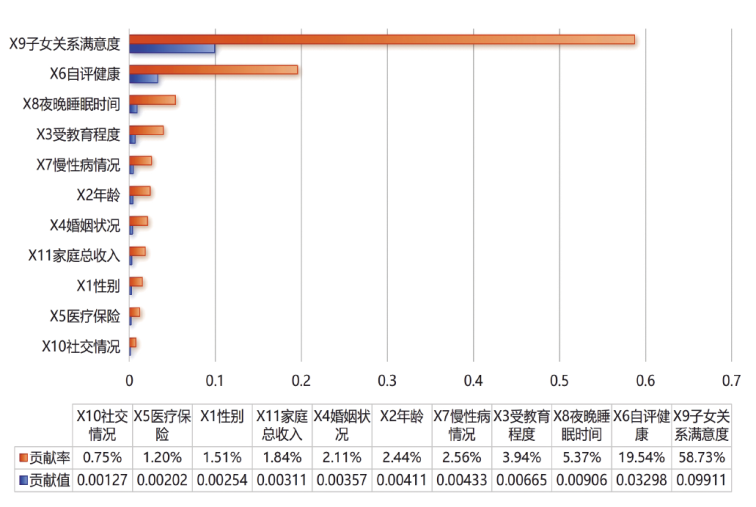
图1 中老年人生活满意度单一变量的shapely分解结果
| 前项 | 后项 | 支持度(%) | 置信度(%) | 增益 |
|---|---|---|---|---|
| 未患慢性病+自评健康好+已婚+子女关系满意+有医疗保险 | 生活满意 | 42.085 | 95.060 | 1.074 |
| 未患慢性病+自评健康好+已婚+子女关系满意 | 生活满意 | 43.692 | 94.966 | 1.073 |
| 未患慢性病+自评健康好+子女关系满意+有医疗保险 | 生活满意 | 48.503 | 94.719 | 1.070 |
| 夜晚睡眠7~<9 h+子女关系满意+有医疗保险 | 生活满意 | 34.271 | 94.695 | 1.070 |
| 夜晚睡眠7~<9 h+已婚+子女关系满意 | 生活满意 | 31.127 | 94.547 | 1.068 |
| 未患慢性病+自评健康好+子女关系满意 | 生活满意 | 50.723 | 94.535 | 1.068 |
| 自评健康好+已婚+子女关系满意+有医疗保险 | 生活满意 | 58.367 | 94.424 | 1.067 |
| 自评健康好+已婚+子女关系满意 | 生活满意 | 60.566 | 94.362 | 1.066 |
| 有社交+自评健康好+已婚+子女关系满意 | 生活满意 | 31.006 | 94.331 | 1.066 |
| 有社交+自评健康好+已婚+子女关系满意+有医疗保险 | 生活满意 | 30.072 | 94.322 | 1.065 |
表5 中老年人生活满意度影响因素的关联规则分析
| 前项 | 后项 | 支持度(%) | 置信度(%) | 增益 |
|---|---|---|---|---|
| 未患慢性病+自评健康好+已婚+子女关系满意+有医疗保险 | 生活满意 | 42.085 | 95.060 | 1.074 |
| 未患慢性病+自评健康好+已婚+子女关系满意 | 生活满意 | 43.692 | 94.966 | 1.073 |
| 未患慢性病+自评健康好+子女关系满意+有医疗保险 | 生活满意 | 48.503 | 94.719 | 1.070 |
| 夜晚睡眠7~<9 h+子女关系满意+有医疗保险 | 生活满意 | 34.271 | 94.695 | 1.070 |
| 夜晚睡眠7~<9 h+已婚+子女关系满意 | 生活满意 | 31.127 | 94.547 | 1.068 |
| 未患慢性病+自评健康好+子女关系满意 | 生活满意 | 50.723 | 94.535 | 1.068 |
| 自评健康好+已婚+子女关系满意+有医疗保险 | 生活满意 | 58.367 | 94.424 | 1.067 |
| 自评健康好+已婚+子女关系满意 | 生活满意 | 60.566 | 94.362 | 1.066 |
| 有社交+自评健康好+已婚+子女关系满意 | 生活满意 | 31.006 | 94.331 | 1.066 |
| 有社交+自评健康好+已婚+子女关系满意+有医疗保险 | 生活满意 | 30.072 | 94.322 | 1.065 |
| [1] | KIM B J, CHEN L, XU L, et al. Self-rated health and subjective economic status in life satisfaction among older Chinese immigrants:A cross-sectional study[J]. Healthcare(Basel), 2021, 9(3):342-350. |
| [2] | 朱国辰, 陈卓铭. 中老年慢性病患者生活满意度现状及其影响因素分析[J]. 康复学报, 2025, 35(1):75-82. |
| [3] | 毛海军, 杨程雅. 收入、公平感和休闲对生活满意度的影响机制研究[J]. 大连民族大学学报, 2025, 27(2):141-148. |
| [4] | 陈功, 王英英, 刘岚. 志愿活动参与对中老年人生活满意度的影响:抑郁的中介作用及年龄组差异[J]. 南京医科大学学报(社会科学版), 2024, 24(2):124-129. |
| [5] | 张国海, 陈舒睿. 新农合对农村中老年人幸福感影响的实证研究[J]. 重庆交通大学学报(社会科学版), 2024, 24(1):79-86. |
| [6] | 刘成斌, 张晏郡. 数字嵌入对老年人生活满意度的影响[J]. 华中科技大学学报(社会科学版), 2025, 39(2):58-69. |
| [7] | 沙思源, 李艳明, 刘思伽, 等. 生活满意度在养老机构老年人电子健康素养与生活质量间的中介效应[J]. 职业与健康, 2025, 41(5):646-650. |
| [8] | 赵冬青, 窦昊颖, 张兰蕊, 等. 生态系统理论视角下老年人社交网络与健康关系的研究进展[J]. 职业与健康, 2025, 41(15):2155-2160. |
| [9] | 王新乐, 梁笑笑, 董海颖, 等. 基于健康生态学模型社区居家医养结合老年人多重慢性病影响因素分析[J]. 郑州大学学报(医学版), 2024, 59(6):838-842. |
| [10] |
张滢, 姜欣彤, 王萍玉. 基于健康生态学模型的中国女性老年人群抑郁症状影响因素研究[J]. 中国全科医学, 2025, 28(13):1595-1600.
DOI |
| [11] |
汤榕, 杨健珍, 党媛媛, 等. 基于shapely分解法的宁夏卫生总费用影响因素研究[J]. 卫生软科学, 2021, 35(5):59-61.
DOI |
| [12] | 李小燕, 许静怡, 周燕. 中老年人抑郁影响因素及其关联规则挖掘[J]. 现代预防医学, 2024, 51(23):4349-4354. |
| [13] | 王聪智, 鲍丙宏, 王佳智, 等. 芜湖农村地区老年人生活满意度和家庭功能现状调查及影响因素分析[J]. 牡丹江医学院学报, 2024, 45(2):115-118. |
| [14] | 中华人民共和国中央人民政府网. 中共中央国务院印发《“健康中国2030”规划纲要》[EB/OL].(2016-11-25)[2025-05-08]. https://www.gov.cn/gongbao/content/2016/content_5133024.htm. |
| [15] | 国家统计局. 中华人民共和国2010年国民经济和社会发展统计公报[EB/OL].(2011-02-28)[2025-04-25]. https://www.stats.gov.cn/xxgk/sjfb/tjgb2020/201310/t20131031_1768617.html. |
| [16] | 国家统计局. 2024年居民收入和消费支出情况[EB/OL].(2015-01-17)[2025-04-25]. https://www.stats.gov.cn/sj/zxfb/202501/t20250117_1958325.html. |
| [17] | 陆华贞, 成浩阳, 张涛梅, 等. 多元化照护银行建设标准的构建及应用专家共识[J]. 军事护理, 2025, 42(1):1-4. |
| [18] | 汤凌霄. 响应国家养老金融战略中国银联打造养老助餐产品特色服务[J]. 中国行政管理, 2024, 40(12):161. |
| [19] | 周俊, 陈鸣声. 江苏省卫生服务利用性别差异分析[J]. 中国卫生事业管理, 2020, 37(10):743-746. |
| [20] | 冉海烨, 罗园, 赵丽萍. 健康行为过程取向理论在慢性病自我管理中的应用进展[J]. 职业与健康, 2025, 41(13):1842-1848. |
| [21] | GROSS D, KOHLMANN C. Physical activity,health,and life satisfaction:Four panel studies demonstrate reciprocal effects[J]. Appl Psychol Health Well Being, 2025, 17(2):1-22. |
| [22] | PARK J, KANG S. Social interaction and life satisfaction among older adults by age group[J]. Healthcare(Basel), 2023, 11(22):2951-2960. |
| [23] |
MACIA E, DUBOZ P, MONTEPARE J M, et al. Age identity,self-rated health,and life satisfaction among older adults in Dakar,Senegal[J]. Eur J Ageing, 2012, 9(3):243-253.
DOI URL |
| [24] | 孔泽宇, 严新明. 年龄认同与老年人生活满意度--微观证据与作用机制[J]. 人口与发展, 2023, 29(6):59-71. |
| [25] | 刘彦旭, 罗莉, 付国琪, 等. 我国老年慢性病患者疼痛与睡眠的关系及日常活动能力和生活满意度的中介作用研究[J]. 现代预防医学, 2025, 52(4):703-708. |
| [26] | 田柳丹, 伍红艳, 杨星, 等. 基于CHARLS数据的我国老年人主观预期寿命及影响因素研究[J]. 职业与健康, 2025, 41(11):1502-1507. |
| [27] | 张茜, 薛奋勤. 基于项群训练理论的运动对睡眠质量影响的研究进展[J]. 职业与健康, 2025, 41(9):1291-1296. |
| [28] | 张萧红, 徐凌忠, 秦文哲, 等. 泰安市45-69岁中老年人健康素养现状及影响因素分析[J]. 中国卫生事业管理, 2021, 38(12):950-956. |
| [29] | 陈高涵, 许兴龙, 周绿林. 中老年人主动健康行为对其健康水平的影响研究:基于潜在剖面分析[J]. 中国卫生事业管理, 2025, 42(3):344-348. |
| [30] | 王莹, 李歆, 方文箐, 等. 癌症对中老年人主观幸福感的影响研究--社交活跃度和抑郁情绪的链式中介作用[J]. 中国卫生事业管理, 2024, 41(10):1169-1173. |
| [31] | 曾泓辑, 赵蔚嘉, 王瑞, 等. 生活环境设施和生活方式对不同性别农村老年人生活满意度的影响及差异分析[J]. 中国卫生事业管理, 2024, 41(6):695-700. |
| [32] | 胡雪梅, 陈庆. 社会参与对独居老人生活满意度的影响--抑郁的中介作用[J]. 中国卫生事业管理, 2024, 41(9):1048-1051,1073. |
| [33] | 袁颖, 王伟, 严非, 等. 上海市某三级综合性医院护理人员应对方式在工作--家庭冲突、护理工作环境与职业倦怠间中介效应分析[J]. 职业与健康, 2025, 41(13):1739-1743. |
| [34] | 李洪娟, 王蕾. 基于社会参与视角的老年生活满意度研究[J]. 山东工商学院学报, 2023, 37(6):117-124. |
| [35] | 李红敏, 徐进, 翟敏, 等. 宁夏农村居民电子健康素养及其影响分析[J]. 中国卫生事业管理, 2022, 39(11):852-856. |
| [36] | 姚果, 何西, 杨紫涵. 三级综合医院慢性肩颈背疼痛医务工作者工作不安全感、社会资本与生活质量的相关研究[J]. 职业与健康, 2025, 41(15):2081-2086. |
| [37] | 江海霞, 冀启星, 李悦. 积极老龄化对老年人生活满意度的影响--基于健康、参与、保障的三支柱分析[J]. 河北农业大学学报(社会科学版), 2023, 25(4):31-47. |
| [38] | 黄德荣, 王桂杰, 王健, 等. 城乡居民医保整合对农村中老年人心理健康的影响[J]. 中国卫生事业管理, 2024, 41(5):518-522. |
| [1] | 王淑玉, 阮坛凤, 陈浩, 黄奕平, 刘浩中. 广东省某市基层公共卫生人员职业紧张现状及影响因素分析[J]. 职业与健康, 2026, 42(9): 1168-1173. |
| [2] | 胡月. 四川省6所三级甲等医院规范化培训护士职业认同现状及影响因素分析[J]. 职业与健康, 2026, 42(9): 1213-1219. |
| [3] | 张世晴, 杨秀木, 邓曼, 徐雪君. 社区老年慢性病患者自我管理积极度现状及影响因素分析[J]. 职业与健康, 2026, 42(9): 1225-1230. |
| [4] | 张思怡, 马少伟, 白伟, 宋珈斌, 宋美勤. 基于健康信念模式的男医学生HPV疫苗接种意愿及影响因素分析[J]. 职业与健康, 2026, 42(9): 1250-1254. |
| [5] | 温小苗, 张瑛, 杨晓. 骨科护士情绪调节及心理灵活性对职业倦怠的影响[J]. 职业与健康, 2026, 42(8): 1020-1024. |
| [6] | 顾蒙, 陈凤, 曹云. 三级甲等综合医院急诊科护士工作-家庭增益、心理资本对职业倦怠的影响[J]. 职业与健康, 2026, 42(8): 1030-1034. |
| [7] | 董洁, 尤芮可, 张昱. 基于扎根理论构建天津市公立医院行政管理人员职业倦怠影响因素的理念框架[J]. 职业与健康, 2026, 42(8): 1035-1039. |
| [8] | 秦怡, 孙璐, 钱蕾, 许洁, 达婧. 老年科护士角色宽度自我效能、职业生涯韧性对职业倦怠的影响[J]. 职业与健康, 2026, 42(8): 1040-1044. |
| [9] | 戴桃芳, 陆高峰, 汤海英, 袁媛. 上海市奉贤区医务人员症状自评量表评分现况及影响因素分析[J]. 职业与健康, 2026, 42(8): 1087-1093. |
| [10] | 李夕然, 胡琛, 樊文彬, 朱峰. 中医药院校本科护理新生专业认同现状及影响因素分析[J]. 职业与健康, 2026, 42(8): 1138-1142. |
| [11] | 王豪, 崔楠, 陈祥华. 山东省三级公立医院全科专业住院医师规范化培训学员付出回报失衡和职业倦怠的关系分析[J]. 职业与健康, 2026, 42(7): 881-886. |
| [12] | 刘鹏, 原晓华, 蒙美旭, 赵娜, 籍小溪. 2019和2023年天津市河东区居民健康素养水平及影响因素分析[J]. 职业与健康, 2026, 42(7): 983-987. |
| [13] | 黄文俊, 米莎莎, 吴超, 王丽霞, 裴迎新. 新疆生产建设兵团预防接种工作人员职业倦怠现状及影响因素分析[J]. 职业与健康, 2026, 42(6): 726-732. |
| [14] | 张文隽, 崔悦, 曹冬, 王旭阳. 复杂基质水中砷能力验证结果与分析[J]. 职业与健康, 2026, 42(6): 757-761. |
| [15] | 张茜, 刘娜, 梁艳, 刘阳, 贾娜, 孟海超. 介入康复科护士非工作时间电子沟通、情绪耗竭对工作时间侵占行为的影响[J]. 职业与健康, 2026, 42(6): 772-776. |
| 阅读次数 | ||||||
|
全文 |
|
|||||
|
摘要 |
|
|||||
 津公网安备12010202000831号 津ICP备11005889号-6
