


OCCUPATION AND HEALTH ›› 2026, Vol. 42 ›› Issue (15): 2132-2140.
• Treatise—Literature Analysis • Previous Articles Next Articles
ZHAO Menglan, CAI Lifang, LIN Songxing, LIU Xinyi, YANG Mei, DUAN Lina( )
)
Received:2025-04-11
Revised:2025-09-22
Online:2026-08-01
Published:2026-07-16
Contact:
DUAN Lina
About author:DUAN Lina,E-mail:56631019@qq.comCLC Number:
ZHAO Menglan, CAI Lifang, LIN Songxing, LIU Xinyi, YANG Mei, DUAN Lina. Analysis of research publications from three-tier disease prevention and control institutions at the municipal,district,and subdistrict levels in Shenzhen from 2015 to 2025. [J]OCCUPATION AND HEALTH, 2026, 42(15): 2132-2140.
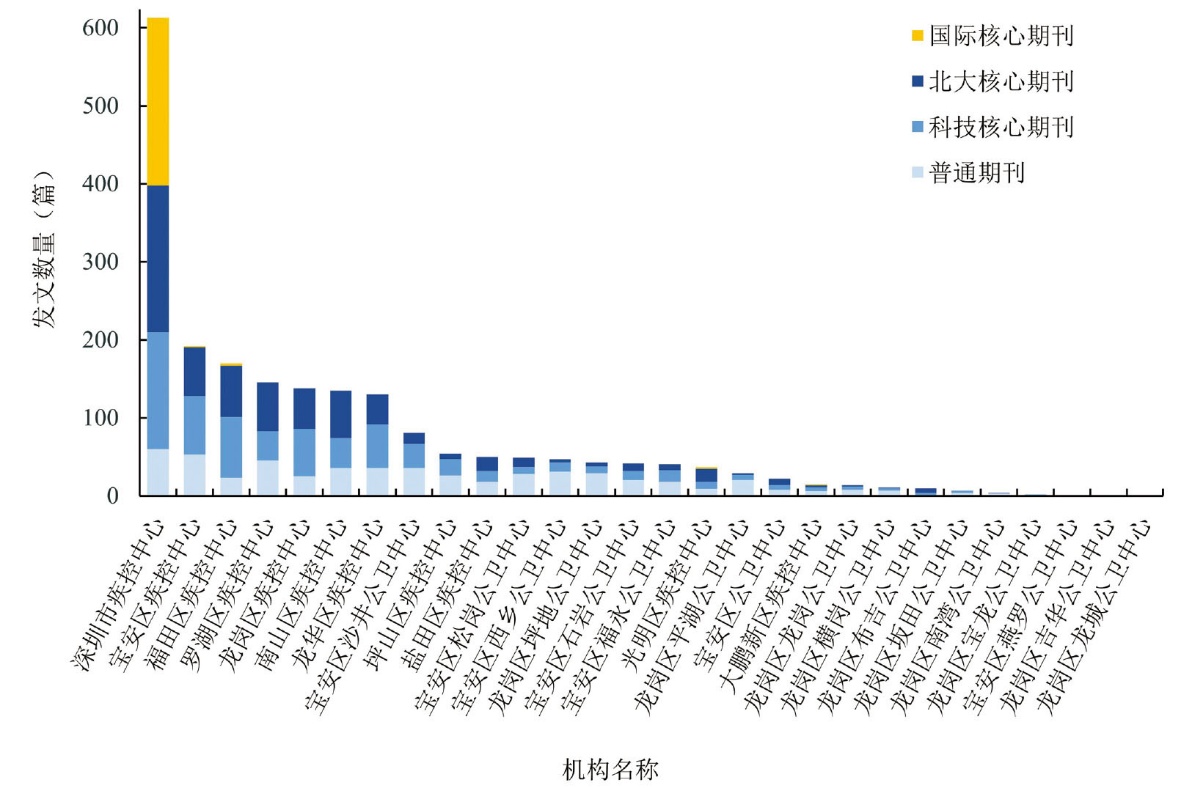
| 机构 | 第1单位发文量(篇) | 总发文量(篇) | ||||||
|---|---|---|---|---|---|---|---|---|
| 国际核心期刊 | 北大核心期刊 | 科技核心期刊 | 普通 期刊 | 合计 | 国际核心期刊 | 中文 期刊 | 小计 | |
| 深圳市疾控中心 | 215 | 188 | 150 | 60 | 613 | 1 024 | 734 | 1 758 |
| 宝安区疾控中心 | 1 | 63 | 75 | 53 | 192 | 21 | 334 | 355 |
| 福田区疾控中心 | 3 | 66 | 78 | 23 | 170 | 27 | 217 | 244 |
| 罗湖区疾控中心 | 0 | 63 | 38 | 45 | 146 | 14 | 205 | 219 |
| 龙岗区疾控中心 | 0 | 52 | 61 | 25 | 138 | 17 | 242 | 259 |
| 南山区疾控中心 | 0 | 61 | 38 | 36 | 135 | 44 | 233 | 277 |
| 龙华区疾控中心 | 0 | 38 | 56 | 36 | 130 | 31 | 153 | 184 |
| 宝安区沙井公卫中心 | 0 | 14 | 31 | 36 | 81 | 0 | 95 | 95 |
| 坪山区疾控中心 | 0 | 7 | 21 | 26 | 54 | 6 | 72 | 78 |
| 盐田区疾控中心 | 0 | 18 | 14 | 18 | 50 | 3 | 60 | 63 |
| 宝安区松岗公卫中心 | 0 | 12 | 9 | 28 | 49 | 3 | 63 | 66 |
| 宝安区西乡公卫中心 | 0 | 4 | 12 | 31 | 47 | 0 | 54 | 54 |
| 龙岗区坪地公卫中心 | 0 | 5 | 9 | 29 | 43 | 3 | 54 | 57 |
| 宝安区石岩公卫中心 | 0 | 10 | 12 | 20 | 42 | 0 | 58 | 58 |
| 宝安区福永公卫中心 | 0 | 8 | 15 | 18 | 41 | 0 | 61 | 61 |
| 光明区疾控中心 | 2 | 17 | 9 | 9 | 37 | 45 | 45 | 90 |
| 龙岗区平湖公卫中心 | 0 | 2 | 7 | 20 | 29 | 0 | 34 | 34 |
| 宝安区公卫中心 | 0 | 8 | 6 | 8 | 22 | 3 | 40 | 43 |
| 大鹏新区疾控中心 | 1 | 3 | 5 | 6 | 15 | 2 | 20 | 22 |
| 龙岗区龙岗公卫中心 | 0 | 2 | 4 | 8 | 14 | 0 | 16 | 16 |
| 龙岗区横岗公卫中心 | 0 | 1 | 3 | 7 | 11 | 0 | 12 | 12 |
| 龙岗区布吉公卫中心 | 0 | 6 | 3 | 1 | 10 | 0 | 17 | 17 |
| 龙岗区坂田公卫中心 | 0 | 0 | 3 | 4 | 7 | 0 | 7 | 7 |
| 龙岗区南湾公卫中心 | 0 | 1 | 0 | 3 | 4 | 0 | 4 | 4 |
| 龙岗区宝龙公卫中心 | 0 | 0 | 2 | 0 | 2 | 0 | 2 | 2 |
| 宝安区燕罗公卫中心 | 0 | 1 | 0 | 0 | 1 | 0 | 1 | 1 |
| 龙岗区吉华公卫中心 | 0 | 0 | 1 | 0 | 1 | 0 | 1 | 1 |
| 龙岗区龙城公卫中心 | 0 | 0 | 1 | 0 | 1 | 0 | 1 | 1 |
| 合计 | 222 | 650 | 663 | 550 | 2 085 | |||
| 机构 | 第1单位发文量(篇) | 总发文量(篇) | ||||||
|---|---|---|---|---|---|---|---|---|
| 国际核心期刊 | 北大核心期刊 | 科技核心期刊 | 普通 期刊 | 合计 | 国际核心期刊 | 中文 期刊 | 小计 | |
| 深圳市疾控中心 | 215 | 188 | 150 | 60 | 613 | 1 024 | 734 | 1 758 |
| 宝安区疾控中心 | 1 | 63 | 75 | 53 | 192 | 21 | 334 | 355 |
| 福田区疾控中心 | 3 | 66 | 78 | 23 | 170 | 27 | 217 | 244 |
| 罗湖区疾控中心 | 0 | 63 | 38 | 45 | 146 | 14 | 205 | 219 |
| 龙岗区疾控中心 | 0 | 52 | 61 | 25 | 138 | 17 | 242 | 259 |
| 南山区疾控中心 | 0 | 61 | 38 | 36 | 135 | 44 | 233 | 277 |
| 龙华区疾控中心 | 0 | 38 | 56 | 36 | 130 | 31 | 153 | 184 |
| 宝安区沙井公卫中心 | 0 | 14 | 31 | 36 | 81 | 0 | 95 | 95 |
| 坪山区疾控中心 | 0 | 7 | 21 | 26 | 54 | 6 | 72 | 78 |
| 盐田区疾控中心 | 0 | 18 | 14 | 18 | 50 | 3 | 60 | 63 |
| 宝安区松岗公卫中心 | 0 | 12 | 9 | 28 | 49 | 3 | 63 | 66 |
| 宝安区西乡公卫中心 | 0 | 4 | 12 | 31 | 47 | 0 | 54 | 54 |
| 龙岗区坪地公卫中心 | 0 | 5 | 9 | 29 | 43 | 3 | 54 | 57 |
| 宝安区石岩公卫中心 | 0 | 10 | 12 | 20 | 42 | 0 | 58 | 58 |
| 宝安区福永公卫中心 | 0 | 8 | 15 | 18 | 41 | 0 | 61 | 61 |
| 光明区疾控中心 | 2 | 17 | 9 | 9 | 37 | 45 | 45 | 90 |
| 龙岗区平湖公卫中心 | 0 | 2 | 7 | 20 | 29 | 0 | 34 | 34 |
| 宝安区公卫中心 | 0 | 8 | 6 | 8 | 22 | 3 | 40 | 43 |
| 大鹏新区疾控中心 | 1 | 3 | 5 | 6 | 15 | 2 | 20 | 22 |
| 龙岗区龙岗公卫中心 | 0 | 2 | 4 | 8 | 14 | 0 | 16 | 16 |
| 龙岗区横岗公卫中心 | 0 | 1 | 3 | 7 | 11 | 0 | 12 | 12 |
| 龙岗区布吉公卫中心 | 0 | 6 | 3 | 1 | 10 | 0 | 17 | 17 |
| 龙岗区坂田公卫中心 | 0 | 0 | 3 | 4 | 7 | 0 | 7 | 7 |
| 龙岗区南湾公卫中心 | 0 | 1 | 0 | 3 | 4 | 0 | 4 | 4 |
| 龙岗区宝龙公卫中心 | 0 | 0 | 2 | 0 | 2 | 0 | 2 | 2 |
| 宝安区燕罗公卫中心 | 0 | 1 | 0 | 0 | 1 | 0 | 1 | 1 |
| 龙岗区吉华公卫中心 | 0 | 0 | 1 | 0 | 1 | 0 | 1 | 1 |
| 龙岗区龙城公卫中心 | 0 | 0 | 1 | 0 | 1 | 0 | 1 | 1 |
| 合计 | 222 | 650 | 663 | 550 | 2 085 | |||
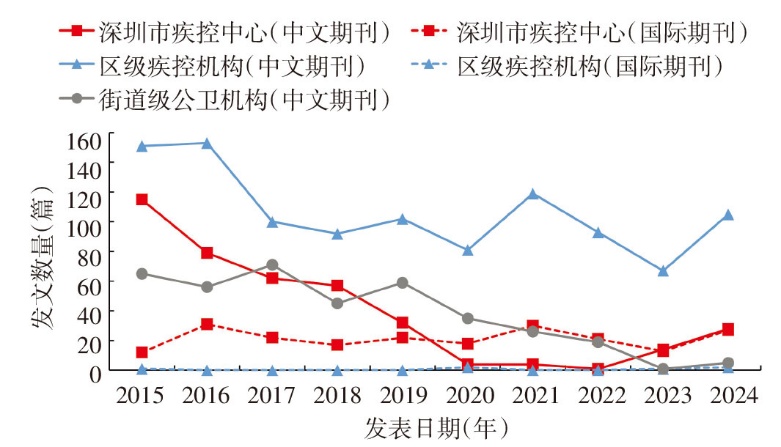
| 机构年度发文量(篇) | 期刊类型 | 2015年 | 2016年 | 2017年 | 2018年 | 2019年 | 2020年 | 2021年 | 2022年 | 2023年 | 2024年 | 2025年a | 小计 |
|---|---|---|---|---|---|---|---|---|---|---|---|---|---|
| 深圳市疾控中心 | 中文期刊 | 115 | 79 | 62 | 57 | 32 | 4 | 4 | 1 | 14 | 28 | 2 | 398 |
| 国际期刊 | 12 | 31 | 22 | 17 | 22 | 18 | 30 | 21 | 13 | 27 | 2 | 215 | |
| 区级疾控机构 | 中文期刊 | 151 | 153 | 100 | 92 | 102 | 81 | 119 | 93 | 67 | 105 | 19 | 1 082 |
| 国际期刊 | 1 | 0 | 0 | 0 | 0 | 2 | 0 | 0 | 1 | 2 | 1 | 7 | |
| 街道级公卫机构 | 中文期刊 | 65 | 56 | 71 | 45 | 59 | 35 | 26 | 19 | 1 | 5 | 1 | 383 |
| 国际期刊 | 0 | 0 | 0 | 0 | 0 | 0 | 0 | 0 | 0 | 0 | 0 | 0 | |
| 合计 | 344 | 319 | 255 | 211 | 215 | 140 | 179 | 134 | 96 | 167 | 25 | 2 085 |
| 机构年度发文量(篇) | 期刊类型 | 2015年 | 2016年 | 2017年 | 2018年 | 2019年 | 2020年 | 2021年 | 2022年 | 2023年 | 2024年 | 2025年a | 小计 |
|---|---|---|---|---|---|---|---|---|---|---|---|---|---|
| 深圳市疾控中心 | 中文期刊 | 115 | 79 | 62 | 57 | 32 | 4 | 4 | 1 | 14 | 28 | 2 | 398 |
| 国际期刊 | 12 | 31 | 22 | 17 | 22 | 18 | 30 | 21 | 13 | 27 | 2 | 215 | |
| 区级疾控机构 | 中文期刊 | 151 | 153 | 100 | 92 | 102 | 81 | 119 | 93 | 67 | 105 | 19 | 1 082 |
| 国际期刊 | 1 | 0 | 0 | 0 | 0 | 2 | 0 | 0 | 1 | 2 | 1 | 7 | |
| 街道级公卫机构 | 中文期刊 | 65 | 56 | 71 | 45 | 59 | 35 | 26 | 19 | 1 | 5 | 1 | 383 |
| 国际期刊 | 0 | 0 | 0 | 0 | 0 | 0 | 0 | 0 | 0 | 0 | 0 | 0 | |
| 合计 | 344 | 319 | 255 | 211 | 215 | 140 | 179 | 134 | 96 | 167 | 25 | 2 085 |
| 序号 | 期刊名 | 发文量(篇) | 占比(%) | 期刊类型 |
|---|---|---|---|---|
| 1 | 实用预防医学 | 164 | 8.8 | 科技核心 |
| 2 | 职业与健康 | 158 | 8.5 | 科技核心 |
| 3 | 中国热带医学 | 115 | 6.2 | 北大核心 |
| 4 | 热带医学杂志 | 111 | 6.0 | 科技核心 |
| 5 | 现代预防医学 | 91 | 4.9 | 北大核心 |
| 6 | 中国卫生检验杂志 | 79 | 4.2 | 北大核心 |
| 7 | 华南预防医学 | 69 | 3.7 | 科技核心 |
| 8 | 中国学校卫生 | 54 | 2.9 | 北大核心 |
| 9 | 医学动物防制 | 46 | 2.5 | 科技核心 |
| 10 | 中国消毒学杂志 | 46 | 2.5 | 北大核心 |
| 11 | 中华疾病控制杂志 | 44 | 2.4 | 北大核心 |
| 12 | 疾病监测 | 43 | 2.3 | 北大核心 |
| 13 | 预防医学论坛 | 42 | 2.3 | 普通 |
| 14 | 应用预防医学 | 41 | 2.2 | 普通 |
| 15 | 中国公共卫生管理 | 40 | 2.1 | 普通 |
| 合计 | 1 143 | 61.4 |
| 序号 | 期刊名 | 发文量(篇) | 占比(%) | 期刊类型 |
|---|---|---|---|---|
| 1 | 实用预防医学 | 164 | 8.8 | 科技核心 |
| 2 | 职业与健康 | 158 | 8.5 | 科技核心 |
| 3 | 中国热带医学 | 115 | 6.2 | 北大核心 |
| 4 | 热带医学杂志 | 111 | 6.0 | 科技核心 |
| 5 | 现代预防医学 | 91 | 4.9 | 北大核心 |
| 6 | 中国卫生检验杂志 | 79 | 4.2 | 北大核心 |
| 7 | 华南预防医学 | 69 | 3.7 | 科技核心 |
| 8 | 中国学校卫生 | 54 | 2.9 | 北大核心 |
| 9 | 医学动物防制 | 46 | 2.5 | 科技核心 |
| 10 | 中国消毒学杂志 | 46 | 2.5 | 北大核心 |
| 11 | 中华疾病控制杂志 | 44 | 2.4 | 北大核心 |
| 12 | 疾病监测 | 43 | 2.3 | 北大核心 |
| 13 | 预防医学论坛 | 42 | 2.3 | 普通 |
| 14 | 应用预防医学 | 41 | 2.2 | 普通 |
| 15 | 中国公共卫生管理 | 40 | 2.1 | 普通 |
| 合计 | 1 143 | 61.4 |
| 序号 | 期刊名称 | 发文量(篇) | 占比(%) | 中科院分区 |
|---|---|---|---|---|
| 1 | ECOTOXICOLOGY AND ENVIRONMENTAL SAFETY | 9 | 4.1 | 环境科学与生态学2区 |
| 2 | CHEMOSPHERE | 6 | 2.7 | 2025年未收录,2023年为环境科学与生态学2区Top |
| 3 | PLOS ONE | 6 | 2.7 | 综合性期刊3区 |
| 4 | BIOCHEMICAL AND BIOPHYSICAL RESEARCH COMMUNICATIONS | 5 | 2.3 | 生物学4区 |
| 5 | ENVIRONMENTAL POLLUTION | 5 | 2.3 | 环境科学与生态学2区 |
| 6 | FRONTIERS IN MICROBIOLOGY | 5 | 2.3 | 生物学2区 |
| 7 | SCIENCE OF THE TOTAL ENVIRONMENT | 5 | 2.3 | 环境科学与生态学2区Top |
| 8 | TOXICOLOGY LETTERS | 5 | 2.3 | 医学3区 |
| 9 | TOXICOLOGY RESEARCH | 5 | 2.3 | 医学4区 |
| 10 | ARCHIVES OF VIROLOGY | 4 | 1.8 | 医学4区 |
| 11 | ENVIRONMENT INTERNATIONAL | 4 | 1.8 | 环境科学与生态学1区Top |
| 12 | ENVIRONMENTAL SCIENCE AND POLLUTION RESEARCH | 4 | 1.8 | 2025年未收录,2023年为环境科学与生态学3区 |
| 13 | FOODBORNE PATHOGENS AND DISEASE | 4 | 1.8 | 农林科学3区 |
| 14 | HUMAN VACCINES & IMMUNOTHERAPEUTICS | 4 | 1.8 | 医学3区 |
| 15 | SCIENTIFIC REPORTS | 4 | 1.8 | 综合性期刊3区 |
| 16 | VECTOR-BORNE AND ZOONOTIC DISEASES | 4 | 1.8 | 医学4区 |
| 合计 | 75 | 35.6 |
| 序号 | 期刊名称 | 发文量(篇) | 占比(%) | 中科院分区 |
|---|---|---|---|---|
| 1 | ECOTOXICOLOGY AND ENVIRONMENTAL SAFETY | 9 | 4.1 | 环境科学与生态学2区 |
| 2 | CHEMOSPHERE | 6 | 2.7 | 2025年未收录,2023年为环境科学与生态学2区Top |
| 3 | PLOS ONE | 6 | 2.7 | 综合性期刊3区 |
| 4 | BIOCHEMICAL AND BIOPHYSICAL RESEARCH COMMUNICATIONS | 5 | 2.3 | 生物学4区 |
| 5 | ENVIRONMENTAL POLLUTION | 5 | 2.3 | 环境科学与生态学2区 |
| 6 | FRONTIERS IN MICROBIOLOGY | 5 | 2.3 | 生物学2区 |
| 7 | SCIENCE OF THE TOTAL ENVIRONMENT | 5 | 2.3 | 环境科学与生态学2区Top |
| 8 | TOXICOLOGY LETTERS | 5 | 2.3 | 医学3区 |
| 9 | TOXICOLOGY RESEARCH | 5 | 2.3 | 医学4区 |
| 10 | ARCHIVES OF VIROLOGY | 4 | 1.8 | 医学4区 |
| 11 | ENVIRONMENT INTERNATIONAL | 4 | 1.8 | 环境科学与生态学1区Top |
| 12 | ENVIRONMENTAL SCIENCE AND POLLUTION RESEARCH | 4 | 1.8 | 2025年未收录,2023年为环境科学与生态学3区 |
| 13 | FOODBORNE PATHOGENS AND DISEASE | 4 | 1.8 | 农林科学3区 |
| 14 | HUMAN VACCINES & IMMUNOTHERAPEUTICS | 4 | 1.8 | 医学3区 |
| 15 | SCIENTIFIC REPORTS | 4 | 1.8 | 综合性期刊3区 |
| 16 | VECTOR-BORNE AND ZOONOTIC DISEASES | 4 | 1.8 | 医学4区 |
| 合计 | 75 | 35.6 |
| 第1作者 | 发文量(篇) | 所属机构 | 主要研究领域 |
|---|---|---|---|
| 吕鸿鑫 | 11 | 深圳市龙华区疾控中心 | 食物中毒调查处置,传染病动力学模型,学校疫情经济学负担,卫生应急能力 |
| 林凯 | 11 | 深圳市盐田区疾控中心 | 疾病监测与预测,疾病负担分析,食品重金属测定方法 |
| 孙群露 | 10 | 深圳市宝安区疾控中心 | 艾滋病及HIV感染,MSM人群人群行为特征 |
| 孙健 | 10 | 深圳市宝安区疾控中心 | 食源性疾病调查处置,食源性疾病监测,食品中铝污染,手足口病流行特征 |
| 饶展宏 | 10 | 深圳市宝安区疾控中心 | 丙肝现况调查,HCV阳性率,丙肝/艾滋病知识知晓情况,职业病危害调查 |
| 牟敬锋 | 10 | 深圳市南山区疾控中心 | 公共场所军团菌污染影响因素,预警模型,大气PM2.5污染状况及影响 |
| 廖静 | 10 | 深圳市龙岗区疾控中心 | 职业病危害因素,现场流行病学,危害因素致病机制研究 |
| 杨冬燕 | 9 | 深圳市疾控中心 | 食品转基因成分测定,肉制品掺假鉴别,地沟油筛查 |
| 赵凌国 | 8 | 深圳市宝安区疾控中心 | 食物中毒原因实验室检测确证,毛细管电泳法测定技术 |
| 许玉成 | 8 | 深圳市福田区疾控中心 | 学校及托幼机构传染病,传播动力学,疾病经济负担,传染病监测数据 |
| 许欣欣 | 8 | 深圳市疾控中心 | 食品中抗生素、杀菌剂、农药、有机物等测定及暴露分析 |
| 秦彦珉 | 8 | 深圳市疾控中心 | 学校及托幼机构暴发疫情,传染病监测 |
| 罗兰 | 8 | 深圳市龙华区疾控中心 | 食品及饮用水中抗生素、毒素、生物碱等成分分析 |
| 李晓霞 | 8 | 深圳市龙岗区疾控中心 | 艾滋病及HIV感染,MSM人群人群行为特征 |
| 甘立勤 | 8 | 深圳市龙岗区疾控中心 | 传染病监测,现场流行病学,登革热防控,消毒质量监测,死因趋势 |
| 第1作者 | 发文量(篇) | 所属机构 | 主要研究领域 |
|---|---|---|---|
| 吕鸿鑫 | 11 | 深圳市龙华区疾控中心 | 食物中毒调查处置,传染病动力学模型,学校疫情经济学负担,卫生应急能力 |
| 林凯 | 11 | 深圳市盐田区疾控中心 | 疾病监测与预测,疾病负担分析,食品重金属测定方法 |
| 孙群露 | 10 | 深圳市宝安区疾控中心 | 艾滋病及HIV感染,MSM人群人群行为特征 |
| 孙健 | 10 | 深圳市宝安区疾控中心 | 食源性疾病调查处置,食源性疾病监测,食品中铝污染,手足口病流行特征 |
| 饶展宏 | 10 | 深圳市宝安区疾控中心 | 丙肝现况调查,HCV阳性率,丙肝/艾滋病知识知晓情况,职业病危害调查 |
| 牟敬锋 | 10 | 深圳市南山区疾控中心 | 公共场所军团菌污染影响因素,预警模型,大气PM2.5污染状况及影响 |
| 廖静 | 10 | 深圳市龙岗区疾控中心 | 职业病危害因素,现场流行病学,危害因素致病机制研究 |
| 杨冬燕 | 9 | 深圳市疾控中心 | 食品转基因成分测定,肉制品掺假鉴别,地沟油筛查 |
| 赵凌国 | 8 | 深圳市宝安区疾控中心 | 食物中毒原因实验室检测确证,毛细管电泳法测定技术 |
| 许玉成 | 8 | 深圳市福田区疾控中心 | 学校及托幼机构传染病,传播动力学,疾病经济负担,传染病监测数据 |
| 许欣欣 | 8 | 深圳市疾控中心 | 食品中抗生素、杀菌剂、农药、有机物等测定及暴露分析 |
| 秦彦珉 | 8 | 深圳市疾控中心 | 学校及托幼机构暴发疫情,传染病监测 |
| 罗兰 | 8 | 深圳市龙华区疾控中心 | 食品及饮用水中抗生素、毒素、生物碱等成分分析 |
| 李晓霞 | 8 | 深圳市龙岗区疾控中心 | 艾滋病及HIV感染,MSM人群人群行为特征 |
| 甘立勤 | 8 | 深圳市龙岗区疾控中心 | 传染病监测,现场流行病学,登革热防控,消毒质量监测,死因趋势 |
| 第1作者 | 发文量(篇) | 所属机构 | 主要研究领域 |
|---|---|---|---|
| LU SHAOYOU | 11 | 深圳市疾控中心 | 环境污染物暴露评估;健康风险评估与生物监测;人群特异性暴露差异;污染物毒性机制研究;环境毒物代谢动力学 |
| GUO YINSHENG | 8 | 深圳市疾控中心 | 分子病理学机制;环境流行病学与污染物暴露评估;自噬调控与疾病;生殖毒理学 |
| LIU WEI | 7 | 深圳市疾控中心 | 三氯乙烯血清蛋白质组学;microRNA;神经退行性疾病保护机制;毒物暴露认知功能障碍关联机制 |
| HUANG SULI | 6 | 深圳市疾控中心 | microRNA调控机制;心血管疾病分子流行病学;环境污染物与健康效应;疾病生物标志物 |
| MA YUE | 6 | 深圳市疾控中心 | 二氧化钛纳米颗粒毒性;三氯生致病机制;表观遗传调控机制 |
| REN XIAOHU | 6 | 深圳市疾控中心 | 三氯乙烯毒性机制;肝细胞凋亡;联合暴露健康效应评估 |
| CHEN XIAO | 5 | 深圳市疾控中心 | 神经毒性机制研究;贝类毒素;糖尿病并发症病理机制;神经退行性疾病机制与治疗 |
| YU HAITAO | 5 | 深圳市疾控中心 | 神经退行性疾病蛋白质组学;铜暴露神经毒性机制 |
| 第1作者 | 发文量(篇) | 所属机构 | 主要研究领域 |
|---|---|---|---|
| LU SHAOYOU | 11 | 深圳市疾控中心 | 环境污染物暴露评估;健康风险评估与生物监测;人群特异性暴露差异;污染物毒性机制研究;环境毒物代谢动力学 |
| GUO YINSHENG | 8 | 深圳市疾控中心 | 分子病理学机制;环境流行病学与污染物暴露评估;自噬调控与疾病;生殖毒理学 |
| LIU WEI | 7 | 深圳市疾控中心 | 三氯乙烯血清蛋白质组学;microRNA;神经退行性疾病保护机制;毒物暴露认知功能障碍关联机制 |
| HUANG SULI | 6 | 深圳市疾控中心 | microRNA调控机制;心血管疾病分子流行病学;环境污染物与健康效应;疾病生物标志物 |
| MA YUE | 6 | 深圳市疾控中心 | 二氧化钛纳米颗粒毒性;三氯生致病机制;表观遗传调控机制 |
| REN XIAOHU | 6 | 深圳市疾控中心 | 三氯乙烯毒性机制;肝细胞凋亡;联合暴露健康效应评估 |
| CHEN XIAO | 5 | 深圳市疾控中心 | 神经毒性机制研究;贝类毒素;糖尿病并发症病理机制;神经退行性疾病机制与治疗 |
| YU HAITAO | 5 | 深圳市疾控中心 | 神经退行性疾病蛋白质组学;铜暴露神经毒性机制 |
| [1] | 周金花, 徐倍, 李悦. 基于扎根理论的医院专职科研人员工作压力源模型建构[J]. 职业与健康, 2025, 41(1):61-65. |
| [2] | 宋启德. 基层医院科研管理探索——以广州市某区属医院2020—2022年SCI论文的文献计量分析为例[J]. 现代医院, 2023, 23(6):949-952. |
| [3] | 崔明. Web of Science核心合集查收查引异常案例分析[J]. 内蒙古科技与经济, 2020(10):148-151. |
| [4] | 郑亦沐, 李树强, 赵赞梅, 等. 职业驾驶作业健康影响研究的文献计量和可视化分析[J]. 职业与健康, 2025, 41(4):554-559. |
| [5] | 扎西卓玛, 任雪琳, 冯渤曦, 等. 我国社区居民健康教育研究热点与发展前沿可视化分析[J]. 职业与健康, 2024, 40(18):2574-2580. |
| [6] | 赵晓云, 黄春燕, 赵晓东. 福建省9个市级疾病预防控制机构2004—2023年科研论文文献计量学分析[J]. 海峡预防医学杂志, 2024, 30(4):100-103. |
| [7] | 聂婵, 李雪云, 唐兰, 等. 2000—2024年中国侵袭性真菌研究热点的可视化分析[J]. 中国感染控制杂志, 2025, 24(5):584-590. |
| [8] | 刘娜娜, 黄烈雨, 刘拓, 等. 基于Citespace的我国健康预期寿命研究热点和发展脉络分析[J]. 疾病监测, 2024, 39(11):1509-1516. |
| [9] | 陈姣, 汪源, 王晓宇, 等. 2011—2020年中国省级疾控中心SCI论文发表情况和研究热点[J]. 环境与职业医学, 2022, 39(11):1249-1255. |
| [10] | 郭予洪, 李美霞, 吴迪. 2016—2020年广州市疾病预防控制中心科研论文发表情况分析[J]. 职业卫生与病伤, 2021, 36(5):327-332. |
| [11] | 林少辉, 罗秀凤, 谢兆勋. 2004—2019年福州市疾病预防控制中心科技论文分析[J]. 预防医学论坛, 2021, 27(1):13-16. |
| [12] | 宁国英, 阴孝刚, 吴金川, 等. 2015—2020年济南市疾病预防控制中心论文发表情况分析[J]. 预防医学论坛, 2022, 28(4):281-283. |
| [13] | 李琳, 宗莲, 张勤丽, 等. 上海市某区疾病预防控制中心2009—2018年论文发表情况分析[J]. 中国公共卫生管理, 2020, 36(6):905-908. |
| [14] | 牛媛娜, 杨泳慧, 唐聪, 等. 2014—2023年河南省疾控系统中文论文的文献计量和可视化分析[J]. 现代疾病预防控制, 2024, 35(11):848-852. |
| [15] | 肖浪潮, 贺金, 冯海哲, 等. 2016—2021年贵州省疾控系统中文论文的文献计量和可视化分析[J]. 贵州医药, 2023, 47(10):1534-1536. |
| [16] | 邱均平. 信息计量学(六)第六讲文献信息作者分布规律——洛特卡定律[J]. 情报理论与实践, 2000(6):475-478. |
| [17] | 马银琦, 姚昊. 学术履历对教育学者实证研究产出的影响研究——基于2015—2019年核心作者的分析[J]. 中国高教研究, 2020(9):73-79. |
| [18] | 阎国华, 韩秀霞. 高校教师科学研究的协作障碍与促进策略[J]. 现代教育管理, 2020(3):59-64. |
| [19] | LI M Y, DENG K, CHENG X H, et al. ARF4-mediated intracellular transport as a broad-spectrum antiviral target[J]. Nat Microbiol, 2025, 10(3):710-723. |
| [20] | YUAN G, ZENG Y, HU G, et al. Inverse association of certain seminal phthalate metabolites with semen quality may be mediated by androgen synthesis:A cross-sectional study from the South China[J]. Environ Int, 2021, 151:106459. |
| [21] | GUO Z, LIU P, LI T, et al. Associations of urinary nicotine metabolites and essential metals with metabolic syndrome in older adults:The mediation effect of insulin resistance[J]. J Hazard Mater, 2024, 480:135969. |
| [22] | 许玉成, 张瑞银, 周志峰, 等. 学校及托幼机构流行性感冒疫情传播能力评估和停课措施效果评价[J]. 中国学校卫生, 2021, 42(2):273-276. |
| [23] | 游杰, 岳亚军, 夏伟, 等. 深圳市罗湖区居民淡水鱼中孔雀石绿膳食暴露水平概率评估[J]. 现代预防医学, 2020, 47(11):1975-1979. |
| [24] | 吴维权, 柯伟奕, 曾细嫦, 等. 深圳市电子行业企业中苯系物的职业健康风险评估[J]. 职业与健康, 2022, 38(11):1450-1454,1459. |
| [25] | 蒋叶, 姚育楠, 陈宇洁. 基于灰色关联度的南通市疾病预防控制中心高层次人才吸引力分析[J]. 职业与健康, 2023, 39(3):414-417. |
| [1] | HU Hui, JI Jing, XING Wanying, WANG Xiuchao. Trend and hotspot analysis of emotional stability researches based on CiteSpace [J]. OCCUPATION AND HEALTH, 2026, 42(6): 817-824. |
| [2] | SONG Wang, BAI Qian, ZHOU Yi, YANG Ming, YU Fangqing, CHANG Cheng. Research on development trends of health association standards in China from a scientometric perspective [J]. OCCUPATION AND HEALTH, 2026, 42(11): 1554-1558. |
| [3] | ZHUO Qianwen, TANG Yuehong, ZHU Yun, GUO Rong, LIU Wanli. Analysis of influencing factors on laboratory testing service capacity of disease control and Prevention institutions in Xinjiang [J]. OCCUPATION AND HEALTH, 2026, 42(10): 1420-1424. |
| [4] | YU Simiao, WANG Xuemei, ZHANG Ying, LIU Yang, LIU Zihan, LI Zhihua. Co-word clustering analysis of research hotspots on core competencies of nursing interns in China [J]. OCCUPATION AND HEALTH, 2026, 42(1): 120-124. |
| [5] | ZHENG Yimu, LI Shuqiang, ZHAO Zanmei, ZHANG Yanlin, GUAN Li. Bibliometric and visual analysis of the research on the health impact of occupational driving work [J]. OCCUPATION AND HEALTH, 2025, 41(4): 554-559. |
| [6] | HE Cairong, WANG Langhong, PANG Panxing, XU Zhongyue. Analysis of research hotspots and trends of health food in China [J]. OCCUPATION AND HEALTH, 2025, 41(22): 3132-3137. |
| [7] | LI Jiayao, CUI Yi, NI Chunping, LIN Yue, HUA Yan. Visualization analysis of research hotspots and trends about health literacy in chronic disease patients based on CiteSpace [J]. OCCUPATION AND HEALTH, 2025, 41(16): 2288-2293. |
| [8] | LIANG Hengjuan, YANG Bo, HUANG Xiaohong. Bibliometric and visual analysis of occupational exposure related to antineoplastic drugs based on CiteSpace [J]. OCCUPATION AND HEALTH, 2025, 41(14): 1985-1992. |
| [9] | HU Yaoyao, ZHOU Taihua, ZHU Lingyun, GU Danfeng, LI Xiaojing, LI Li. Visual analysis of research hotspots and trends of vocational rehabilitation for coronary heart disease based on CiteSpace software [J]. OCCUPATION AND HEALTH, 2025, 41(13): 1825-1830. |
| [10] | LIU Linfeng, ZHANG Wen, CAO Jun, WANG Hongyan, RONG xian, LIN qin. Visual analysis of nurse empathy fatigue research based on CiteSpace [J]. OCCUPATION AND HEALTH, 2025, 41(13): 1831-1836. |
| [11] | Nazhakaiti Nabijiang, YAO Xuan, Kaisaier Abudukeremu. Visualization analysis on research of emergency management under public health emergencies in China [J]. OCCUPATION AND HEALTH, 2024, 40(7): 969-972. |
| [12] | ZHANG Xinping, FU Shuoxiong, CHEN Haoyang, MO Wenxi. Construction and empirical research on post competency model of public health physicians in disease control and prevention institutions in Hebei Province [J]. OCCUPATION AND HEALTH, 2024, 40(3): 301-305. |
| [13] | LU Qiang, ZHANG Qiuling, LIU Yongmei. Bibliometric analysis of Chinese journal papers on ionizing radiation-induced chromosome aberration [J]. OCCUPATION AND HEALTH, 2024, 40(20): 2860-2863. |
| [14] | LIU Linfeng, WANG Hongyan, LIN Qin, ZHANG Wen, CAO Jun, DENG Qingchuan. Visual analysis of mental health literacy research based on CiteSpace [J]. OCCUPATION AND HEALTH, 2024, 40(19): 2706-2709. |
| [15] | ZHOU Chen, YAN Jun, ZHU Yao, FENG Shijian, WANG Suzhen. Visual analysis of the integration of integrated traditional Chinese and Western medicine into public health [J]. OCCUPATION AND HEALTH, 2024, 40(15): 2108-2113. |
| Viewed | ||||||
|
Full text |
|
|||||
|
Abstract |
|
|||||
 津公网安备12010202000831号 津ICP备11005889号-6
