


OCCUPATION AND HEALTH ›› 2026, Vol. 42 ›› Issue (7): 961-965.
• Treatise • Previous Articles Next Articles
SUN Yana, LIANG Guangzhong, ZHAO Xiaomeng, ZOU Wenci, WANG Jing, LIU Jianling( )
)
Received:2025-07-07
Revised:2025-07-28
Online:2026-04-01
Published:2026-05-14
CLC Number:
SUN Yana, LIANG Guangzhong, ZHAO Xiaomeng, ZOU Wenci, WANG Jing, LIU Jianling. Monitoring and analysis of influenza-like-cases in a hospital in Jinnan District of Tianjin City from 2018 to 2023. [J]OCCUPATION AND HEALTH, 2026, 42(7): 961-965.
| 日期(年) | 门(急)诊病 例数 | ILI数量 (例) | ILI占门(急)诊病例数的 比例(%) |
|---|---|---|---|
| 2018 | 218 492 | 6 974 | 3.19 |
| 2019 | 252 102 | 10 360 | 4.11 |
| 2020 | 183 611 | 5 075 | 2.76 |
| 2021 | 242 285 | 5 414 | 2.23 |
| 2022 | 161 870 | 6 194 | 3.83 |
| 2023 | 292 322 | 23 144 | 7.92 |
| 日期(年) | 门(急)诊病 例数 | ILI数量 (例) | ILI占门(急)诊病例数的 比例(%) |
|---|---|---|---|
| 2018 | 218 492 | 6 974 | 3.19 |
| 2019 | 252 102 | 10 360 | 4.11 |
| 2020 | 183 611 | 5 075 | 2.76 |
| 2021 | 242 285 | 5 414 | 2.23 |
| 2022 | 161 870 | 6 194 | 3.83 |
| 2023 | 292 322 | 23 144 | 7.92 |
| 项目 | 检测数 | 阳性数[例(%)] | χ2值 | P |
|---|---|---|---|---|
| 性别 | 0.076 | >0.05 | ||
| 男 | 2 294 | 585(25.50) | ||
| 女 | 1 815 | 456(25.12) | ||
| 年龄(岁) | 223.374 | <0.05 | ||
| 0~<4 | 1 396 | 188(13.47) | ||
| 4~<7 | 1 056 | 314(29.73) | ||
| 7~<15 | 1 126 | 432(38.37) | ||
| ≥15 | 531 | 107(20.15) | ||
| 日期(年) | 360.544 | <0.05 | ||
| 2018 | 753 | 239(31.74) | ||
| 2019 | 754 | 320(42.44) | ||
| 2020 | 642 | 70(10.90) | ||
| 2021 | 657 | 51(7.76) | ||
| 2022 | 329 | 45(13.68) | ||
| 2023 | 974 | 316(32.44) |
| 项目 | 检测数 | 阳性数[例(%)] | χ2值 | P |
|---|---|---|---|---|
| 性别 | 0.076 | >0.05 | ||
| 男 | 2 294 | 585(25.50) | ||
| 女 | 1 815 | 456(25.12) | ||
| 年龄(岁) | 223.374 | <0.05 | ||
| 0~<4 | 1 396 | 188(13.47) | ||
| 4~<7 | 1 056 | 314(29.73) | ||
| 7~<15 | 1 126 | 432(38.37) | ||
| ≥15 | 531 | 107(20.15) | ||
| 日期(年) | 360.544 | <0.05 | ||
| 2018 | 753 | 239(31.74) | ||
| 2019 | 754 | 320(42.44) | ||
| 2020 | 642 | 70(10.90) | ||
| 2021 | 657 | 51(7.76) | ||
| 2022 | 329 | 45(13.68) | ||
| 2023 | 974 | 316(32.44) |
| 日期(年) | 0~<4岁 | 4~<7岁 | 7~<15岁 | ≥15岁 |
|---|---|---|---|---|
| 2018 | 251(33.33) | 226(30.01) | 128(17.00) | 148(19.65) |
| 2019 | 238(31.56) | 192(25.46) | 241(31.96) | 83(11.01) |
| 2020 | 391(60.90) | 141(21.96) | 104(16.20) | 6(0.93) |
| 2021 | 230(35.01) | 152(23.14) | 159(24.20) | 116(17.66) |
| 2022 | 47(14.29) | 36(10.94) | 88(26.75) | 158(48.02) |
| 2023 | 239(24.54) | 309(31.72) | 406(41.68) | 20(2.05) |
| 日期(年) | 0~<4岁 | 4~<7岁 | 7~<15岁 | ≥15岁 |
|---|---|---|---|---|
| 2018 | 251(33.33) | 226(30.01) | 128(17.00) | 148(19.65) |
| 2019 | 238(31.56) | 192(25.46) | 241(31.96) | 83(11.01) |
| 2020 | 391(60.90) | 141(21.96) | 104(16.20) | 6(0.93) |
| 2021 | 230(35.01) | 152(23.14) | 159(24.20) | 116(17.66) |
| 2022 | 47(14.29) | 36(10.94) | 88(26.75) | 158(48.02) |
| 2023 | 239(24.54) | 309(31.72) | 406(41.68) | 20(2.05) |
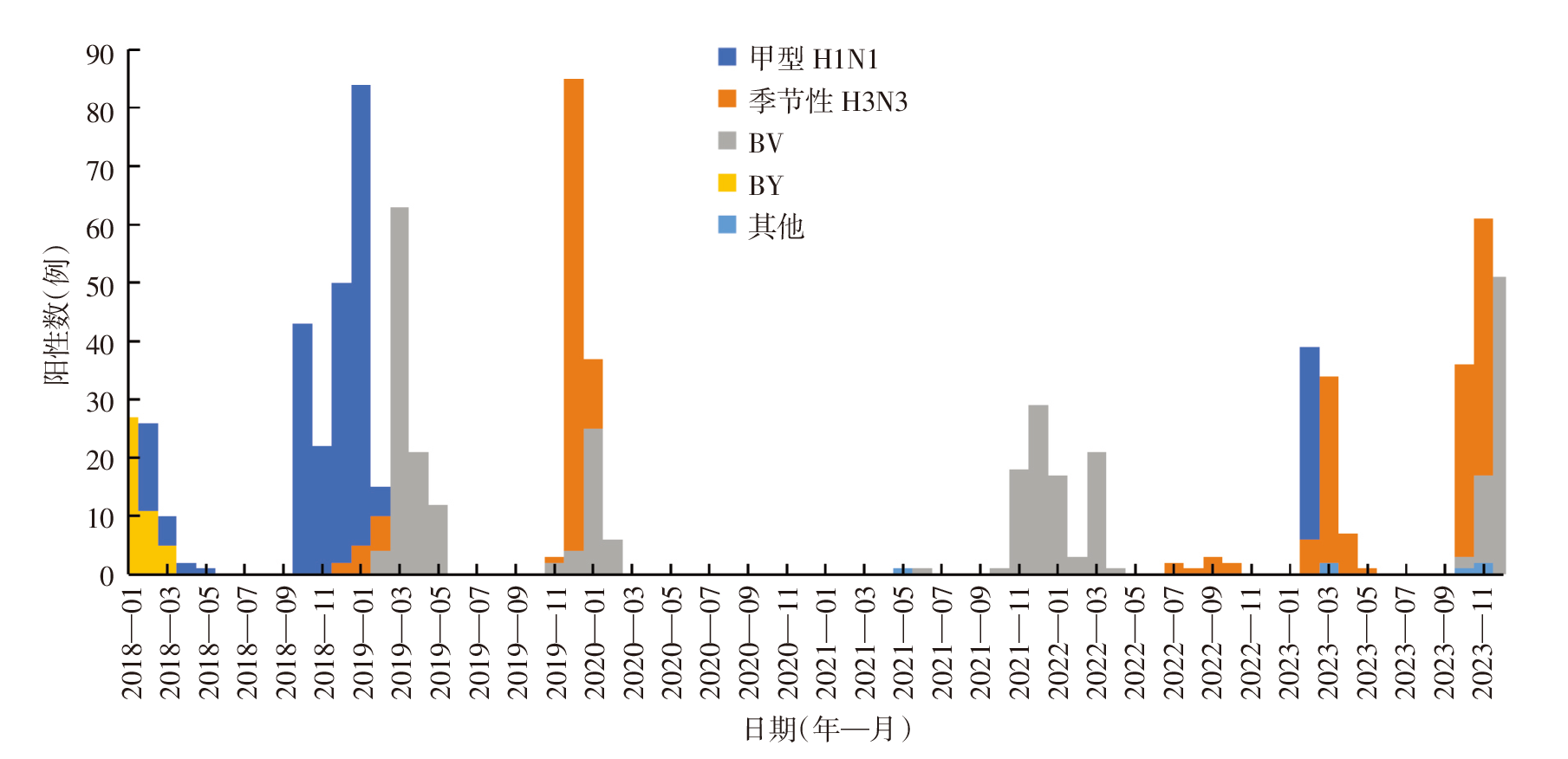
| 日期 | 病例数 | 阳性检出数 | 甲型H1N1 | 季节性H3N2 | B-V | B-Y | 其他 |
|---|---|---|---|---|---|---|---|
| 2018年 | |||||||
| 第一季度 | 277 | 118(42.60) | 61(22.02) | 13(4.69) | 1(0.36) | 43(15.53) | 0(0.00) |
| 第二季度 | 77 | 3(3.90) | 3(3.90) | 0(0.00) | 0(0.00) | 0(0.00) | 0(0.00) |
| 第三季度 | 73 | 0(0.00) | 0(0.00) | 0(0.00) | 0(0.00) | 0(0.00) | 0(0.00) |
| 第四季度 | 326 | 118(36.20) | 116(35.58) | 2(0.62) | 0(0.00) | 0(0.00) | 0(0.00) |
| 2019年 | |||||||
| 第一季度 | 310 | 191(61.61) | 99(31.94) | 25(8.06) | 67(21.61) | 0(0.00) | 0(0.00) |
| 第二季度 | 85 | 35(41.18) | 0(0.00) | 2(2.35) | 33(38.83) | 0(0.00) | 0(0.00) |
| 第三季度 | 69 | 0(0.00) | 0(0.00) | 0(0.00) | 0(0.00) | 0(0.00) | 0(0.00) |
| 第四季度 | 290 | 94(32.41) | 0(0.00) | 88(30.34) | 6(2.07) | 0(0.00) | 0(0.00) |
| 2020年 | |||||||
| 第一季度 | 242 | 70(28.93) | 1(0.41) | 38(15.70) | 31(12.82) | 0(0.00) | 0(0.00) |
| 第二季度 | 69 | 0(0.00) | 0(0.00) | 0(0.00) | 0(0.00) | 0(0.00) | 0(0.00) |
| 第三季度 | 71 | 0(0.00) | 0(0.00) | 0(0.00) | 0(0.00) | 0(0.00) | 0(0.00) |
| 第四季度 | 260 | 0(0.00) | 0(0.00) | 0(0.00) | 0(0.00) | 0(0.00) | 0(0.00) |
| 2021年 | |||||||
| 第一季度 | 262 | 0(0.00) | 0(0.00) | 0(0.00) | 0(0.00) | 0(0.00) | 0(0.00) |
| 第二季度 | 67 | 3(4.48) | 0(0.00) | 0(0.00) | 2(2.99) | 0(0.00) | 1(1.49)a |
| 第三季度 | 67 | 0(0.00) | 0(0.00) | 0(0.00) | 0(0.00) | 0(0.00) | 0(0.00) |
| 第四季度 | 261 | 48(18.39) | 0(0.00) | 0(0.00) | 48(18.39) | 0(0.00) | 0(0.00) |
| 2022年 | |||||||
| 第一季度 | 80 | 36(45.00) | 0(0.00) | 0(0.00) | 36(45.00) | 0(0.00) | 0(0.00) |
| 第二季度 | 55 | 1(1.82) | 0(0.00) | 0(0.00) | 1(1.82) | 0(0.00) | 0(0.00) |
| 第三季度 | 45 | 6(13.33) | 0(0.00) | 6(13.33) | 0(0.00) | 0(0.00) | 0(0.00) |
| 第四季度 | 149 | 2(1.34) | 0(0.00) | 2(1.34) | 0(0.00) | 0(0.00) | 0(0.00) |
| 2023年 | |||||||
| 第一季度 | 277 | 123(44.40) | 81(29.44) | 40(14.44) | 0(0.00) | 0(0.00) | 2(0.72)b |
| 第二季度 | 160 | 9(5.63) | 1(0.63) | 8(5.00) | 0(0.00) | 0(0.00) | 0(0.00) |
| 第三季度 | 138 | 0(0.00) | 0(0.00) | 0(0.00) | 0(0.00) | 0(0.00) | 0(0.00) |
| 第四季度 | 399 | 184(46.12) | 0(0.00) | 110(27.57) | 71(17.80) | 0(0.00) | 3(0.75)b |
| 合计 | 4 109 | 1 041(25.33) | 362(8.83) | 334(8.13) | 296(7.20) | 43(1.05) | 6(0.15) |
| 日期 | 病例数 | 阳性检出数 | 甲型H1N1 | 季节性H3N2 | B-V | B-Y | 其他 |
|---|---|---|---|---|---|---|---|
| 2018年 | |||||||
| 第一季度 | 277 | 118(42.60) | 61(22.02) | 13(4.69) | 1(0.36) | 43(15.53) | 0(0.00) |
| 第二季度 | 77 | 3(3.90) | 3(3.90) | 0(0.00) | 0(0.00) | 0(0.00) | 0(0.00) |
| 第三季度 | 73 | 0(0.00) | 0(0.00) | 0(0.00) | 0(0.00) | 0(0.00) | 0(0.00) |
| 第四季度 | 326 | 118(36.20) | 116(35.58) | 2(0.62) | 0(0.00) | 0(0.00) | 0(0.00) |
| 2019年 | |||||||
| 第一季度 | 310 | 191(61.61) | 99(31.94) | 25(8.06) | 67(21.61) | 0(0.00) | 0(0.00) |
| 第二季度 | 85 | 35(41.18) | 0(0.00) | 2(2.35) | 33(38.83) | 0(0.00) | 0(0.00) |
| 第三季度 | 69 | 0(0.00) | 0(0.00) | 0(0.00) | 0(0.00) | 0(0.00) | 0(0.00) |
| 第四季度 | 290 | 94(32.41) | 0(0.00) | 88(30.34) | 6(2.07) | 0(0.00) | 0(0.00) |
| 2020年 | |||||||
| 第一季度 | 242 | 70(28.93) | 1(0.41) | 38(15.70) | 31(12.82) | 0(0.00) | 0(0.00) |
| 第二季度 | 69 | 0(0.00) | 0(0.00) | 0(0.00) | 0(0.00) | 0(0.00) | 0(0.00) |
| 第三季度 | 71 | 0(0.00) | 0(0.00) | 0(0.00) | 0(0.00) | 0(0.00) | 0(0.00) |
| 第四季度 | 260 | 0(0.00) | 0(0.00) | 0(0.00) | 0(0.00) | 0(0.00) | 0(0.00) |
| 2021年 | |||||||
| 第一季度 | 262 | 0(0.00) | 0(0.00) | 0(0.00) | 0(0.00) | 0(0.00) | 0(0.00) |
| 第二季度 | 67 | 3(4.48) | 0(0.00) | 0(0.00) | 2(2.99) | 0(0.00) | 1(1.49)a |
| 第三季度 | 67 | 0(0.00) | 0(0.00) | 0(0.00) | 0(0.00) | 0(0.00) | 0(0.00) |
| 第四季度 | 261 | 48(18.39) | 0(0.00) | 0(0.00) | 48(18.39) | 0(0.00) | 0(0.00) |
| 2022年 | |||||||
| 第一季度 | 80 | 36(45.00) | 0(0.00) | 0(0.00) | 36(45.00) | 0(0.00) | 0(0.00) |
| 第二季度 | 55 | 1(1.82) | 0(0.00) | 0(0.00) | 1(1.82) | 0(0.00) | 0(0.00) |
| 第三季度 | 45 | 6(13.33) | 0(0.00) | 6(13.33) | 0(0.00) | 0(0.00) | 0(0.00) |
| 第四季度 | 149 | 2(1.34) | 0(0.00) | 2(1.34) | 0(0.00) | 0(0.00) | 0(0.00) |
| 2023年 | |||||||
| 第一季度 | 277 | 123(44.40) | 81(29.44) | 40(14.44) | 0(0.00) | 0(0.00) | 2(0.72)b |
| 第二季度 | 160 | 9(5.63) | 1(0.63) | 8(5.00) | 0(0.00) | 0(0.00) | 0(0.00) |
| 第三季度 | 138 | 0(0.00) | 0(0.00) | 0(0.00) | 0(0.00) | 0(0.00) | 0(0.00) |
| 第四季度 | 399 | 184(46.12) | 0(0.00) | 110(27.57) | 71(17.80) | 0(0.00) | 3(0.75)b |
| 合计 | 4 109 | 1 041(25.33) | 362(8.83) | 334(8.13) | 296(7.20) | 43(1.05) | 6(0.15) |
| [1] | 张春涛, 任曲. 中国流行性感冒流行病学及疾病负担浅析[J]. 中国病毒病杂志, 2013, 3(6):423-427. |
| [2] |
JAVANIAN M, BARARY M, GHEBREHEWET S, et al. A brief review of influenza virus infection[J]. J Med Virol, 2021, 93(8):4638-4646.
DOI PMID |
| [3] | 国家卫生健康委办公厅, 国家中医药管理局办公室. 流行性感冒诊疗方案(2020版)[J]. 中国病毒病杂志, 2021, 11(1):1-5. |
| [4] | 天津市卫生和计划生育委员会. 天津市流行性感冒监测方案(2017年版)[Z]. 天津,2017:5-9. |
| [5] | LIANG Y. Pathogenicity and virulence of influenza[J]. Vrulence, 2023, 14(1):2223057. |
| [6] | 陈华凤, 康宁, 张超, 等. 2020—2021年广西Victoria系乙型流感病毒的抗原性及基因特征分析[J]. 疾病监测, 2022, 37(8):1079-1087. |
| [7] | 黄一伟, 曾舸, 黄超洋, 等. 2017—2022年湖南省流感样病例病原学监测分析[J]. 疾病监测, 2024, 39(1):38-42. |
| [8] | 周丽君, 董爽, 李知睿, 等. 2020—2022年四川省流感哨点监测结果分析[J]. 现代预防医学, 2024, 51(1):156-160,172. |
| [9] |
CHAO S, WANG Y, WU B, et al. Characterization of viral infections in children with influenza-like-illness during December 2018-January 2019[J]. Front Cell Infect Microbiol, 2024, 13:1351814.
DOI URL |
| [10] | 陈洁, 张娜, 徐浩, 等. 2020年6月—2023年4月临沂地区儿童流感流行病学及甲型流感临床特征[J]. 山东医药, 2023, 63(36):73-77. |
| [11] | 国家免疫规划技术工作组流感疫苗工作组. 中国流感疫苗预防接种技术指南(2021—2022)[J]. 中华医学杂志, 2021, 101(40):3287-3312. |
| [12] | 张慕丽, 彭质斌, 郑建东, 等. 中国儿童流感疾病负担和疫苗应用现状[J]. 中华实用儿科临床杂志, 2019, 34(2):91-97. |
| [13] | Committee on Infectious Diseases. Recommendations for prevention and control of influenza in Children,2023-2024[J]. Pediatrics, 2023, 152(4):e2023063772. |
| [14] | World Health Organization. Influenza laboratory surveillance information virus detections by subtype reported to flunet[EB/OL].(2023-11-20)[2023-12-10]. https://www.who.int/tools/flunet/flunet-summary. |
| [15] | 吴巨龙, 宋绍霞, 刘倜, 等. 2018—2020年山东省甲型H1N1流感病毒NA基因变异和耐药分析[J]. 中国病原生物学杂志, 2021, 16(5):577-581. |
| [16] |
MORIYAMA M, HUGENTOBLER W J, IWASAKI A. Seasonality of Respiratory Viral Infections[J]. Annu Rev Virol, 2020, 7(1):83-101.
DOI PMID |
| [17] |
FANG K, SONG W, ZHANG Y, et al. Comparative analysis and prediction of avian influenza in Shangrao city,China from 2016 to 2022[J]. Virology, 2024, 592:109995.
DOI URL |
| [18] | 刘晓雪, 宋祎凡, 张肇南, 等. 2014—2021年流感季中国流感疫苗估算报告接种覆盖情况分析[J]. 中国病毒病杂志, 2023, 13(3):226-232. |
| [19] |
NAVARRO ALONSO J A, BONT L J, BOZZOLA E, et al. RSV:Perspectives to strengthen the need for protection in all infants[J]. Emerg Themes Epidemiol, 2021, 18(1):15.
DOI |
| [20] | 李安安, 刘庆峰, 王燕, 等. 肺炎患者上下呼吸道样本多病原检测比较分析[J]. 现代预防医学, 2022, 49(4):715-719. |
| [21] |
马鹏程, 陈愉. 呼吸道病原体检测方法研究进展[J]. 中国感染与化疗杂志, 2024, 24(1):118-122.
DOI |
| Viewed | ||||||
|
Full text |
|
|||||
|
Abstract |
|
|||||
 津公网安备12010202000831号 津ICP备11005889号-6
