

职业与健康 ›› 2026, Vol. 42 ›› Issue (15): 2132-2140.
赵梦蓝, 蔡立芳, 林松兴, 刘昕怡, 杨梅, 段利娜( )
)
收稿日期:2025-04-11
修回日期:2025-09-22
出版日期:2026-08-01
发布日期:2026-07-16
通信作者:
段利娜,E-mail:56631019@qq.com
作者简介:赵梦蓝,女,主管医师,主要从事卫生应急管理工作。
基金资助:
ZHAO Menglan, CAI Lifang, LIN Songxing, LIU Xinyi, YANG Mei, DUAN Lina()
Received:2025-04-11
Revised:2025-09-22
Online:2026-08-01
Published:2026-07-16
Contact:
DUAN Lina,E-mail:56631019@qq.com
摘要:
目的 分析深圳市三级疾病预防控制(疾控)机构科研论文发表现状与趋势,为促进城市疾控体系学术协同发展提供参考。方法 采用文献计量学与可视化方法检索2015年1月—2025年3月中国知网、万方及Web of Science数据库中深圳市、区、街道三级疾控机构为作者单位的期刊论文,分析发文量、论文质量、核心作者及研究热点。结果 三级机构共发表论文3 651篇,其中以第1单位发
中图分类号:
赵梦蓝, 蔡立芳, 林松兴, 刘昕怡, 杨梅, 段利娜. 2015—2025年深圳市、区、街道三级疾病预防控制机构科研论文发表情况分析. [J]职业与健康, 2026, 42(15): 2132-2140.
ZHAO Menglan, CAI Lifang, LIN Songxing, LIU Xinyi, YANG Mei, DUAN Lina. Analysis of research publications from three-tier disease prevention and control institutions at the municipal,district,and subdistrict levels in Shenzhen from 2015 to 2025. [J]OCCUPATION AND HEALTH, 2026, 42(15): 2132-2140.
| 机构 | 第1单位发文量(篇) | 总发文量(篇) | ||||||
|---|---|---|---|---|---|---|---|---|
| 国际核心期刊 | 北大核心期刊 | 科技核心期刊 | 普通 期刊 | 合计 | 国际核心期刊 | 中文 期刊 | 小计 | |
| 深圳市疾控中心 | 215 | 188 | 150 | 60 | 613 | 1 024 | 734 | 1 758 |
| 宝安区疾控中心 | 1 | 63 | 75 | 53 | 192 | 21 | 334 | 355 |
| 福田区疾控中心 | 3 | 66 | 78 | 23 | 170 | 27 | 217 | 244 |
| 罗湖区疾控中心 | 0 | 63 | 38 | 45 | 146 | 14 | 205 | 219 |
| 龙岗区疾控中心 | 0 | 52 | 61 | 25 | 138 | 17 | 242 | 259 |
| 南山区疾控中心 | 0 | 61 | 38 | 36 | 135 | 44 | 233 | 277 |
| 龙华区疾控中心 | 0 | 38 | 56 | 36 | 130 | 31 | 153 | 184 |
| 宝安区沙井公卫中心 | 0 | 14 | 31 | 36 | 81 | 0 | 95 | 95 |
| 坪山区疾控中心 | 0 | 7 | 21 | 26 | 54 | 6 | 72 | 78 |
| 盐田区疾控中心 | 0 | 18 | 14 | 18 | 50 | 3 | 60 | 63 |
| 宝安区松岗公卫中心 | 0 | 12 | 9 | 28 | 49 | 3 | 63 | 66 |
| 宝安区西乡公卫中心 | 0 | 4 | 12 | 31 | 47 | 0 | 54 | 54 |
| 龙岗区坪地公卫中心 | 0 | 5 | 9 | 29 | 43 | 3 | 54 | 57 |
| 宝安区石岩公卫中心 | 0 | 10 | 12 | 20 | 42 | 0 | 58 | 58 |
| 宝安区福永公卫中心 | 0 | 8 | 15 | 18 | 41 | 0 | 61 | 61 |
| 光明区疾控中心 | 2 | 17 | 9 | 9 | 37 | 45 | 45 | 90 |
| 龙岗区平湖公卫中心 | 0 | 2 | 7 | 20 | 29 | 0 | 34 | 34 |
| 宝安区公卫中心 | 0 | 8 | 6 | 8 | 22 | 3 | 40 | 43 |
| 大鹏新区疾控中心 | 1 | 3 | 5 | 6 | 15 | 2 | 20 | 22 |
| 龙岗区龙岗公卫中心 | 0 | 2 | 4 | 8 | 14 | 0 | 16 | 16 |
| 龙岗区横岗公卫中心 | 0 | 1 | 3 | 7 | 11 | 0 | 12 | 12 |
| 龙岗区布吉公卫中心 | 0 | 6 | 3 | 1 | 10 | 0 | 17 | 17 |
| 龙岗区坂田公卫中心 | 0 | 0 | 3 | 4 | 7 | 0 | 7 | 7 |
| 龙岗区南湾公卫中心 | 0 | 1 | 0 | 3 | 4 | 0 | 4 | 4 |
| 龙岗区宝龙公卫中心 | 0 | 0 | 2 | 0 | 2 | 0 | 2 | 2 |
| 宝安区燕罗公卫中心 | 0 | 1 | 0 | 0 | 1 | 0 | 1 | 1 |
| 龙岗区吉华公卫中心 | 0 | 0 | 1 | 0 | 1 | 0 | 1 | 1 |
| 龙岗区龙城公卫中心 | 0 | 0 | 1 | 0 | 1 | 0 | 1 | 1 |
| 合计 | 222 | 650 | 663 | 550 | 2 085 | |||
表1 2015年1月—2025年3月深圳市三级疾控机构发文量
| 机构 | 第1单位发文量(篇) | 总发文量(篇) | ||||||
|---|---|---|---|---|---|---|---|---|
| 国际核心期刊 | 北大核心期刊 | 科技核心期刊 | 普通 期刊 | 合计 | 国际核心期刊 | 中文 期刊 | 小计 | |
| 深圳市疾控中心 | 215 | 188 | 150 | 60 | 613 | 1 024 | 734 | 1 758 |
| 宝安区疾控中心 | 1 | 63 | 75 | 53 | 192 | 21 | 334 | 355 |
| 福田区疾控中心 | 3 | 66 | 78 | 23 | 170 | 27 | 217 | 244 |
| 罗湖区疾控中心 | 0 | 63 | 38 | 45 | 146 | 14 | 205 | 219 |
| 龙岗区疾控中心 | 0 | 52 | 61 | 25 | 138 | 17 | 242 | 259 |
| 南山区疾控中心 | 0 | 61 | 38 | 36 | 135 | 44 | 233 | 277 |
| 龙华区疾控中心 | 0 | 38 | 56 | 36 | 130 | 31 | 153 | 184 |
| 宝安区沙井公卫中心 | 0 | 14 | 31 | 36 | 81 | 0 | 95 | 95 |
| 坪山区疾控中心 | 0 | 7 | 21 | 26 | 54 | 6 | 72 | 78 |
| 盐田区疾控中心 | 0 | 18 | 14 | 18 | 50 | 3 | 60 | 63 |
| 宝安区松岗公卫中心 | 0 | 12 | 9 | 28 | 49 | 3 | 63 | 66 |
| 宝安区西乡公卫中心 | 0 | 4 | 12 | 31 | 47 | 0 | 54 | 54 |
| 龙岗区坪地公卫中心 | 0 | 5 | 9 | 29 | 43 | 3 | 54 | 57 |
| 宝安区石岩公卫中心 | 0 | 10 | 12 | 20 | 42 | 0 | 58 | 58 |
| 宝安区福永公卫中心 | 0 | 8 | 15 | 18 | 41 | 0 | 61 | 61 |
| 光明区疾控中心 | 2 | 17 | 9 | 9 | 37 | 45 | 45 | 90 |
| 龙岗区平湖公卫中心 | 0 | 2 | 7 | 20 | 29 | 0 | 34 | 34 |
| 宝安区公卫中心 | 0 | 8 | 6 | 8 | 22 | 3 | 40 | 43 |
| 大鹏新区疾控中心 | 1 | 3 | 5 | 6 | 15 | 2 | 20 | 22 |
| 龙岗区龙岗公卫中心 | 0 | 2 | 4 | 8 | 14 | 0 | 16 | 16 |
| 龙岗区横岗公卫中心 | 0 | 1 | 3 | 7 | 11 | 0 | 12 | 12 |
| 龙岗区布吉公卫中心 | 0 | 6 | 3 | 1 | 10 | 0 | 17 | 17 |
| 龙岗区坂田公卫中心 | 0 | 0 | 3 | 4 | 7 | 0 | 7 | 7 |
| 龙岗区南湾公卫中心 | 0 | 1 | 0 | 3 | 4 | 0 | 4 | 4 |
| 龙岗区宝龙公卫中心 | 0 | 0 | 2 | 0 | 2 | 0 | 2 | 2 |
| 宝安区燕罗公卫中心 | 0 | 1 | 0 | 0 | 1 | 0 | 1 | 1 |
| 龙岗区吉华公卫中心 | 0 | 0 | 1 | 0 | 1 | 0 | 1 | 1 |
| 龙岗区龙城公卫中心 | 0 | 0 | 1 | 0 | 1 | 0 | 1 | 1 |
| 合计 | 222 | 650 | 663 | 550 | 2 085 | |||
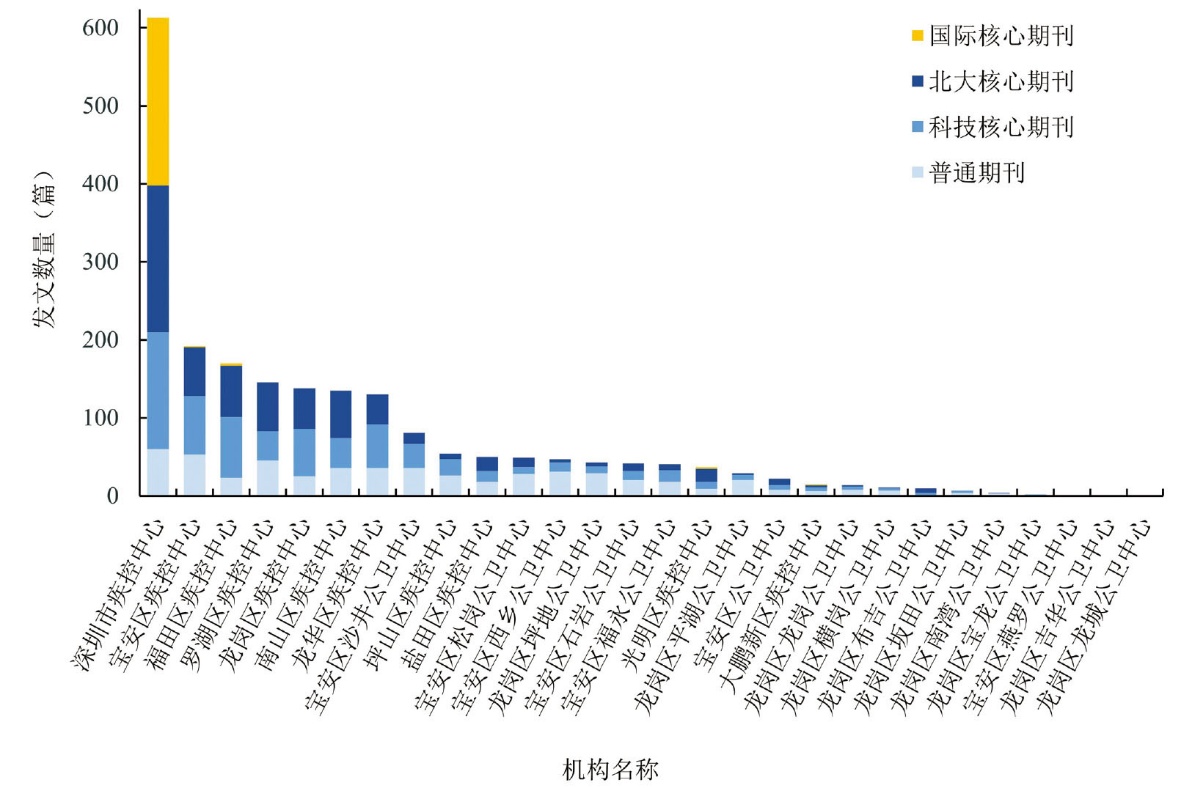
图1 2015年1月—2025年3月深圳市三级疾控机构发文量(第1单位) 注:疾控—疾病预防控制;公卫—公共卫生服务。
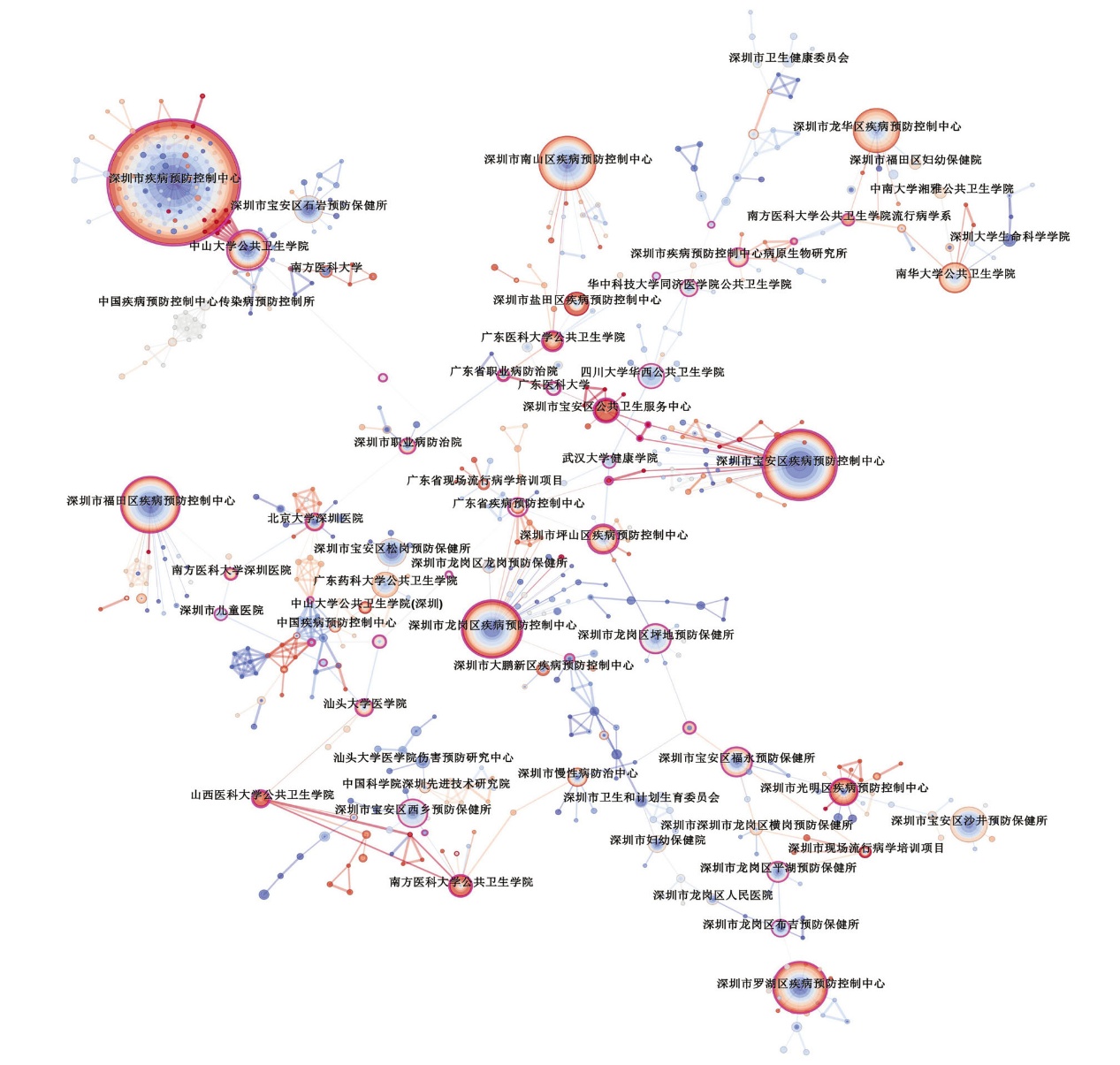
图2 2015年1月—2025年3月深圳市三级疾病预防控制机构中文论文合作网络(数据库:CNKI)
| 机构年度发文量(篇) | 期刊类型 | 2015年 | 2016年 | 2017年 | 2018年 | 2019年 | 2020年 | 2021年 | 2022年 | 2023年 | 2024年 | 2025年a | 小计 |
|---|---|---|---|---|---|---|---|---|---|---|---|---|---|
| 深圳市疾控中心 | 中文期刊 | 115 | 79 | 62 | 57 | 32 | 4 | 4 | 1 | 14 | 28 | 2 | 398 |
| 国际期刊 | 12 | 31 | 22 | 17 | 22 | 18 | 30 | 21 | 13 | 27 | 2 | 215 | |
| 区级疾控机构 | 中文期刊 | 151 | 153 | 100 | 92 | 102 | 81 | 119 | 93 | 67 | 105 | 19 | 1 082 |
| 国际期刊 | 1 | 0 | 0 | 0 | 0 | 2 | 0 | 0 | 1 | 2 | 1 | 7 | |
| 街道级公卫机构 | 中文期刊 | 65 | 56 | 71 | 45 | 59 | 35 | 26 | 19 | 1 | 5 | 1 | 383 |
| 国际期刊 | 0 | 0 | 0 | 0 | 0 | 0 | 0 | 0 | 0 | 0 | 0 | 0 | |
| 合计 | 344 | 319 | 255 | 211 | 215 | 140 | 179 | 134 | 96 | 167 | 25 | 2 085 |
表2 深圳市三级疾控机构年度发文量(第1单位)
| 机构年度发文量(篇) | 期刊类型 | 2015年 | 2016年 | 2017年 | 2018年 | 2019年 | 2020年 | 2021年 | 2022年 | 2023年 | 2024年 | 2025年a | 小计 |
|---|---|---|---|---|---|---|---|---|---|---|---|---|---|
| 深圳市疾控中心 | 中文期刊 | 115 | 79 | 62 | 57 | 32 | 4 | 4 | 1 | 14 | 28 | 2 | 398 |
| 国际期刊 | 12 | 31 | 22 | 17 | 22 | 18 | 30 | 21 | 13 | 27 | 2 | 215 | |
| 区级疾控机构 | 中文期刊 | 151 | 153 | 100 | 92 | 102 | 81 | 119 | 93 | 67 | 105 | 19 | 1 082 |
| 国际期刊 | 1 | 0 | 0 | 0 | 0 | 2 | 0 | 0 | 1 | 2 | 1 | 7 | |
| 街道级公卫机构 | 中文期刊 | 65 | 56 | 71 | 45 | 59 | 35 | 26 | 19 | 1 | 5 | 1 | 383 |
| 国际期刊 | 0 | 0 | 0 | 0 | 0 | 0 | 0 | 0 | 0 | 0 | 0 | 0 | |
| 合计 | 344 | 319 | 255 | 211 | 215 | 140 | 179 | 134 | 96 | 167 | 25 | 2 085 |
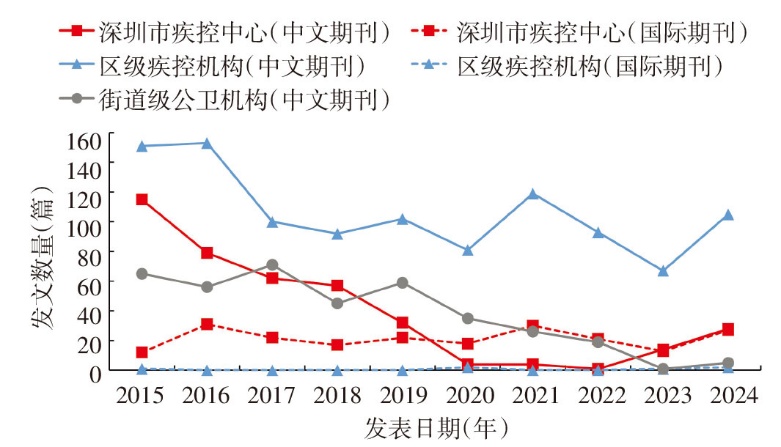
图3 深圳市三级疾控机构年度发文量(第1单位) 注:疾控—疾病预防控制;公卫—公共卫生服务。
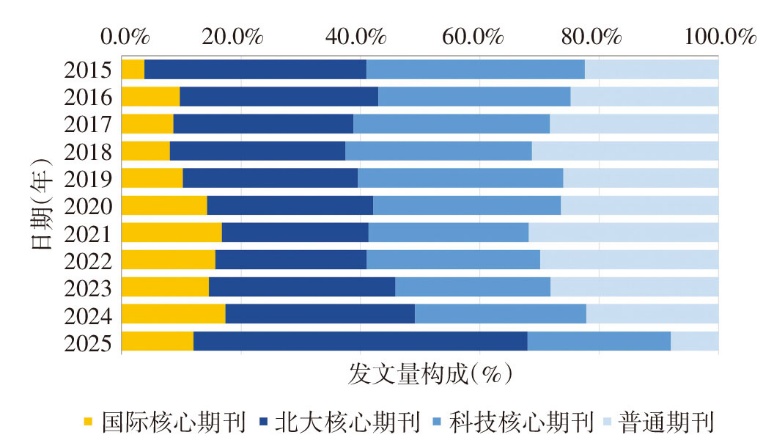
图4 深圳市三级疾病预防控制机构年度发文量构成(第1单位)
| 序号 | 期刊名 | 发文量(篇) | 占比(%) | 期刊类型 |
|---|---|---|---|---|
| 1 | 实用预防医学 | 164 | 8.8 | 科技核心 |
| 2 | 职业与健康 | 158 | 8.5 | 科技核心 |
| 3 | 中国热带医学 | 115 | 6.2 | 北大核心 |
| 4 | 热带医学杂志 | 111 | 6.0 | 科技核心 |
| 5 | 现代预防医学 | 91 | 4.9 | 北大核心 |
| 6 | 中国卫生检验杂志 | 79 | 4.2 | 北大核心 |
| 7 | 华南预防医学 | 69 | 3.7 | 科技核心 |
| 8 | 中国学校卫生 | 54 | 2.9 | 北大核心 |
| 9 | 医学动物防制 | 46 | 2.5 | 科技核心 |
| 10 | 中国消毒学杂志 | 46 | 2.5 | 北大核心 |
| 11 | 中华疾病控制杂志 | 44 | 2.4 | 北大核心 |
| 12 | 疾病监测 | 43 | 2.3 | 北大核心 |
| 13 | 预防医学论坛 | 42 | 2.3 | 普通 |
| 14 | 应用预防医学 | 41 | 2.2 | 普通 |
| 15 | 中国公共卫生管理 | 40 | 2.1 | 普通 |
| 合计 | 1 143 | 61.4 |
表3 2015年1月—2025年3月深圳市三级疾病预防控制机构发文量前15位的中文期刊(第1单位)
| 序号 | 期刊名 | 发文量(篇) | 占比(%) | 期刊类型 |
|---|---|---|---|---|
| 1 | 实用预防医学 | 164 | 8.8 | 科技核心 |
| 2 | 职业与健康 | 158 | 8.5 | 科技核心 |
| 3 | 中国热带医学 | 115 | 6.2 | 北大核心 |
| 4 | 热带医学杂志 | 111 | 6.0 | 科技核心 |
| 5 | 现代预防医学 | 91 | 4.9 | 北大核心 |
| 6 | 中国卫生检验杂志 | 79 | 4.2 | 北大核心 |
| 7 | 华南预防医学 | 69 | 3.7 | 科技核心 |
| 8 | 中国学校卫生 | 54 | 2.9 | 北大核心 |
| 9 | 医学动物防制 | 46 | 2.5 | 科技核心 |
| 10 | 中国消毒学杂志 | 46 | 2.5 | 北大核心 |
| 11 | 中华疾病控制杂志 | 44 | 2.4 | 北大核心 |
| 12 | 疾病监测 | 43 | 2.3 | 北大核心 |
| 13 | 预防医学论坛 | 42 | 2.3 | 普通 |
| 14 | 应用预防医学 | 41 | 2.2 | 普通 |
| 15 | 中国公共卫生管理 | 40 | 2.1 | 普通 |
| 合计 | 1 143 | 61.4 |
| 序号 | 期刊名称 | 发文量(篇) | 占比(%) | 中科院分区 |
|---|---|---|---|---|
| 1 | ECOTOXICOLOGY AND ENVIRONMENTAL SAFETY | 9 | 4.1 | 环境科学与生态学2区 |
| 2 | CHEMOSPHERE | 6 | 2.7 | 2025年未收录,2023年为环境科学与生态学2区Top |
| 3 | PLOS ONE | 6 | 2.7 | 综合性期刊3区 |
| 4 | BIOCHEMICAL AND BIOPHYSICAL RESEARCH COMMUNICATIONS | 5 | 2.3 | 生物学4区 |
| 5 | ENVIRONMENTAL POLLUTION | 5 | 2.3 | 环境科学与生态学2区 |
| 6 | FRONTIERS IN MICROBIOLOGY | 5 | 2.3 | 生物学2区 |
| 7 | SCIENCE OF THE TOTAL ENVIRONMENT | 5 | 2.3 | 环境科学与生态学2区Top |
| 8 | TOXICOLOGY LETTERS | 5 | 2.3 | 医学3区 |
| 9 | TOXICOLOGY RESEARCH | 5 | 2.3 | 医学4区 |
| 10 | ARCHIVES OF VIROLOGY | 4 | 1.8 | 医学4区 |
| 11 | ENVIRONMENT INTERNATIONAL | 4 | 1.8 | 环境科学与生态学1区Top |
| 12 | ENVIRONMENTAL SCIENCE AND POLLUTION RESEARCH | 4 | 1.8 | 2025年未收录,2023年为环境科学与生态学3区 |
| 13 | FOODBORNE PATHOGENS AND DISEASE | 4 | 1.8 | 农林科学3区 |
| 14 | HUMAN VACCINES & IMMUNOTHERAPEUTICS | 4 | 1.8 | 医学3区 |
| 15 | SCIENTIFIC REPORTS | 4 | 1.8 | 综合性期刊3区 |
| 16 | VECTOR-BORNE AND ZOONOTIC DISEASES | 4 | 1.8 | 医学4区 |
| 合计 | 75 | 35.6 |
表4 2015年1月—2025年3月深圳市三级疾病预防控制机构发文量前16位的国际期刊(第1单位)
| 序号 | 期刊名称 | 发文量(篇) | 占比(%) | 中科院分区 |
|---|---|---|---|---|
| 1 | ECOTOXICOLOGY AND ENVIRONMENTAL SAFETY | 9 | 4.1 | 环境科学与生态学2区 |
| 2 | CHEMOSPHERE | 6 | 2.7 | 2025年未收录,2023年为环境科学与生态学2区Top |
| 3 | PLOS ONE | 6 | 2.7 | 综合性期刊3区 |
| 4 | BIOCHEMICAL AND BIOPHYSICAL RESEARCH COMMUNICATIONS | 5 | 2.3 | 生物学4区 |
| 5 | ENVIRONMENTAL POLLUTION | 5 | 2.3 | 环境科学与生态学2区 |
| 6 | FRONTIERS IN MICROBIOLOGY | 5 | 2.3 | 生物学2区 |
| 7 | SCIENCE OF THE TOTAL ENVIRONMENT | 5 | 2.3 | 环境科学与生态学2区Top |
| 8 | TOXICOLOGY LETTERS | 5 | 2.3 | 医学3区 |
| 9 | TOXICOLOGY RESEARCH | 5 | 2.3 | 医学4区 |
| 10 | ARCHIVES OF VIROLOGY | 4 | 1.8 | 医学4区 |
| 11 | ENVIRONMENT INTERNATIONAL | 4 | 1.8 | 环境科学与生态学1区Top |
| 12 | ENVIRONMENTAL SCIENCE AND POLLUTION RESEARCH | 4 | 1.8 | 2025年未收录,2023年为环境科学与生态学3区 |
| 13 | FOODBORNE PATHOGENS AND DISEASE | 4 | 1.8 | 农林科学3区 |
| 14 | HUMAN VACCINES & IMMUNOTHERAPEUTICS | 4 | 1.8 | 医学3区 |
| 15 | SCIENTIFIC REPORTS | 4 | 1.8 | 综合性期刊3区 |
| 16 | VECTOR-BORNE AND ZOONOTIC DISEASES | 4 | 1.8 | 医学4区 |
| 合计 | 75 | 35.6 |
| 第1作者 | 发文量(篇) | 所属机构 | 主要研究领域 |
|---|---|---|---|
| 吕鸿鑫 | 11 | 深圳市龙华区疾控中心 | 食物中毒调查处置,传染病动力学模型,学校疫情经济学负担,卫生应急能力 |
| 林凯 | 11 | 深圳市盐田区疾控中心 | 疾病监测与预测,疾病负担分析,食品重金属测定方法 |
| 孙群露 | 10 | 深圳市宝安区疾控中心 | 艾滋病及HIV感染,MSM人群人群行为特征 |
| 孙健 | 10 | 深圳市宝安区疾控中心 | 食源性疾病调查处置,食源性疾病监测,食品中铝污染,手足口病流行特征 |
| 饶展宏 | 10 | 深圳市宝安区疾控中心 | 丙肝现况调查,HCV阳性率,丙肝/艾滋病知识知晓情况,职业病危害调查 |
| 牟敬锋 | 10 | 深圳市南山区疾控中心 | 公共场所军团菌污染影响因素,预警模型,大气PM2.5污染状况及影响 |
| 廖静 | 10 | 深圳市龙岗区疾控中心 | 职业病危害因素,现场流行病学,危害因素致病机制研究 |
| 杨冬燕 | 9 | 深圳市疾控中心 | 食品转基因成分测定,肉制品掺假鉴别,地沟油筛查 |
| 赵凌国 | 8 | 深圳市宝安区疾控中心 | 食物中毒原因实验室检测确证,毛细管电泳法测定技术 |
| 许玉成 | 8 | 深圳市福田区疾控中心 | 学校及托幼机构传染病,传播动力学,疾病经济负担,传染病监测数据 |
| 许欣欣 | 8 | 深圳市疾控中心 | 食品中抗生素、杀菌剂、农药、有机物等测定及暴露分析 |
| 秦彦珉 | 8 | 深圳市疾控中心 | 学校及托幼机构暴发疫情,传染病监测 |
| 罗兰 | 8 | 深圳市龙华区疾控中心 | 食品及饮用水中抗生素、毒素、生物碱等成分分析 |
| 李晓霞 | 8 | 深圳市龙岗区疾控中心 | 艾滋病及HIV感染,MSM人群人群行为特征 |
| 甘立勤 | 8 | 深圳市龙岗区疾控中心 | 传染病监测,现场流行病学,登革热防控,消毒质量监测,死因趋势 |
表5 2015年1月—2025年3月深圳市三级疾病预防控制机构中文核心期刊发文量前15位的第1作者
| 第1作者 | 发文量(篇) | 所属机构 | 主要研究领域 |
|---|---|---|---|
| 吕鸿鑫 | 11 | 深圳市龙华区疾控中心 | 食物中毒调查处置,传染病动力学模型,学校疫情经济学负担,卫生应急能力 |
| 林凯 | 11 | 深圳市盐田区疾控中心 | 疾病监测与预测,疾病负担分析,食品重金属测定方法 |
| 孙群露 | 10 | 深圳市宝安区疾控中心 | 艾滋病及HIV感染,MSM人群人群行为特征 |
| 孙健 | 10 | 深圳市宝安区疾控中心 | 食源性疾病调查处置,食源性疾病监测,食品中铝污染,手足口病流行特征 |
| 饶展宏 | 10 | 深圳市宝安区疾控中心 | 丙肝现况调查,HCV阳性率,丙肝/艾滋病知识知晓情况,职业病危害调查 |
| 牟敬锋 | 10 | 深圳市南山区疾控中心 | 公共场所军团菌污染影响因素,预警模型,大气PM2.5污染状况及影响 |
| 廖静 | 10 | 深圳市龙岗区疾控中心 | 职业病危害因素,现场流行病学,危害因素致病机制研究 |
| 杨冬燕 | 9 | 深圳市疾控中心 | 食品转基因成分测定,肉制品掺假鉴别,地沟油筛查 |
| 赵凌国 | 8 | 深圳市宝安区疾控中心 | 食物中毒原因实验室检测确证,毛细管电泳法测定技术 |
| 许玉成 | 8 | 深圳市福田区疾控中心 | 学校及托幼机构传染病,传播动力学,疾病经济负担,传染病监测数据 |
| 许欣欣 | 8 | 深圳市疾控中心 | 食品中抗生素、杀菌剂、农药、有机物等测定及暴露分析 |
| 秦彦珉 | 8 | 深圳市疾控中心 | 学校及托幼机构暴发疫情,传染病监测 |
| 罗兰 | 8 | 深圳市龙华区疾控中心 | 食品及饮用水中抗生素、毒素、生物碱等成分分析 |
| 李晓霞 | 8 | 深圳市龙岗区疾控中心 | 艾滋病及HIV感染,MSM人群人群行为特征 |
| 甘立勤 | 8 | 深圳市龙岗区疾控中心 | 传染病监测,现场流行病学,登革热防控,消毒质量监测,死因趋势 |
| 第1作者 | 发文量(篇) | 所属机构 | 主要研究领域 |
|---|---|---|---|
| LU SHAOYOU | 11 | 深圳市疾控中心 | 环境污染物暴露评估;健康风险评估与生物监测;人群特异性暴露差异;污染物毒性机制研究;环境毒物代谢动力学 |
| GUO YINSHENG | 8 | 深圳市疾控中心 | 分子病理学机制;环境流行病学与污染物暴露评估;自噬调控与疾病;生殖毒理学 |
| LIU WEI | 7 | 深圳市疾控中心 | 三氯乙烯血清蛋白质组学;microRNA;神经退行性疾病保护机制;毒物暴露认知功能障碍关联机制 |
| HUANG SULI | 6 | 深圳市疾控中心 | microRNA调控机制;心血管疾病分子流行病学;环境污染物与健康效应;疾病生物标志物 |
| MA YUE | 6 | 深圳市疾控中心 | 二氧化钛纳米颗粒毒性;三氯生致病机制;表观遗传调控机制 |
| REN XIAOHU | 6 | 深圳市疾控中心 | 三氯乙烯毒性机制;肝细胞凋亡;联合暴露健康效应评估 |
| CHEN XIAO | 5 | 深圳市疾控中心 | 神经毒性机制研究;贝类毒素;糖尿病并发症病理机制;神经退行性疾病机制与治疗 |
| YU HAITAO | 5 | 深圳市疾控中心 | 神经退行性疾病蛋白质组学;铜暴露神经毒性机制 |
表6 2015年1月—2025年3月深圳市三级疾病预防控制机构国际核心期刊发文量前8位的第1作者
| 第1作者 | 发文量(篇) | 所属机构 | 主要研究领域 |
|---|---|---|---|
| LU SHAOYOU | 11 | 深圳市疾控中心 | 环境污染物暴露评估;健康风险评估与生物监测;人群特异性暴露差异;污染物毒性机制研究;环境毒物代谢动力学 |
| GUO YINSHENG | 8 | 深圳市疾控中心 | 分子病理学机制;环境流行病学与污染物暴露评估;自噬调控与疾病;生殖毒理学 |
| LIU WEI | 7 | 深圳市疾控中心 | 三氯乙烯血清蛋白质组学;microRNA;神经退行性疾病保护机制;毒物暴露认知功能障碍关联机制 |
| HUANG SULI | 6 | 深圳市疾控中心 | microRNA调控机制;心血管疾病分子流行病学;环境污染物与健康效应;疾病生物标志物 |
| MA YUE | 6 | 深圳市疾控中心 | 二氧化钛纳米颗粒毒性;三氯生致病机制;表观遗传调控机制 |
| REN XIAOHU | 6 | 深圳市疾控中心 | 三氯乙烯毒性机制;肝细胞凋亡;联合暴露健康效应评估 |
| CHEN XIAO | 5 | 深圳市疾控中心 | 神经毒性机制研究;贝类毒素;糖尿病并发症病理机制;神经退行性疾病机制与治疗 |
| YU HAITAO | 5 | 深圳市疾控中心 | 神经退行性疾病蛋白质组学;铜暴露神经毒性机制 |
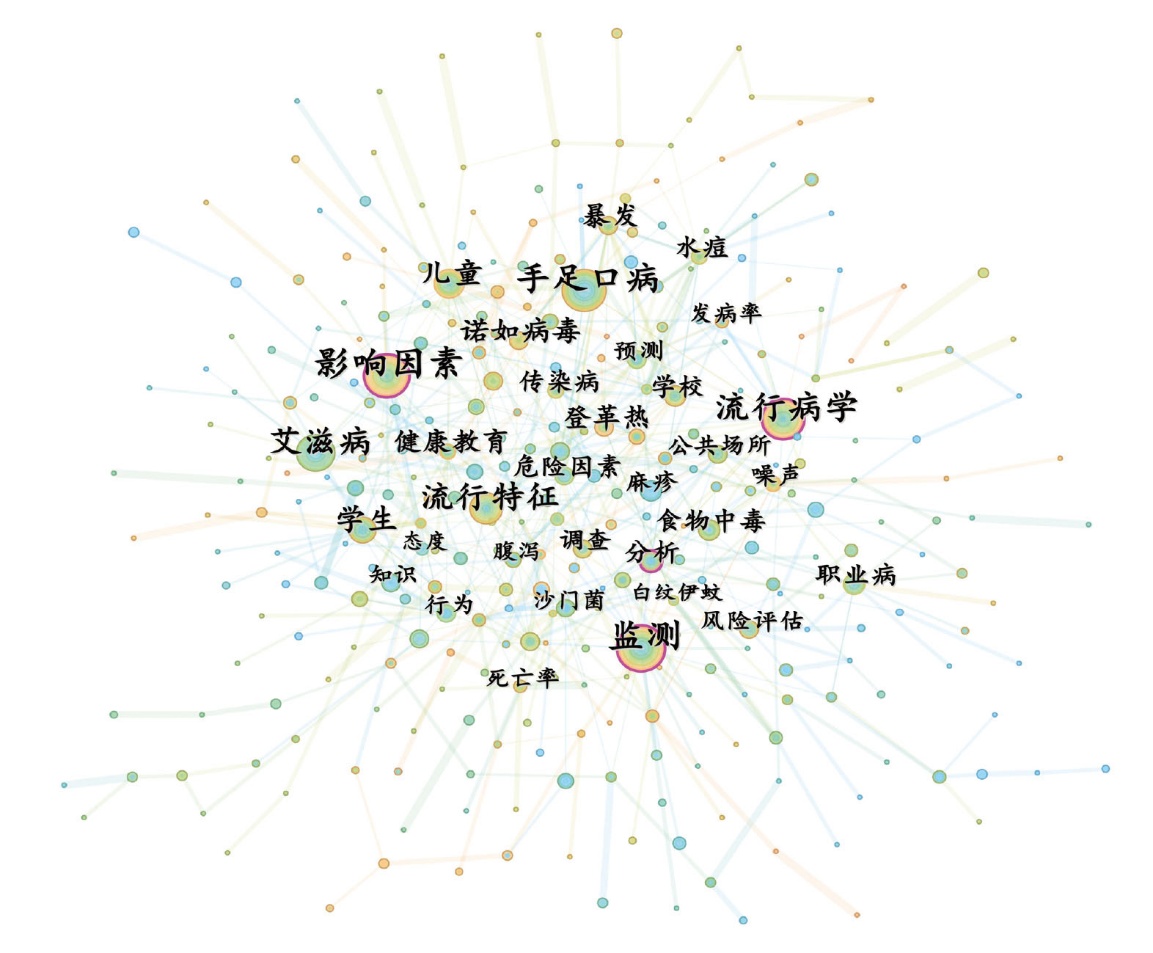
图5 2015年1月—2025年3月深圳市三级疾病预防控制机构中文论文关键词共现谱(数据库:CNKI)
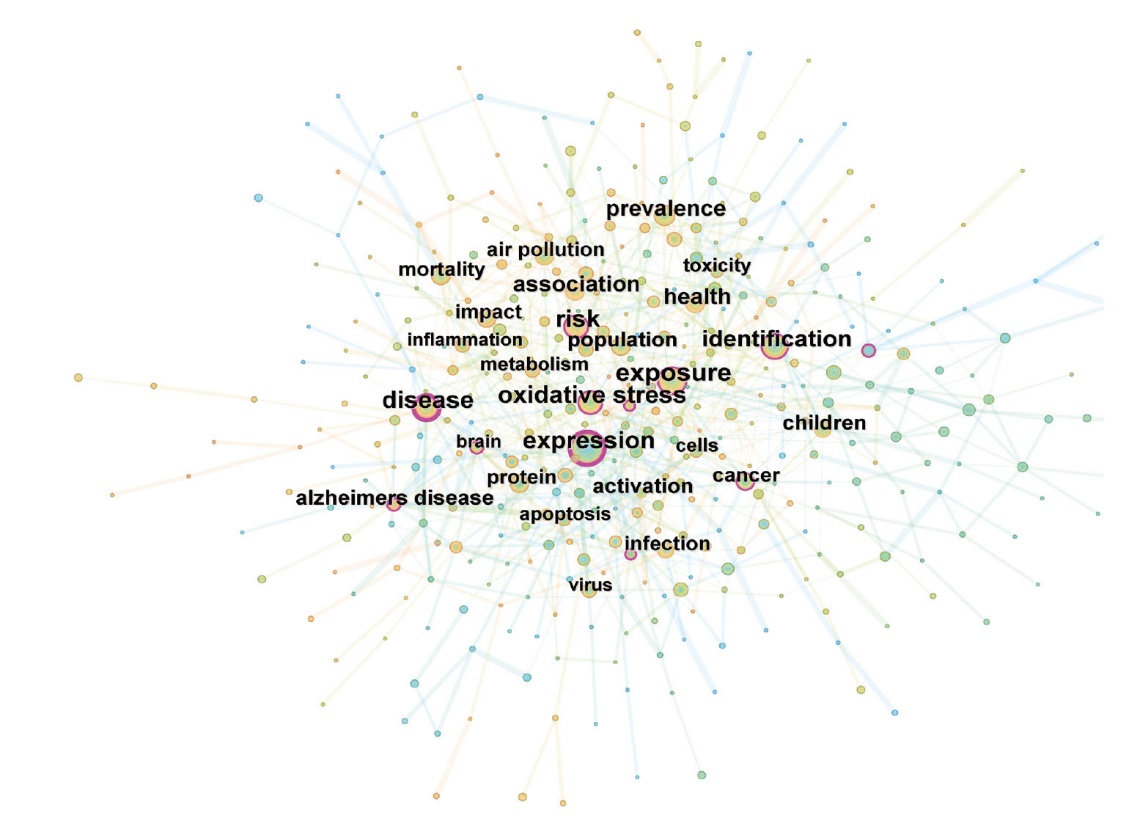
图6 2015年1月—2025年3月深圳市三级疾病预防控制机构英文论文关键词共现谱(数据库:Web of Science)
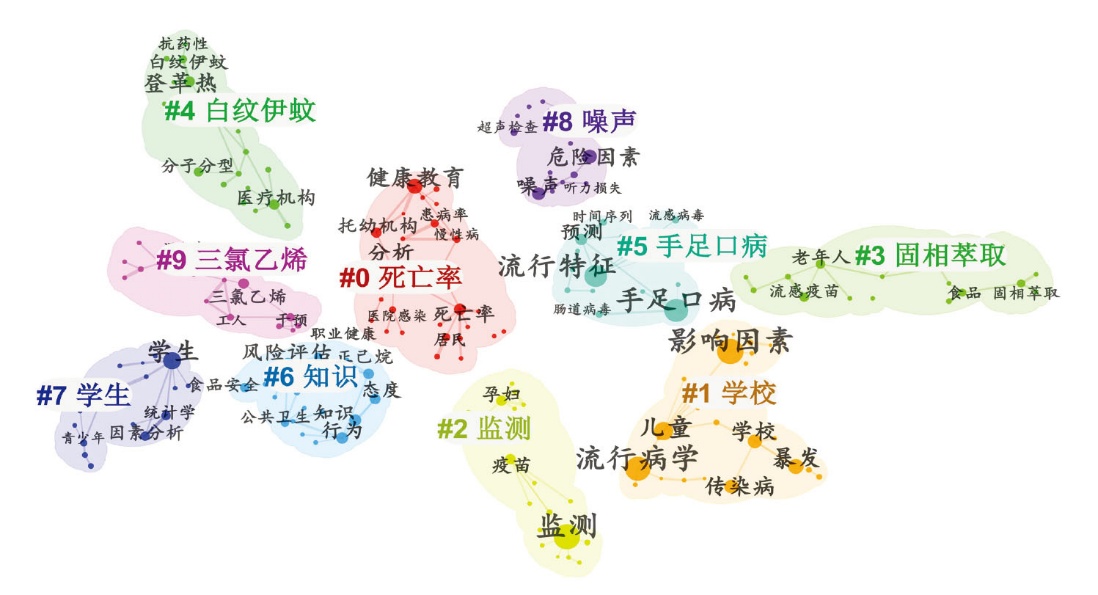
图7 2015年1月—2025年3月深圳市三级疾病预防控制机构中文论文关键词聚类谱(数据库:CNKI)
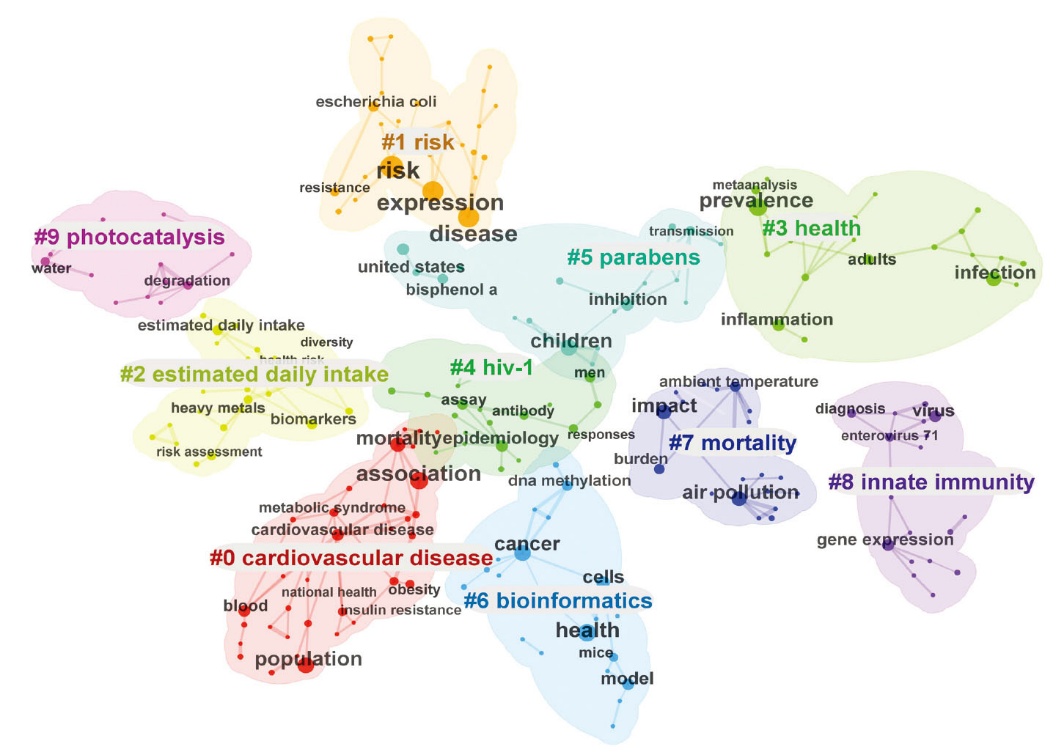
图8 2015年1月—2025年3月深圳市三级疾病预防控制机构英文论文关键词聚类谱(数据库:Web of Science)
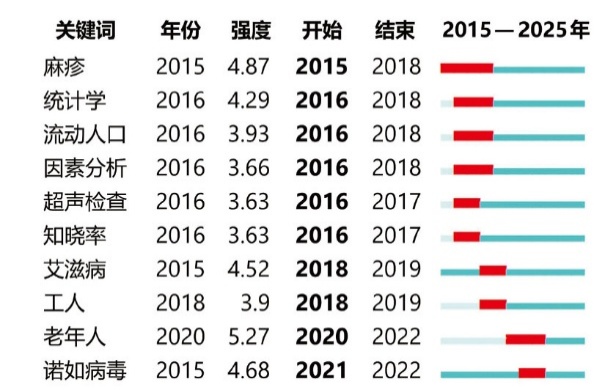
图9 2015年1月—2025年3月深圳市三级疾病预防控制机构中文论文突现词(数据库:CNKI)
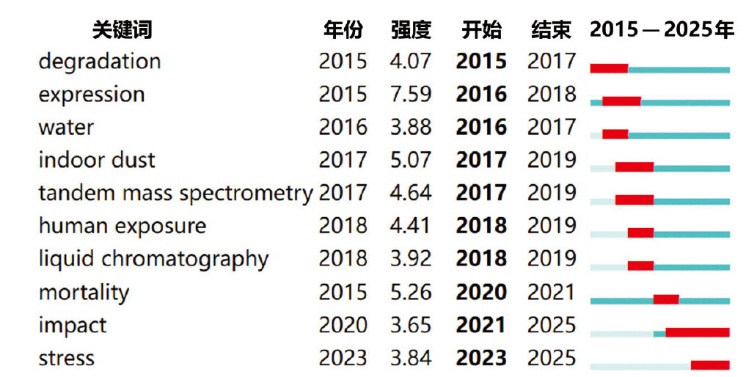
图10 2015年1月—2025年3月深圳市三级疾病预防控制机构英文论文突现词(数据库:Web of Science)
| [1] | 周金花, 徐倍, 李悦. 基于扎根理论的医院专职科研人员工作压力源模型建构[J]. 职业与健康, 2025, 41(1):61-65. |
| [2] | 宋启德. 基层医院科研管理探索——以广州市某区属医院2020—2022年SCI论文的文献计量分析为例[J]. 现代医院, 2023, 23(6):949-952. |
| [3] | 崔明. Web of Science核心合集查收查引异常案例分析[J]. 内蒙古科技与经济, 2020(10):148-151. |
| [4] | 郑亦沐, 李树强, 赵赞梅, 等. 职业驾驶作业健康影响研究的文献计量和可视化分析[J]. 职业与健康, 2025, 41(4):554-559. |
| [5] | 扎西卓玛, 任雪琳, 冯渤曦, 等. 我国社区居民健康教育研究热点与发展前沿可视化分析[J]. 职业与健康, 2024, 40(18):2574-2580. |
| [6] | 赵晓云, 黄春燕, 赵晓东. 福建省9个市级疾病预防控制机构2004—2023年科研论文文献计量学分析[J]. 海峡预防医学杂志, 2024, 30(4):100-103. |
| [7] | 聂婵, 李雪云, 唐兰, 等. 2000—2024年中国侵袭性真菌研究热点的可视化分析[J]. 中国感染控制杂志, 2025, 24(5):584-590. |
| [8] | 刘娜娜, 黄烈雨, 刘拓, 等. 基于Citespace的我国健康预期寿命研究热点和发展脉络分析[J]. 疾病监测, 2024, 39(11):1509-1516. |
| [9] | 陈姣, 汪源, 王晓宇, 等. 2011—2020年中国省级疾控中心SCI论文发表情况和研究热点[J]. 环境与职业医学, 2022, 39(11):1249-1255. |
| [10] | 郭予洪, 李美霞, 吴迪. 2016—2020年广州市疾病预防控制中心科研论文发表情况分析[J]. 职业卫生与病伤, 2021, 36(5):327-332. |
| [11] | 林少辉, 罗秀凤, 谢兆勋. 2004—2019年福州市疾病预防控制中心科技论文分析[J]. 预防医学论坛, 2021, 27(1):13-16. |
| [12] | 宁国英, 阴孝刚, 吴金川, 等. 2015—2020年济南市疾病预防控制中心论文发表情况分析[J]. 预防医学论坛, 2022, 28(4):281-283. |
| [13] | 李琳, 宗莲, 张勤丽, 等. 上海市某区疾病预防控制中心2009—2018年论文发表情况分析[J]. 中国公共卫生管理, 2020, 36(6):905-908. |
| [14] | 牛媛娜, 杨泳慧, 唐聪, 等. 2014—2023年河南省疾控系统中文论文的文献计量和可视化分析[J]. 现代疾病预防控制, 2024, 35(11):848-852. |
| [15] | 肖浪潮, 贺金, 冯海哲, 等. 2016—2021年贵州省疾控系统中文论文的文献计量和可视化分析[J]. 贵州医药, 2023, 47(10):1534-1536. |
| [16] | 邱均平. 信息计量学(六)第六讲文献信息作者分布规律——洛特卡定律[J]. 情报理论与实践, 2000(6):475-478. |
| [17] | 马银琦, 姚昊. 学术履历对教育学者实证研究产出的影响研究——基于2015—2019年核心作者的分析[J]. 中国高教研究, 2020(9):73-79. |
| [18] | 阎国华, 韩秀霞. 高校教师科学研究的协作障碍与促进策略[J]. 现代教育管理, 2020(3):59-64. |
| [19] | LI M Y, DENG K, CHENG X H, et al. ARF4-mediated intracellular transport as a broad-spectrum antiviral target[J]. Nat Microbiol, 2025, 10(3):710-723. |
| [20] | YUAN G, ZENG Y, HU G, et al. Inverse association of certain seminal phthalate metabolites with semen quality may be mediated by androgen synthesis:A cross-sectional study from the South China[J]. Environ Int, 2021, 151:106459. |
| [21] | GUO Z, LIU P, LI T, et al. Associations of urinary nicotine metabolites and essential metals with metabolic syndrome in older adults:The mediation effect of insulin resistance[J]. J Hazard Mater, 2024, 480:135969. |
| [22] | 许玉成, 张瑞银, 周志峰, 等. 学校及托幼机构流行性感冒疫情传播能力评估和停课措施效果评价[J]. 中国学校卫生, 2021, 42(2):273-276. |
| [23] | 游杰, 岳亚军, 夏伟, 等. 深圳市罗湖区居民淡水鱼中孔雀石绿膳食暴露水平概率评估[J]. 现代预防医学, 2020, 47(11):1975-1979. |
| [24] | 吴维权, 柯伟奕, 曾细嫦, 等. 深圳市电子行业企业中苯系物的职业健康风险评估[J]. 职业与健康, 2022, 38(11):1450-1454,1459. |
| [25] | 蒋叶, 姚育楠, 陈宇洁. 基于灰色关联度的南通市疾病预防控制中心高层次人才吸引力分析[J]. 职业与健康, 2023, 39(3):414-417. |
| [1] | 邓晓谍, 杨康晴, 王菲, 王小俊, 成芳. 基于CiteSpace的我国护理职业倦怠相关研究的可视化分析[J]. 职业与健康, 2026, 42(9): 1255-1261. |
| [2] | 崔怡, 李佳遥, 籍婧睿, 柳琴, 刘娜, 马磊. 基于CiteSpace的突发公共事件救援人员心理健康防护研究热点与趋势的可视化分析[J]. 职业与健康, 2026, 42(7): 977-982. |
| [3] | 张鹏, 方亮, 周学伟, 刘才勇, 张洪. 医疗放射技术人员职业健康与安全研究可视化分析[J]. 职业与健康, 2026, 42(6): 812-816. |
| [4] | 胡慧, 姬菁, 邢婉莹, 王秀超. 基于CiteSpace的情绪稳定性研究趋势及热点分析[J]. 职业与健康, 2026, 42(6): 817-824. |
| [5] | 吕茜, 蔡倩, 赵建荣, 徐静艳, 杨红丽, 曾思燚. 国内外HIV/AIDS患者血液透析领域研究热点及趋势可视化分析[J]. 职业与健康, 2026, 42(5): 687-695. |
| [6] | 杏玲芝, 汉瑞娟, 杨亚楠, 朱鑫华. 基于CiteSpace的我国高原军事心理领域研究现状与趋势分析[J]. 职业与健康, 2026, 42(2): 243-248. |
| [7] | 马立国, 汪军, 龚静, 陈栋, 秦伟. 2009—2023年我国基本公共卫生服务研究热点与趋势分析[J]. 职业与健康, 2026, 42(2): 249-253. |
| [8] | 宋旺, 白倩, 周懿, 杨铭, 余方青, 常诚. 科技文献视角下我国卫生健康团体标准发展态势研究[J]. 职业与健康, 2026, 42(11): 1554-1558. |
| [9] | 王亚君, 吕利明, 林淑楠, 张嘉卓. 基于CiteSpace的国内外护士工作家庭冲突相关研究的可视化分析[J]. 职业与健康, 2026, 42(10): 1414-1419. |
| [10] | 于思淼, 王雪梅, 张莹, 刘阳, 刘子晗, 李之华. 我国实习护生核心能力研究热点的共词聚类分析[J]. 职业与健康, 2026, 42(1): 120-124. |
| [11] | 袁作琴, 张文墨. 近30年中国高原军人心理健康研究的知识图谱-基于CiteSpace的可视化分析[J]. 职业与健康, 2025, 41(6): 826-830. |
| [12] | 郑亦沐, 李树强, 赵赞梅, 张雁林, 关里. 职业驾驶作业健康影响研究的文献计量和可视化分析[J]. 职业与健康, 2025, 41(4): 554-559. |
| [13] | 何彩荣, 汪浪红, 庞盼杏, 徐中岳. 我国保健食品研究热点及趋势分析[J]. 职业与健康, 2025, 41(22): 3132-3137. |
| [14] | 赵晨晨, 满孝平, 张强, 赵婉越, 周松. 基于CiteSpace的老年人跌倒恐惧研究热点和趋势的可视化分析[J]. 职业与健康, 2025, 41(21): 3008-3014. |
| [15] | 李玉杰, 徐立然, 孟鹏飞, 徐芙蓉, 卢昶, 岳静宇. 基于CiteSpace与VOSviewer的中医药防治艾滋病领域研究的可视化分析[J]. 职业与健康, 2025, 41(20): 2833-2837. |
| 阅读次数 | ||||||
|
全文 |
|
|||||
|
摘要 |
|
|||||
 津公网安备12010202000831号 津ICP备11005889号-6