

职业与健康 ›› 2026, Vol. 42 ›› Issue (18): 2490-2495.
寇久隆1,2, 许雪宇2, 李雪丹2,3, 李佳慧1,2, 杨倩2, 何平2( )
)
收稿日期:2025-07-25
修回日期:2025-12-29
出版日期:2026-09-15
发布日期:2026-08-28
通信作者:
何平
作者简介:何平,E-mail:304230180@qq.com基金资助:
KOU Jiulong1,2, XU Xueyu2, LI Xuedan2,3, LI Jiahui1,2, YANG Qian2, HE Ping2()
Received:2025-07-25
Revised:2025-12-29
Online:2026-09-15
Published:2026-08-28
Contact:
HE Ping
摘要:
目的 分析半胱氨酸蛋白酶1(CASP1)基因多态性与新疆地区矽肺的遗传易感性,以及位点间交互作用与矽肺发病的相关性,为矽肺的发病及预防提供线索。方法 采用方便抽样,选取2020年1月—2024年12月在新疆某家省级职业病诊断机构进行职业性矽肺病诊断的劳动者为分析对象,共纳入84例职业性矽肺病患者为病例组,以70例接触矽尘作业而未患尘肺病的劳动者为对照组。选择CASP1基因的单核苷酸多态性位点rs2282659、rs530537、rs516095、rs1790203,采集血样后提取DNA进行基因分型,应用非条件Logistic回归模型对基因多态性与矽肺易感性的关联性进行分析。采用广义多因子降维(generalized multifactor dimensionality reduction,GMDR)分析位点间的交互作用与矽肺的相关性。结果 矽肺组rs2282659、rs530537次要等位基因频率低于接尘对照组(P<0.05)。在校正接尘工龄、吸烟和饮酒等混杂因素后,rs530537位点显性模型中,TC、CC基因型携带者罹患矽肺的风险低于TT基因型携带者(OR=0.461,95%CI:0.231~0.922,P<0.05);超显性模型下,TC基因型携带者罹患矽肺的风险低于TT、CC基因型携带者(OR=0.495,95%CI:0.245~0.999,P<0.05);加性模型下,随着C等位基因数量的增加矽肺患病风险逐渐降低(OR=0.541,95%CI:0.299~0.976,P<0.05),显性模型是最佳遗传模型。GMDR位点间交互分析发现rs2282659,rs530537,rs1790203三位点相互作用模型为最佳模型(P<0.05)。结论 CASP1基因rs530537和rs2282659与罹患矽肺的风险相关,且与rs1790203位点间存在交互作用,为进一步研究矽肺的发病风险提供了线索。
中图分类号:
寇久隆, 许雪宇, 李雪丹, 李佳慧, 杨倩, 何平. CASP1基因多态性及位点间交互作用与新疆地区矽肺易感性分析. [J]职业与健康, 2026, 42(18): 2490-2495.
KOU Jiulong, XU Xueyu, LI Xuedan, LI Jiahui, YANG Qian, HE Ping. Analysis of CASP1 gene polymorphisms and loci interaction with susceptibility to silicosis in Xinjiang. [J]OCCUPATION AND HEALTH, 2026, 42(18): 2490-2495.
| 项目 | 接尘对照组(n=70) | 矽肺组(n=84) | Z/χ2值 | P值 |
|---|---|---|---|---|
| 年龄 | 53.00(49.00,57.00) | 53.00(50.00,56.75) | -0.320a | 0.749 |
| 工种 | 3.789b | 0.285 | ||
| 掘进工 | 39(55.7) | 52(61.9) | ||
| 皮带巡检工 | 15(21.4) | 14(16.7) | ||
| 采煤工 | 11(15.7) | 7(8.3) | ||
| 其他 | 5(7.1)d | 11(13.1) | ||
| 接尘工龄(年) | 14.00(10.00,23.00) | 18.00(13.00,23.75) | -1.755a | 0.079 |
| 接尘工龄(年) | 3.455b | 0.178 | ||
| 0~<20 | 44(62.9) | 46(54.8) | ||
| 20~<30 | 15(21.4) | 28(34.5) | ||
| ≥30 | 11(15.7) | 9(10.7) | ||
| 吸烟 | 6.297b | 0.012 | ||
| 是 | 41(58.6) | 65(77.4) | ||
| 否 | 29(41.4) | 19(22.6) | ||
| 饮酒 | 7.652b | 0.006 | ||
| 是 | 26(37.1) | 50(59.5) | ||
| 否 | 44(62.9) | 34(40.5) | ||
| 锻炼 | 2.553b | 0.110 | ||
| 是 | 23(32.9) | 18(21.4) | ||
| 否 | 47(67.1) | 66(78.6) | ||
| 工作环境 | 3.188c | 0.366 | ||
| 井下 | 56(80.0) | 57(67.9) | ||
| 敞开式车间 | 5(7.1) | 9(10.7) | ||
| 密闭大车间 | 5(7.1) | 12(14.3) | ||
| 露天 | 4(5.7)d | 6(7.1) | ||
| 日均工作时间(h) | 0.733b | 0.392 | ||
| 0~8 | 42(60.0) | 56(66.7) | ||
| >8 | 28(40.0) | 28(33.3) |
表1 2020年1月—2024年12月在新疆某家省级职业病诊断机构进行职业性矽肺诊断的154名劳动者基本情况
| 项目 | 接尘对照组(n=70) | 矽肺组(n=84) | Z/χ2值 | P值 |
|---|---|---|---|---|
| 年龄 | 53.00(49.00,57.00) | 53.00(50.00,56.75) | -0.320a | 0.749 |
| 工种 | 3.789b | 0.285 | ||
| 掘进工 | 39(55.7) | 52(61.9) | ||
| 皮带巡检工 | 15(21.4) | 14(16.7) | ||
| 采煤工 | 11(15.7) | 7(8.3) | ||
| 其他 | 5(7.1)d | 11(13.1) | ||
| 接尘工龄(年) | 14.00(10.00,23.00) | 18.00(13.00,23.75) | -1.755a | 0.079 |
| 接尘工龄(年) | 3.455b | 0.178 | ||
| 0~<20 | 44(62.9) | 46(54.8) | ||
| 20~<30 | 15(21.4) | 28(34.5) | ||
| ≥30 | 11(15.7) | 9(10.7) | ||
| 吸烟 | 6.297b | 0.012 | ||
| 是 | 41(58.6) | 65(77.4) | ||
| 否 | 29(41.4) | 19(22.6) | ||
| 饮酒 | 7.652b | 0.006 | ||
| 是 | 26(37.1) | 50(59.5) | ||
| 否 | 44(62.9) | 34(40.5) | ||
| 锻炼 | 2.553b | 0.110 | ||
| 是 | 23(32.9) | 18(21.4) | ||
| 否 | 47(67.1) | 66(78.6) | ||
| 工作环境 | 3.188c | 0.366 | ||
| 井下 | 56(80.0) | 57(67.9) | ||
| 敞开式车间 | 5(7.1) | 9(10.7) | ||
| 密闭大车间 | 5(7.1) | 12(14.3) | ||
| 露天 | 4(5.7)d | 6(7.1) | ||
| 日均工作时间(h) | 0.733b | 0.392 | ||
| 0~8 | 42(60.0) | 56(66.7) | ||
| >8 | 28(40.0) | 28(33.3) |
| 位点 | 位置 | 等位 基因 | 基因区域 | 次要等位基因频率 | Hardy-Weinberg 平衡检验P值 | |
|---|---|---|---|---|---|---|
| 矽肺组 | 接尘对照组 | |||||
| rs2282659 | chr1:104897437 | A/G | 内含子变异 | 0.15 | 0.25 | 0.447 |
| rs530537 | chr1:104898513 | T/C | 内含子变异 | 0.20 | 0.32 | 0.667 |
| rs516095 | chr1:104902938 | G/T | 内含子变异 | 0.22 | 0.26 | 0.827 |
| rs1790203 | chr1:104896613 | A/G | 内含子变异 | 0.21 | 0.26 | 1.000 |
表2 CASP1基因4个SNPs位点基本信息
| 位点 | 位置 | 等位 基因 | 基因区域 | 次要等位基因频率 | Hardy-Weinberg 平衡检验P值 | |
|---|---|---|---|---|---|---|
| 矽肺组 | 接尘对照组 | |||||
| rs2282659 | chr1:104897437 | A/G | 内含子变异 | 0.15 | 0.25 | 0.447 |
| rs530537 | chr1:104898513 | T/C | 内含子变异 | 0.20 | 0.32 | 0.667 |
| rs516095 | chr1:104902938 | G/T | 内含子变异 | 0.22 | 0.26 | 0.827 |
| rs1790203 | chr1:104896613 | A/G | 内含子变异 | 0.21 | 0.26 | 1.000 |
| SNP位点 | 等位 基因 | 接尘对照组 (n=70) | 矽肺组 (n=84) | OR(95%CI) | P值 |
|---|---|---|---|---|---|
| rs2282659 | A | 105(75.0) | 142(84.5) | 1.000 | 0.037 |
| G | 35(25.0) | 26(15.5) | 0.549(0.312~0.968) | ||
| rs530537 | T | 95(67.9) | 136(81.0) | 1.000 | 0.008 |
| C | 45(32.1) | 32(19.0) | 0.496(0.294~0.838) | ||
| rs516095 | G | 103(73.6) | 131(78.0) | 1.000 | 0.368 |
| T | 37(26.4) | 37(22.0) | 0.786(0.466~1.327) | ||
| rs1790203 | A | 103(73.6) | 132(78.6) | 1.000 | 0.305 |
| G | 37(26.4) | 36(21.4) | 0.759(0.449~1.285) |
表3 2020年1月—2024年12月在新疆某家省级职业病诊断机构进行职业性矽肺诊断的154名劳动者CASP1基因4个SNPs位点等位基因频率分布[人(%)]
| SNP位点 | 等位 基因 | 接尘对照组 (n=70) | 矽肺组 (n=84) | OR(95%CI) | P值 |
|---|---|---|---|---|---|
| rs2282659 | A | 105(75.0) | 142(84.5) | 1.000 | 0.037 |
| G | 35(25.0) | 26(15.5) | 0.549(0.312~0.968) | ||
| rs530537 | T | 95(67.9) | 136(81.0) | 1.000 | 0.008 |
| C | 45(32.1) | 32(19.0) | 0.496(0.294~0.838) | ||
| rs516095 | G | 103(73.6) | 131(78.0) | 1.000 | 0.368 |
| T | 37(26.4) | 37(22.0) | 0.786(0.466~1.327) | ||
| rs1790203 | A | 103(73.6) | 132(78.6) | 1.000 | 0.305 |
| G | 37(26.4) | 36(21.4) | 0.759(0.449~1.285) |
| 遗传模型 | 基因型 | 接尘对照组 (n=70) | 矽肺组 (n=84) | 模型1 | 模型2 | |||
|---|---|---|---|---|---|---|---|---|
| OR(95%CI) | P值 | OR(95%CI) | P值 | AIC值 | ||||
| rs2282659 | ||||||||
| 共显性模型 | AA | 39(55.7) | 58(67.9) | 1.000 | 0.031 | 1.000 | 0.082 | 208.770 |
| AG | 27(38.6) | 26(32.1) | 0.777(0.395~1.527) | 0.925(0.449~1.907) | ||||
| GG | 4(5.7) | 0(0.0) | ||||||
| 显性模型 | AA | 39(55.8) | 58(69.0) | 1.000 | 0.088 | 1.000 | 0.562 | 211.440 |
| AG+GG | 31(44.2) | 26(31.0) | 0.670 (0.346~1.296) | 0.811(0.399~1.646) | ||||
| 隐性模型 | AA+AG | 66(94.3) | 84(100.0) | 1.000 | 0.041 | 1.000 | 0.026 | 206.815 |
| GG | 4(5.7) | 0(0.0) | ||||||
| 超显性模型 | AA+GG | 43(61.4) | 58(69.0) | 1.000 | 0.322 | 1.000 | 0.988 | 211.776 |
| AG | 27(38.6) | 26(31.0) | 0.853 (0.436~1.666) | 1.005(0.490~2.061) | ||||
| 加性模型 | 0.594 (0.311~0.968) | 0.036 | 0.581(0.301~1.112) | 0.288 | 210.646 | |||
| rs530537 | ||||||||
| 共显性模型 | TT | 30(42.9) | 55(65.5) | 1.000 | 0.018 | 1.000 | 0.088 | 208.925 |
| TC | 35(50.0) | 26(31.0) | 0.405(0.206~0.796) | 0.462(0.226~0.946) | ||||
| CC | 5(7.1) | 3(3.5) | 0.327 (0.073~1.465) | 0.454(0.091~2.252) | ||||
| 显性模型 | TT | 30(42.9) | 55(65.5) | 1.000 | 0.005 | 1.000 | 0.028 | 206.926 |
| TC+CC | 40(57.1) | 29(34.5) | 0.396 (0.206~0.760) | 0.461(0.231~0.922) | ||||
| 隐性模型 | TT+TC | 65(92.9) | 81(96.4) | 1.000 | 0.320 | 1.000 | 0.560 | 211.436 |
| CC | 5(7.1) | 3(3.6) | 0.482 (0.111~2.090) | 0.628(0.130~3.042) | ||||
| 超显性模型 | TT+CC | 35(50.0) | 58(69.0) | 1.000 | 0.016 | 1.000 | 0.048 | 207.882 |
| TC | 35(50.0) | 26(31.0) | 0.448 (0.232~0.866) | 0.495(0.245~0.999) | ||||
| 加性模型 | 0.468 (0.267~0.818) | 0.008 | 0.541(0.299~0.976) | 0.039 | 207.494 | |||
| rs516095 | ||||||||
| 共显性模型 | GG | 37(52.9) | 51(60.7) | 1.000 | 0.618 | 1.000 | 0.885 | 213.532 |
| GT | 29(41.4) | 29(34.5) | 0.726 (0.373~1.413) | 0.836(0.412~1.699) | ||||
| TT | 4(5.7) | 4(4.8) | 0.726 (0.170~3.090) | 0.917(0.194~4.338) | ||||
| 显性模型 | GG | 37(52.9) | 51(60.7) | 1.000 | 0.327 | 1.000 | 0.630 | 211.545 |
| GT+TT | 33(47.1) | 33(39.3) | 0.726 (0.382~1.378) | 0.846(0.428~1.673) | ||||
| 隐性模型 | GG+GT | 66(94.3) | 80(95.2) | 1.000 | 0.327 | 1.000 | 0.983 | 211.776 |
| TT | 4(5.7) | 4(4.8) | 0.825 (0.199~3.426) | 0..983(0.213~4.543) | ||||
| 超显性模型 | GG+TT | 41(58.6) | 55(65.5) | 1.000 | 0.379 | 1.000 | 0.630 | 211.544 |
| GT | 29(41.4) | 29(34.5) | 0.746 (0.387~1.435) | 0.842(0.420~1.692) | ||||
| 加性模型 | 0.780 (0.457~1.330) | 0.361 | 0.888(0.503~1.568) | 0.683 | 211.609 | |||
| rs1790203 | ||||||||
| 共显性模型 | AA | 37(52.9) | 52(61.9) | 1.000 | 0.527 | 1.000 | 0.837 | 213.421 |
| GA | 29(41.4) | 28(33.3) | 0.687 (0.352~1.341) | 0.806(0.396~1.640) | ||||
| GG | 4(5.7) | 4(4.8) | 0.712 (0.167~3.029) | 0.94(0.191~4.273) | ||||
| 显性模型 | AA | 37(52.9) | 52(61.9) | 1.000 | 0.258 | 1.000 | 0.563 | 211.441 |
| GA+GG | 33(47.1) | 32(38.1) | 0.690 (0.363~1.313) | 0.817(0.412~1.619) | ||||
| 隐性模型 | AA+GA | 66(94.3) | 80(95.2) | 1.000 | 0.791 | 1.000 | 0.983 | 211.776 |
| GG | 4(5.7) | 4(4.8) | 0.825 (0.199~3.426) | 0.983(0.213~4.543) | ||||
| 超显性模型 | AA+GG | 41(58.6) | 56(66.7) | 1.000 | 0.301 | 1.000 | 0.560 | 211.438 |
| GA | 29(41.4) | 28(33.3) | 0.707 (0.366~1.364) | 0.812(0.403~1.635) | ||||
| 加性模型 | 0.753 (0.441~1.287) | 0.300 | 0.867(0.491~1.533) | 0.625 | 211.537 | |||
表4 2020年1月—2024年12月在新疆某家省级职业病诊断机构进行职业性矽肺诊断的154名劳动者CASP1基因4个SNPs位点不同遗传模型与矽肺易感性分析
| 遗传模型 | 基因型 | 接尘对照组 (n=70) | 矽肺组 (n=84) | 模型1 | 模型2 | |||
|---|---|---|---|---|---|---|---|---|
| OR(95%CI) | P值 | OR(95%CI) | P值 | AIC值 | ||||
| rs2282659 | ||||||||
| 共显性模型 | AA | 39(55.7) | 58(67.9) | 1.000 | 0.031 | 1.000 | 0.082 | 208.770 |
| AG | 27(38.6) | 26(32.1) | 0.777(0.395~1.527) | 0.925(0.449~1.907) | ||||
| GG | 4(5.7) | 0(0.0) | ||||||
| 显性模型 | AA | 39(55.8) | 58(69.0) | 1.000 | 0.088 | 1.000 | 0.562 | 211.440 |
| AG+GG | 31(44.2) | 26(31.0) | 0.670 (0.346~1.296) | 0.811(0.399~1.646) | ||||
| 隐性模型 | AA+AG | 66(94.3) | 84(100.0) | 1.000 | 0.041 | 1.000 | 0.026 | 206.815 |
| GG | 4(5.7) | 0(0.0) | ||||||
| 超显性模型 | AA+GG | 43(61.4) | 58(69.0) | 1.000 | 0.322 | 1.000 | 0.988 | 211.776 |
| AG | 27(38.6) | 26(31.0) | 0.853 (0.436~1.666) | 1.005(0.490~2.061) | ||||
| 加性模型 | 0.594 (0.311~0.968) | 0.036 | 0.581(0.301~1.112) | 0.288 | 210.646 | |||
| rs530537 | ||||||||
| 共显性模型 | TT | 30(42.9) | 55(65.5) | 1.000 | 0.018 | 1.000 | 0.088 | 208.925 |
| TC | 35(50.0) | 26(31.0) | 0.405(0.206~0.796) | 0.462(0.226~0.946) | ||||
| CC | 5(7.1) | 3(3.5) | 0.327 (0.073~1.465) | 0.454(0.091~2.252) | ||||
| 显性模型 | TT | 30(42.9) | 55(65.5) | 1.000 | 0.005 | 1.000 | 0.028 | 206.926 |
| TC+CC | 40(57.1) | 29(34.5) | 0.396 (0.206~0.760) | 0.461(0.231~0.922) | ||||
| 隐性模型 | TT+TC | 65(92.9) | 81(96.4) | 1.000 | 0.320 | 1.000 | 0.560 | 211.436 |
| CC | 5(7.1) | 3(3.6) | 0.482 (0.111~2.090) | 0.628(0.130~3.042) | ||||
| 超显性模型 | TT+CC | 35(50.0) | 58(69.0) | 1.000 | 0.016 | 1.000 | 0.048 | 207.882 |
| TC | 35(50.0) | 26(31.0) | 0.448 (0.232~0.866) | 0.495(0.245~0.999) | ||||
| 加性模型 | 0.468 (0.267~0.818) | 0.008 | 0.541(0.299~0.976) | 0.039 | 207.494 | |||
| rs516095 | ||||||||
| 共显性模型 | GG | 37(52.9) | 51(60.7) | 1.000 | 0.618 | 1.000 | 0.885 | 213.532 |
| GT | 29(41.4) | 29(34.5) | 0.726 (0.373~1.413) | 0.836(0.412~1.699) | ||||
| TT | 4(5.7) | 4(4.8) | 0.726 (0.170~3.090) | 0.917(0.194~4.338) | ||||
| 显性模型 | GG | 37(52.9) | 51(60.7) | 1.000 | 0.327 | 1.000 | 0.630 | 211.545 |
| GT+TT | 33(47.1) | 33(39.3) | 0.726 (0.382~1.378) | 0.846(0.428~1.673) | ||||
| 隐性模型 | GG+GT | 66(94.3) | 80(95.2) | 1.000 | 0.327 | 1.000 | 0.983 | 211.776 |
| TT | 4(5.7) | 4(4.8) | 0.825 (0.199~3.426) | 0..983(0.213~4.543) | ||||
| 超显性模型 | GG+TT | 41(58.6) | 55(65.5) | 1.000 | 0.379 | 1.000 | 0.630 | 211.544 |
| GT | 29(41.4) | 29(34.5) | 0.746 (0.387~1.435) | 0.842(0.420~1.692) | ||||
| 加性模型 | 0.780 (0.457~1.330) | 0.361 | 0.888(0.503~1.568) | 0.683 | 211.609 | |||
| rs1790203 | ||||||||
| 共显性模型 | AA | 37(52.9) | 52(61.9) | 1.000 | 0.527 | 1.000 | 0.837 | 213.421 |
| GA | 29(41.4) | 28(33.3) | 0.687 (0.352~1.341) | 0.806(0.396~1.640) | ||||
| GG | 4(5.7) | 4(4.8) | 0.712 (0.167~3.029) | 0.94(0.191~4.273) | ||||
| 显性模型 | AA | 37(52.9) | 52(61.9) | 1.000 | 0.258 | 1.000 | 0.563 | 211.441 |
| GA+GG | 33(47.1) | 32(38.1) | 0.690 (0.363~1.313) | 0.817(0.412~1.619) | ||||
| 隐性模型 | AA+GA | 66(94.3) | 80(95.2) | 1.000 | 0.791 | 1.000 | 0.983 | 211.776 |
| GG | 4(5.7) | 4(4.8) | 0.825 (0.199~3.426) | 0.983(0.213~4.543) | ||||
| 超显性模型 | AA+GG | 41(58.6) | 56(66.7) | 1.000 | 0.301 | 1.000 | 0.560 | 211.438 |
| GA | 29(41.4) | 28(33.3) | 0.707 (0.366~1.364) | 0.812(0.403~1.635) | ||||
| 加性模型 | 0.753 (0.441~1.287) | 0.300 | 0.867(0.491~1.533) | 0.625 | 211.537 | |||
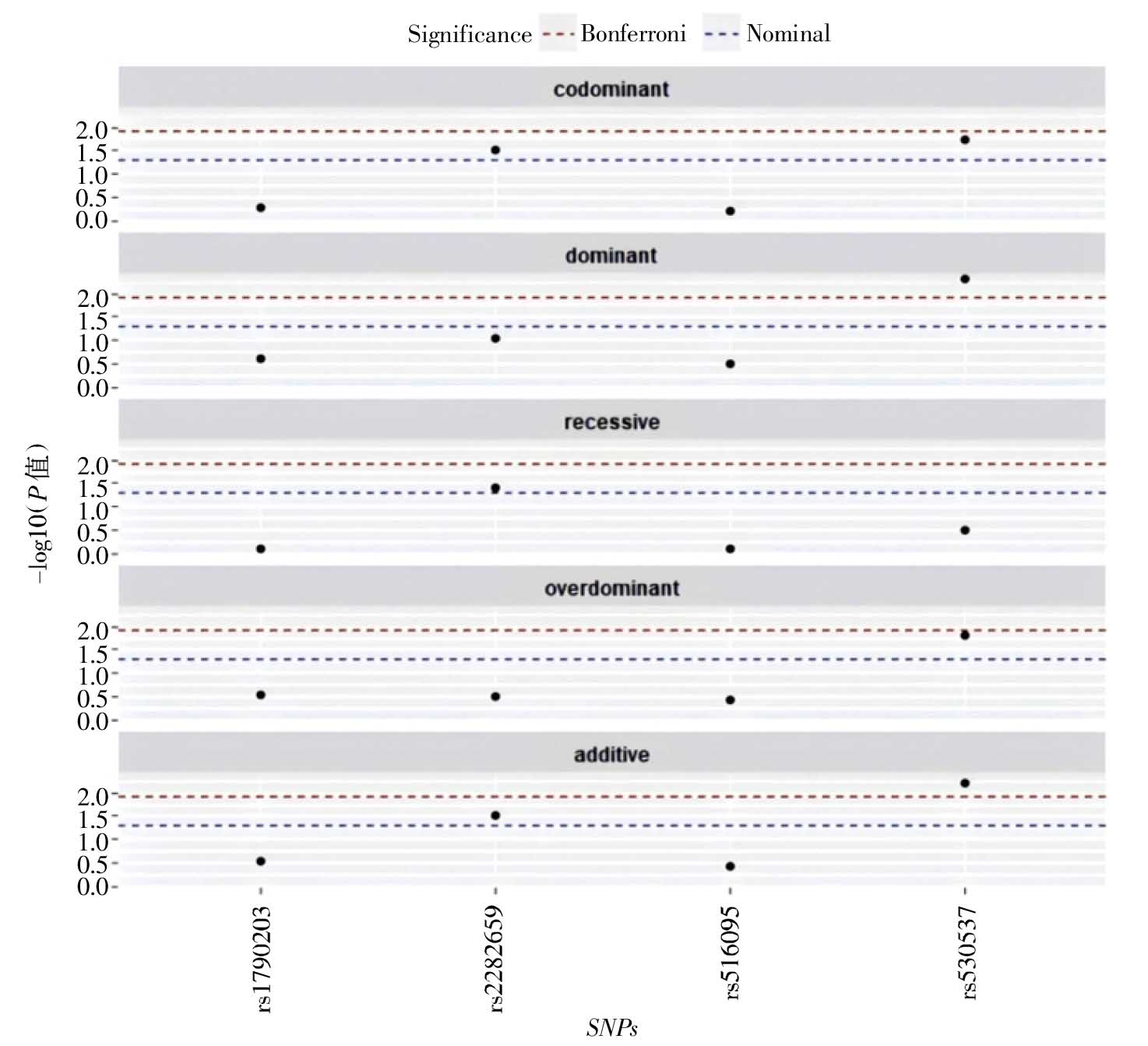
图1 CASP1基因4个SNPs位点不同遗传模型的曼哈顿图 注:codominant—共显性模型;dominant—显性模型:recessive—隐性模型:overdominant—超显性模型;additive—加性模型;Bonferroni校正通过测试的SNP数量(0.05/4=0.0125)降低阈值。图中每一个点代表每种遗传模式P值的-lg值;基因位点的P值越小,则-lg(P值)越大,其与矽肺的关联程度越强。
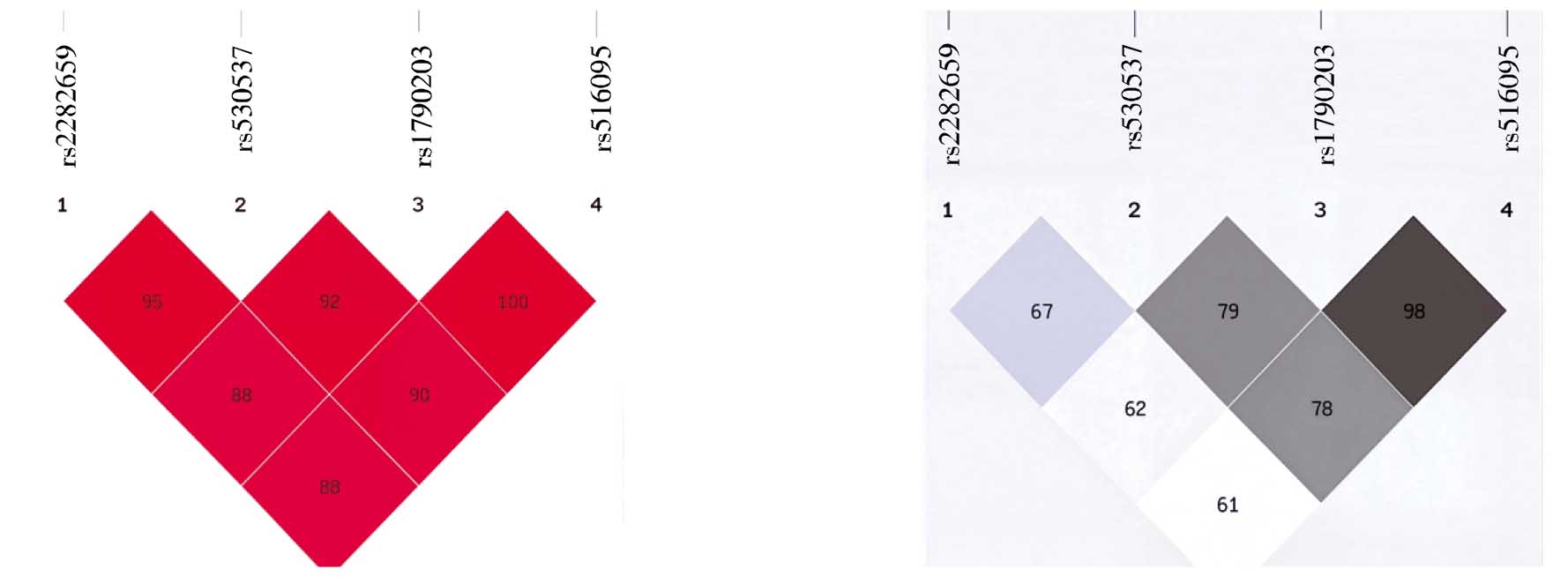
图2 CASP1基因连锁不平衡D'图谱和R2图谱 注:左侧为D’值图谱,右侧为R2值图谱。
| 单倍型a | 接尘对照组 频率b(n=84) | 矽肺组频 率b(n=70) | χ2值 | P值 | OR(95%CI) |
|---|---|---|---|---|---|
| ACTG | 7(0.050) | 7(0.042) | 0.194 | 0.660 | 0.790(0.272~2.920) |
| ATGA | 94(0.671) | 131(0.780) | 3.011 | 0.083 | 1.610(0.940~2.756) |
| GCTG | 30(0.214) | 25(0.149) | 2.708 | 0.099 | 0.610(0.340~1.095) |
表5 2020年1月—2024年12月在新疆某家省级职业病诊断机构进行职业性矽肺诊断的154名劳动者CASP1基因4个SNPs位点构建单倍型分析结果
| 单倍型a | 接尘对照组 频率b(n=84) | 矽肺组频 率b(n=70) | χ2值 | P值 | OR(95%CI) |
|---|---|---|---|---|---|
| ACTG | 7(0.050) | 7(0.042) | 0.194 | 0.660 | 0.790(0.272~2.920) |
| ATGA | 94(0.671) | 131(0.780) | 3.011 | 0.083 | 1.610(0.940~2.756) |
| GCTG | 30(0.214) | 25(0.149) | 2.708 | 0.099 | 0.610(0.340~1.095) |
| 模型 | 训练样本 准确度 | 验证样本 准确度 | 符号检验 (P值) | 交叉验证 一致性 |
|---|---|---|---|---|
| rs530537 | 0.613 0 | 0.605 7 | 9(0.010 7) | 10/10 |
| rs2282659,rs530537 | 0.627 4 | 0.601 5 | 8(0.054 7) | 10/10 |
| rs2282659,rs530537,rs1790203 | 0.632 7 | 0.597 5 | 9(0.010 7) | 10/10 |
| rs2282659,rs5305,rs1790203,rs516095 | 0.632 7 | 0.594 7 | 9(0.010 7) | 10/10 |
表6 广义多因子降维法分析基因-基因交互作用与矽肺的发病风险
| 模型 | 训练样本 准确度 | 验证样本 准确度 | 符号检验 (P值) | 交叉验证 一致性 |
|---|---|---|---|---|
| rs530537 | 0.613 0 | 0.605 7 | 9(0.010 7) | 10/10 |
| rs2282659,rs530537 | 0.627 4 | 0.601 5 | 8(0.054 7) | 10/10 |
| rs2282659,rs530537,rs1790203 | 0.632 7 | 0.597 5 | 9(0.010 7) | 10/10 |
| rs2282659,rs5305,rs1790203,rs516095 | 0.632 7 | 0.594 7 | 9(0.010 7) | 10/10 |
| [1] |
WANG J, ZENG X, XUE W, et al. Transcriptomic profiling of lung fibroblasts in silicosis:Regulatory roles of Nrf2 agonists in a mouse model[J]. Int Immunopharmacol, 2024, 143(1):113273.
DOI URL |
| [2] | 毛翎, 彭莉君, 王焕强, 等. 尘肺病治疗中国专家共识(2024年版)[J]. 环境与职业医学, 2024, 41(1):1-21. |
| [3] | 国家卫生健康委员会. 2023年我国卫生健康事业发展统计公报[EB/OL]. (2024-08-29)[2025-07-22]. https://www.gov.cn/lianbo/bumen/202408/content_6971241.htm. |
| [4] |
KIM R Y, PINKERTON J W, ESSILFIE A T, et al. Role for NLRP3 Inflammasome-mediated,IL-1β-Dependent Responses in Severe,Steroid-Resistant Asthma[J]. Am J Respir Crit Care Med, 2017, 196(3):283-297.
DOI URL |
| [5] |
FANG Y, TIAN S, PAN Y, et al. Pyroptosis:A new frontier in cancer[J]. Biomed Pharmacother, 2020, 121(2020):109595.
DOI URL |
| [6] |
KIM J J, JO E K. NLRP3 Inflammasome and Host Protection against Bacterial Infection[J]. J Korean Med Sci, 2013, 28(10):1415-1423.
DOI URL |
| [7] |
KIM R Y, PINKERTONI J W, GIBSON P G, et al. Inflammasomes in COPD and neutrophilic asthma[J]. Thorax, 2015, 70(12):1199-1201.
DOI PMID |
| [8] |
SWAROOP K V, SHAKTI S, et al. Understanding the pathogenesis of occupational coal and silica dust-associated lung disease[J]. Eur Respir Rev, 2022, 31(165):210250.
DOI URL |
| [9] |
HOY R F, CHAMBERS D C. Silica-related diseases in the modern world[J]. Allergy, 2020, 75(11):2805-2817.
DOI URL |
| [10] |
CHENG Z, ZHANG Y, ZHAO R, et al. A novel circRNA-SNP may increase susceptibility to silicosis[J]. Ecotoxicol Environ Saf, 2022, 242:113855.
DOI URL |
| [11] |
CHAIR S Y, CHAN J Y W, LAW B M H, et al. Genetic susceptibility in pneumoconiosis in China:A systematic review[J]. Int Arch Occup Environ Health, 2022, 96(1):45-56.
DOI |
| [12] |
PONTILLO A, GIRARDELLI M, KAMADA A J, et al. Polimorphisms in Inflammasome Genes Are Involved in the Predisposition to Systemic Lupus Erythematosus[J]. Autoimmunity, 2012, 45(4):271-278.
DOI PMID |
| [13] |
LIU Y, JIA X, YANG Z, et al. Association of caspase-1 gene polymorphisms with rheumatoid arthritis risk in a Chinese Han population[J]. Cytokine, 2023, 162:156101.
DOI URL |
| [14] | 中华人民共和国国家卫生健康委员会. 工作场所粉尘危害预防控制指南:GBZ/T 340-2025[S].北京: 中国标准出版社, 2025:1-13. |
| [15] | 中华人民共和国国家卫生健康委员会. 职业性尘肺的诊断:GBZ 70-2015[S]. 北京: 中国标准出版社, 2015:1-13 |
| [16] | 袁辉, 胡晓远, 郝伟, 等. 2008-2018年新疆煤炭行业职业性尘肺病新发病例分析[J]. 职业与健康, 2022, 38(3):289-293. |
| [17] | 黄莉敏, 周韶炜, 陈子丹, 等. 快进型矽肺临床特点及治疗预后的系统性综述[J]. 中华劳动卫生职业病杂志, 2025, 43(6):401-409. |
| [18] | 梁晓娇, 阿依奴尔·克里木江, 陈丽萍. 尘肺发病机制及标志物的研究[J]. 临床医学进展, 2024, 14(8):1386-1393. |
| [19] |
TAN S, CHEN S. The mechanism and effect of autophagy,apoptosis,and pyroptosis on the progression of silicosis[J]. Int J Mol Sci, 2021, 22(15):8110.
DOI URL |
| [20] |
LI P, ALLEN H, BANERJEE S, et al. Mice deficient in IL-1β-converting enzyme are defective in production of mature IL-1β and resistant to endotoxic shock[J]. Cell, 1995, 80:401-411
DOI URL |
| [21] | 陈勇军. Caspase-1调控单核-巨噬细胞分化的效应及机制[D]. 南京: 南京大学, 2012. |
| [22] | ARAKI C, YOSHIMURA M, FUKUMITSU Y, et al. The evidence of genetic polymorphisms of genes involved in the P2RX7 signaling pathway as predictive biomarkers for response and loss of response to infliximab against Crohn's disease[J]. IMM, 2016, 3(6):1-15. |
| [23] |
DE SOUZA J L, dE FARIAS GUERRA M V, DE MESQUITA T G R, et al. Caspase-1 Variants and Plasma IL-1β in Patients with Leishmania guyanensis Cutaneous Leishmaniasis in the Amazonas[J]. Int J Mol Sci, 2024, 25(22):12438.
DOI URL |
| [24] |
MILLER A K, TAVERA G, DOMINGUEZ R L, et al. Ornithine decarboxylase(ODC1) gene variant(rs2302615) is associated with gastric cancer independently of Helicobacter pylori CagA serostatus[J]. Oncogene, 2021, 40(40):5963-5969.
DOI |
| [25] |
YING C, XUEYUN F, YULAN J, et al. Association between polymorphisms of interleukin-17A and interleukin-17F genes and silicosis susceptibility in Chinese Han people[J]. Asian Pac J Cancer Prev, 2014, 15(20):8775-8778.
DOI URL |
| [26] | DENG G X, YIN R X, GUAN Y Z, et al. Association of the NCAN-TM6SF2-CILP2-PBX4-SUGP1-MAU2 SNPs and gene-gene and gene-environment interactions with serum lipid levels[J]. Aging(Albany NY), 2020, 12(12):11893-11913. |
| [1] | 耿剑, 黄晓霞, 张春艳, 王庞宇, 王宪昂. 职业性矽肺生物标志物检测技术的研究进展[J]. 职业与健康, 2026, 42(9): 1277-1283. |
| [2] | 潘炜仪, 谢燊, 陆彩霞, 张王剑, 黄永顺. 广东省低浓度电焊烟尘暴露对工人心律失常的影响及相关因素分析[J]. 职业与健康, 2026, 42(7): 865-870. |
| [3] | 李佳慧, 何平, 李雪丹, 寇久隆, 杨成新. 不同分期矽肺患者肺功能与血常规指标变化及其与炎性因子水平的关联分析[J]. 职业与健康, 2026, 42(16): 2172-2177. |
| [4] | 张艳, 陈耀华. 部分血清生物标志物在矽肺诊断中的临床应用分析[J]. 职业与健康, 2026, 42(16): 2189-2193. |
| [5] | 宋全全, 柳淑琴, 孙武, 王秀珍, 李倩, 张书余. 温度和PM2.5暴露对小鼠肺泡巨噬细胞影响的实验研究[J]. 职业与健康, 2025, 41(7): 899-903. |
| [6] | 王卫平, 白雨, 冯勇, 程琬然, 杨天, 邓鹏飞. HLA基因多态性与乙型肝炎疫苗免疫效果和安全性的研究进展[J]. 职业与健康, 2024, 40(6): 856-859. |
| [7] | 胡洁, 胡在方, 周国伟, 张丽, 甄国新. 北京市某区职业性尘肺病患者现状调查[J]. 职业与健康, 2024, 40(5): 609-612. |
| [8] | 李文凤, 王洋, 张丹丹, 李芳, 段雅妮, 崔玉山. 天津市高氟暴露对高血糖患病的影响[J]. 职业与健康, 2024, 40(23): 3254-3258. |
| [9] | 贺今, 王贝贝, 邱梦茹, 王丽, 刘保岩, 刘燕. 矽肺患者合并阻塞性睡眠呼吸暂停低通气综合征的临床特征分析[J]. 职业与健康, 2024, 40(15): 2017-2020. |
| [10] | 高伟, 焦柯影, 何新蕾, 郝瀚. 应用生物信息学从铁死亡角度筛选治疗矽肺病的天然药物成分[J]. 职业与健康, 2024, 40(14): 1889-1894. |
| [11] | 尉红, 王长勇, 刘冰, 王英. 2006—2022年泰安市职业性尘肺病流行病学特征分析[J]. 职业与健康, 2024, 40(13): 1758-1763. |
| [12] | 金鑫. 2015—2020年长治市新发尘肺病流行病学特征分析[J]. 职业与健康, 2024, 40(1): 119-121. |
| [13] | 莫奥伟, 邵罗成, 陈丽夏, 刘佳乐, 胡文健, 陶慧慧. SiO2 暴露量对矽肺模型小鼠肺组织中促纤维化因子TGF-β1表达和肺纤维化的影响[J]. 职业与健康, 2023, 39(18): 2456-2460. |
| 阅读次数 | ||||||
|
全文 |
|
|||||
|
摘要 |
|
|||||
 津公网安备12010202000831号 津ICP备11005889号-6