OCCUPATION AND HEALTH ›› 2026, Vol. 42 ›› Issue (14): 1959-1963.

• Treatise—Epidemiology and Preventive Health Care • Previous Articles     Next Articles

Analysis of parents' cognition of HPV and factors influencing HPV vaccination decisions among female children aged 9 to 14 in Tianjin

YU Shuang1,2, LI Yufeng3, PAN Honglei4, CHANG Limin5, LI Yankun6, DING Yaxing6()   

  1. 1 Tianjin Heping District Center for Disease Control and PreventionTianjin 300041, China
    2 China Center for Disease Control and PreventionChina Field Epidemiology Training ProgramBeijing 100050, China
    3 Tianjin Dongli District Center for Disease Control and PreventionTianjin 300300, China
    4 Tianjin Baodi District Center for Disease Control and PreventionTianjin 301800, China
    5 Tianjin Ninghe District Center for Disease Control and PreventionTianjin 301500, China
    6 Tianjin Center for Disease Control and PreventionTianjin 300171, China
  • Received:2025-07-11 Revised:2025-09-29 Online:2026-07-15 Published:2026-07-16
  • Contact: DING Yaxing,E-mail:louisdyx@163.com

Abstract:

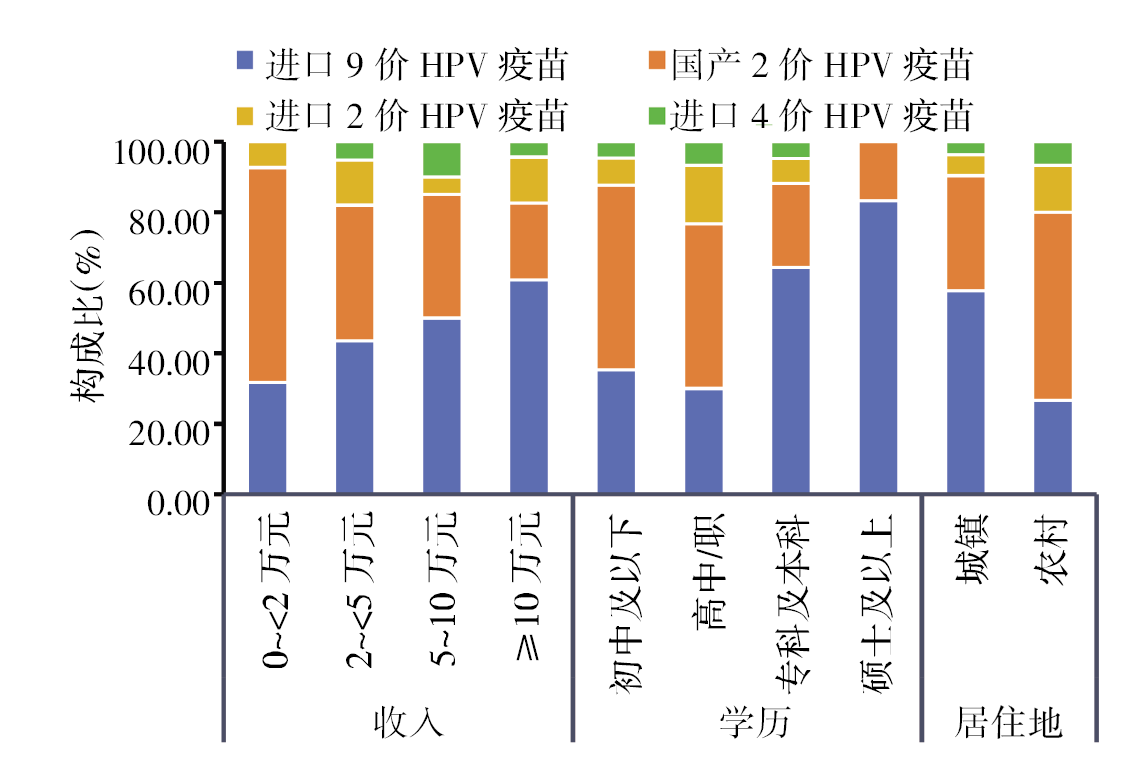
Objective To understand the current status and related influencing factors of parents' knowledge about human papilloma virus(HPV) and HPV vaccines,as well as the HPV vaccination status of schoolgirls aged 9-14 in Tianjin,and to provide a theoretical basis for formulating relevant intervention measures. Methods A multi-stage sampling method was used to select mothers or fathers with independent behavioral capabilities of schoolgirls aged 9-14 in Tianjin as survey respondents. A self-designed questionnaire was conducted online through Wenjuanxing,and the data were analyzed. Results The overall awareness rates of parents regarding HPV-related knowledge,vaccine knowledge,and general knowledge were 49.79%,69.50%,and 55.15%,respectively. Parents aged 30-<40(OR=1.907,95%CI:1.348-2.697) and 40-<50(OR=1.427,95%CI:1.007-2.023),as well as those with a profession of doctor(OR=4.636,95%CI:2.698-7.967),had higher levels of knowledge. Parents who were fathers(OR=0.329,95%CI:0.265-0.408),had educational backgrounds of junior high school or below(OR=0.261,95%CI:0.169-0.401),and high school/vocational education(OR=0.393,95%CI:0.257-0.600),with incomes of 2-<50 000 yuan(OR=0.673,95%CI:0.560-0.809),and 0-<20 000 yuan(OR=0.470,95%CI:0.379-0.583),had lower levels of knowledge. The vaccination rate among schoolgirls aged 9-14 in Tianjin was 2.79%. In the group of girls aged 12 to 14(OR=2.086,95%CI:1.430-3.042),those with an income of 0-<20 000 yuan(OR=2.574,95%CI:1.409-4.704) exhibited a higher vaccination rate,while those residing in urban areas(OR=0.578,95%CI:0.375-0.890) had a lower vaccination rate. Conclusion Parents of girls aged 9 to 14 in Tianjin have poor knowledge regarding HPV and HPV vaccines,and the surveyed vaccination rate among girls is extremely low. Health departments and schools should strengthen health education for key populations and focus on key content through multiple methods and channels to enhance awareness and subsequently increase vaccination rates.

Key words: Cervical cancer, Human papilloma virus, Vaccine, Cognition, Influencing factors, Girls aged 9-14

CLC Number: