


职业与健康 ›› 2026, Vol. 42 ›› Issue (18): 2551-2557.
胡萌萌, 常红娟, 刘欣, 张美临, 侯忠旭, 葛扬( )
)
收稿日期:2025-11-26
修回日期:2026-01-31
出版日期:2026-09-15
发布日期:2026-08-28
通信作者:
葛扬
作者简介:葛扬,E-mail:geyang@wust.edu.cn基金资助:
HU Mengmeng, CHANG Hongjuan, LIU Xin, ZHANG Meilin, HOU Zhongxu, GE Yang()
Received:2025-11-26
Revised:2026-01-31
Online:2026-09-15
Published:2026-08-28
Contact:
GE Yang
摘要:
目的 调查大学生反刍性思维与其情绪自理能力关系,构建网络模型并识别潜在的干预靶点,为缓解大学生心理问题提供参考依据。方法 2024年3—6月采用便利抽样法,选取武汉市3所综合大学5 527例在校大学生为研究对象,采用一般资料调查表、反刍性思维量表(ruminative responses scale,RRS)、简式自我控制量表(brief self-control scale,BSCS)和认知情绪调节策略量表(cognitive emotion regulation questionnaire,CERQ)进行问卷调查。采用R 4.3.2软件进行网络分析,探索大学生RRS与BSCS、CERQ各维度间的关联强度(strength,S)、预期影响(expected influence,EI)及桥梁强度(bridge strength,BS),并计算中心性指标以识别关键节点。结果 大学生RRS得分为(40.64±11.84)分,BSCS得分为(35.12±6.66)分,CERQ得分为(52.65±11.13)分。单因素分析结果显示,不同性别、留守经历、父亲文化程度、母亲文化程度、运动频率和参加情绪管理培训的大学生RRS、BSCS和CERQ得分比较,差异均有统计学意义(均P<0.05)。同期网络/桥接网络模型中心性指标显示,强度和桥梁强度最高的节点是RRS“症状反刍”(S=2.228/BS=0.831);预期影响最高的节点是CERQ“重新关注计划”(EI=0.911)。结论 大学生反刍性思维与自我控制及认知情绪调节策略密切相关,“症状反刍”和“重新关注计划”为关键的干预靶点,可通过拟定科学精准的心理干预措施,促进大学生生理和心理健康状况的改善。
中图分类号:
胡萌萌, 常红娟, 刘欣, 张美临, 侯忠旭, 葛扬. 大学生反刍性思维与情绪自理能力的网络关系研究. [J]职业与健康, 2026, 42(18): 2551-2557.
HU Mengmeng, CHANG Hongjuan, LIU Xin, ZHANG Meilin, HOU Zhongxu, GE Yang. Research on the network relationship between rumination and emotional self-care ability of college students. [J]OCCUPATION AND HEALTH, 2026, 42(18): 2551-2557.
| 项目 | 人数[人(%)] | RRS | BSCS | CERQ |
|---|---|---|---|---|
| 性别 | ||||
| 男 | 1 610(29.1) | 41.59±12.92 | 39.59±11.63 | 52.36±12.73 |
| 女 | 3 917(70.9) | 40.25±11.35 | 42.94±11.98 | 52.77±10.40 |
| t值 | 3.827 | 9.524 | 1.245 | |
| P值 | <0.001 | <0.001 | <0.001 | |
| 生源地 | ||||
| 城镇 | 1 180(21.3) | 40.20±12.58 | 35.08±7.05 | 52.45±11.63 |
| 农村 | 4 347(78.7) | 40.76±11.63 | 35.13±6.55 | 52.70±10.99 |
| t值 | -1.134 | 0.229 | 0.684 | |
| P值 | <0.001 | 0.832 | 0.491 | |
| 留守经历 | ||||
| 无 | 3 797(68.7) | 39.59±11.63 | 35.49±6.85 | 52.15±11.47 |
| 有 | 1 730(31.3) | 42.94±11.98 | 34.29±6.13 | 53.74±10.27 |
| t值 | 9.836 | 6.235 | 4.936 | |
| P值 | 0.014 | <0.001 | <0.001 | |
| 父亲文化程度 | ||||
| 小学以下 | 1 058(19.1) | 41.83±12.22 | 34.64±6.52 | 52.85±11.06 |
| 初中 | 2 731(49.4) | 40.44±11.43 | 35.31±6.57 | 52.57±10.92 |
| 高中或中专 | 1 219(22.1) | 40.26±11.73 | 35.04±6.84 | 52.70±11.09 |
| 本科或大专 | 497(9.0) | 40.12±12.92 | 35.31±6.85 | 52.90±11.58 |
| 硕士及以上 | 22(0.4) | 41.50±19.94 | 33.32±7.61 | 43.68±23.38 |
| F值 | 3.452 | 2.494 | 3.770 | |
| P值 | 0.008 | 0.041 | 0.005 | |
| 母亲文化程度 | ||||
| 小学以下 | 1 648(29.8) | 41.39±11.91 | 34.56±6.61 | 52.54±11.08 |
| 初中 | 2 505(45.3) | 40.35±11.51 | 35.47±6.56 | 52.75±10.66 |
| 高中或中专 | 993(18.0) | 40.05±12.00 | 35.06±6.94 | 52.52±11.76 |
| 本科或大专 | 360(6.5) | 40.95±12.62 | 35.37±6.47 | 53.35±11.35 |
| 硕士及以上 | 21(0.4) | 38.81±20.09 | 34.38±8.83 | 43.48±24.38 |
| F值 | 2.843 | 4.937 | 4.058 | |
| P值 | 0.023 | 0.001 | 0.003 | |
| 运动频率 | ||||
| 经常 | 1 193(21.6) | 38.38±11.83 | 36.02±7.33 | 51.58±13.28 |
| 有时 | 1 326(23.9) | 39.87±11.66 | 36.06±6.61 | 52.19±10.63 |
| 一般 | 1 910(34.6) | 41.00±11.17 | 35.06±6.19 | 53.06±10.25 |
| 偶尔 | 1 004(18.2) | 43.21±12.08 | 33.27±6.11 | 53.61±9.62 |
| 从不 | 94(1.7) | 45.29±17.33 | 31.32±7.73 | 53.68±17.34 |
| F值 | 28.663 | 40.197 | 6.054 | |
| P值 | <0.001 | <0.001 | <0.001 | |
| 参加情绪管理 培训 | ||||
| 经常 | 358(6.5) | 35.41±13.78 | 36.81±8.76 | 47.58±18.06 |
| 有时 | 1 143(20.7) | 39.56±11.52 | 35.98±6.70 | 53.03±10.78 |
| 一般 | 1 065(19.3) | 39.62±10.62 | 35.42±6.14 | 51.90±10.45 |
| 偶尔 | 1 633(29.5) | 41.74±11.40 | 35.06±6.26 | 53.22±9.70 |
| 从未 | 1 328(24.0) | 42.45±12.43 | 33.74±6.33 | 53.57±10.75 |
| F值 | 33.856 | 25.813 | 23.907 | |
| P值 | <0.001 | <0.001 | <0.001 | |
| 合计 | 5 527 | 40.64±11.84 | 35.12±6.66 | 52.65±11.13 |
表1 2024年武汉市大学生反刍性思维、自我控制及认知情绪调节策略得分($\bar{x} \pm s$)
| 项目 | 人数[人(%)] | RRS | BSCS | CERQ |
|---|---|---|---|---|
| 性别 | ||||
| 男 | 1 610(29.1) | 41.59±12.92 | 39.59±11.63 | 52.36±12.73 |
| 女 | 3 917(70.9) | 40.25±11.35 | 42.94±11.98 | 52.77±10.40 |
| t值 | 3.827 | 9.524 | 1.245 | |
| P值 | <0.001 | <0.001 | <0.001 | |
| 生源地 | ||||
| 城镇 | 1 180(21.3) | 40.20±12.58 | 35.08±7.05 | 52.45±11.63 |
| 农村 | 4 347(78.7) | 40.76±11.63 | 35.13±6.55 | 52.70±10.99 |
| t值 | -1.134 | 0.229 | 0.684 | |
| P值 | <0.001 | 0.832 | 0.491 | |
| 留守经历 | ||||
| 无 | 3 797(68.7) | 39.59±11.63 | 35.49±6.85 | 52.15±11.47 |
| 有 | 1 730(31.3) | 42.94±11.98 | 34.29±6.13 | 53.74±10.27 |
| t值 | 9.836 | 6.235 | 4.936 | |
| P值 | 0.014 | <0.001 | <0.001 | |
| 父亲文化程度 | ||||
| 小学以下 | 1 058(19.1) | 41.83±12.22 | 34.64±6.52 | 52.85±11.06 |
| 初中 | 2 731(49.4) | 40.44±11.43 | 35.31±6.57 | 52.57±10.92 |
| 高中或中专 | 1 219(22.1) | 40.26±11.73 | 35.04±6.84 | 52.70±11.09 |
| 本科或大专 | 497(9.0) | 40.12±12.92 | 35.31±6.85 | 52.90±11.58 |
| 硕士及以上 | 22(0.4) | 41.50±19.94 | 33.32±7.61 | 43.68±23.38 |
| F值 | 3.452 | 2.494 | 3.770 | |
| P值 | 0.008 | 0.041 | 0.005 | |
| 母亲文化程度 | ||||
| 小学以下 | 1 648(29.8) | 41.39±11.91 | 34.56±6.61 | 52.54±11.08 |
| 初中 | 2 505(45.3) | 40.35±11.51 | 35.47±6.56 | 52.75±10.66 |
| 高中或中专 | 993(18.0) | 40.05±12.00 | 35.06±6.94 | 52.52±11.76 |
| 本科或大专 | 360(6.5) | 40.95±12.62 | 35.37±6.47 | 53.35±11.35 |
| 硕士及以上 | 21(0.4) | 38.81±20.09 | 34.38±8.83 | 43.48±24.38 |
| F值 | 2.843 | 4.937 | 4.058 | |
| P值 | 0.023 | 0.001 | 0.003 | |
| 运动频率 | ||||
| 经常 | 1 193(21.6) | 38.38±11.83 | 36.02±7.33 | 51.58±13.28 |
| 有时 | 1 326(23.9) | 39.87±11.66 | 36.06±6.61 | 52.19±10.63 |
| 一般 | 1 910(34.6) | 41.00±11.17 | 35.06±6.19 | 53.06±10.25 |
| 偶尔 | 1 004(18.2) | 43.21±12.08 | 33.27±6.11 | 53.61±9.62 |
| 从不 | 94(1.7) | 45.29±17.33 | 31.32±7.73 | 53.68±17.34 |
| F值 | 28.663 | 40.197 | 6.054 | |
| P值 | <0.001 | <0.001 | <0.001 | |
| 参加情绪管理 培训 | ||||
| 经常 | 358(6.5) | 35.41±13.78 | 36.81±8.76 | 47.58±18.06 |
| 有时 | 1 143(20.7) | 39.56±11.52 | 35.98±6.70 | 53.03±10.78 |
| 一般 | 1 065(19.3) | 39.62±10.62 | 35.42±6.14 | 51.90±10.45 |
| 偶尔 | 1 633(29.5) | 41.74±11.40 | 35.06±6.26 | 53.22±9.70 |
| 从未 | 1 328(24.0) | 42.45±12.43 | 33.74±6.33 | 53.57±10.75 |
| F值 | 33.856 | 25.813 | 23.907 | |
| P值 | <0.001 | <0.001 | <0.001 | |
| 合计 | 5 527 | 40.64±11.84 | 35.12±6.66 | 52.65±11.13 |
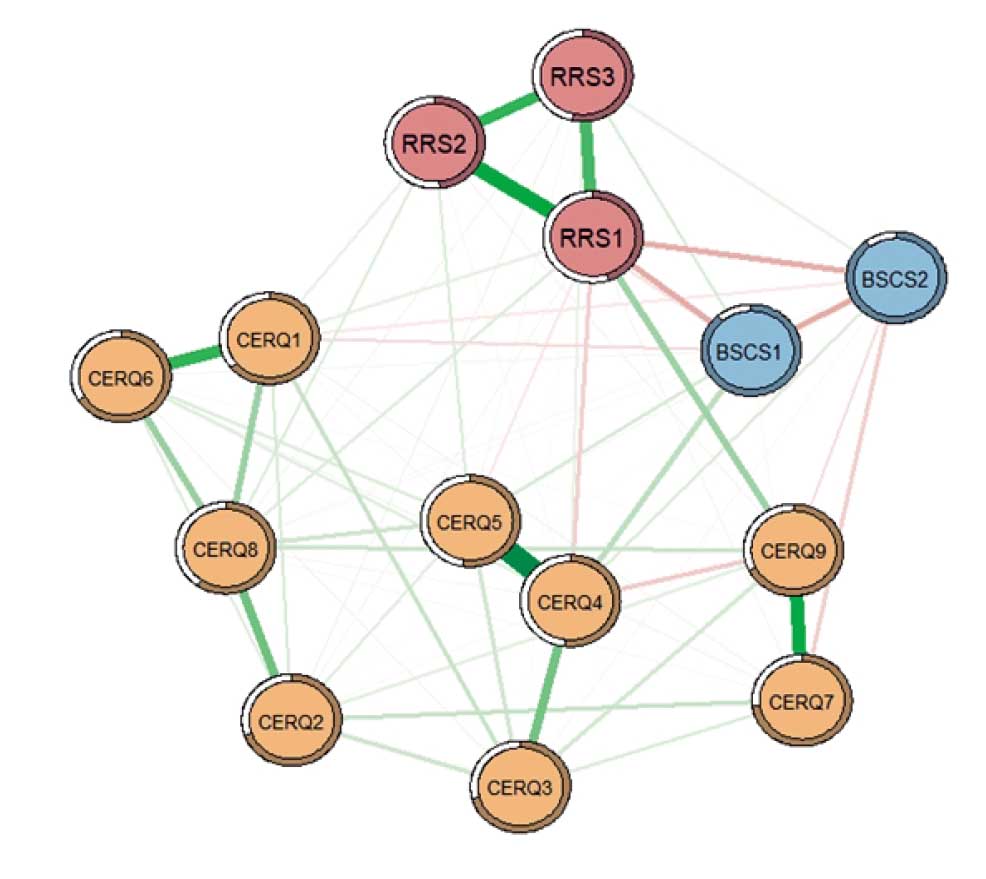
图1 武汉市大学生反刍性思维与自我控制及认知情绪调节策略网络模型 注:RRS1—症状反刍;RRS2—强迫思考;RRS3—反省沉思;BSCS1—自律性;BSCS2—冲动控制;CERQ1—接受;CERQ2—积极重新关注;CERQ3—理性分析;CERQ4—积极重新评价;CERQ5—重新关注计划;CERQ6—自我责难;CERQ7—责难他人;CERQ8—沉思;CERQ9—灾难化。
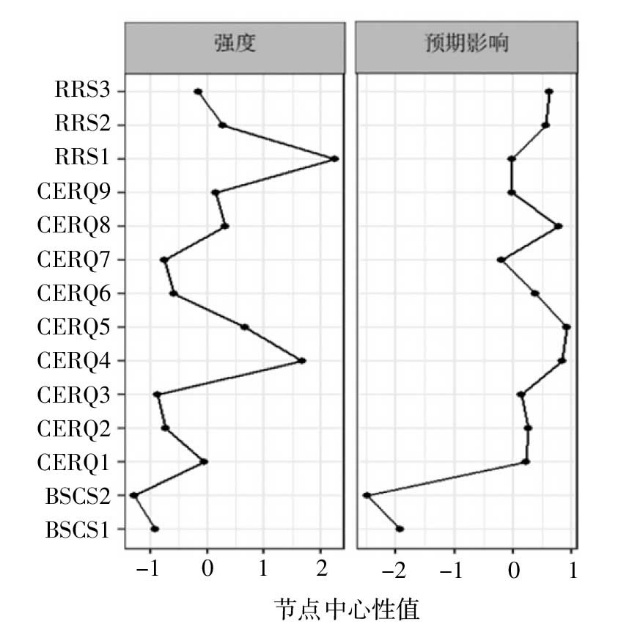
图2 武汉市大学生反刍性思维与自我控制及认知情绪调节策略的中心性指标 注:RRS1—症状反刍;RRS2—强迫思考;RRS3—反省沉思;BSCS1—自律性;BSCS2—冲动控制;CERQ1—接受;CERQ2—积极重新关注;CERQ3—理性分析;CERQ4—积极重新评价;CERQ5—重新关注计划;CERQ6—自我责难;CERQ7—责难他人;CERQ8—沉思;CERQ9—灾难化。
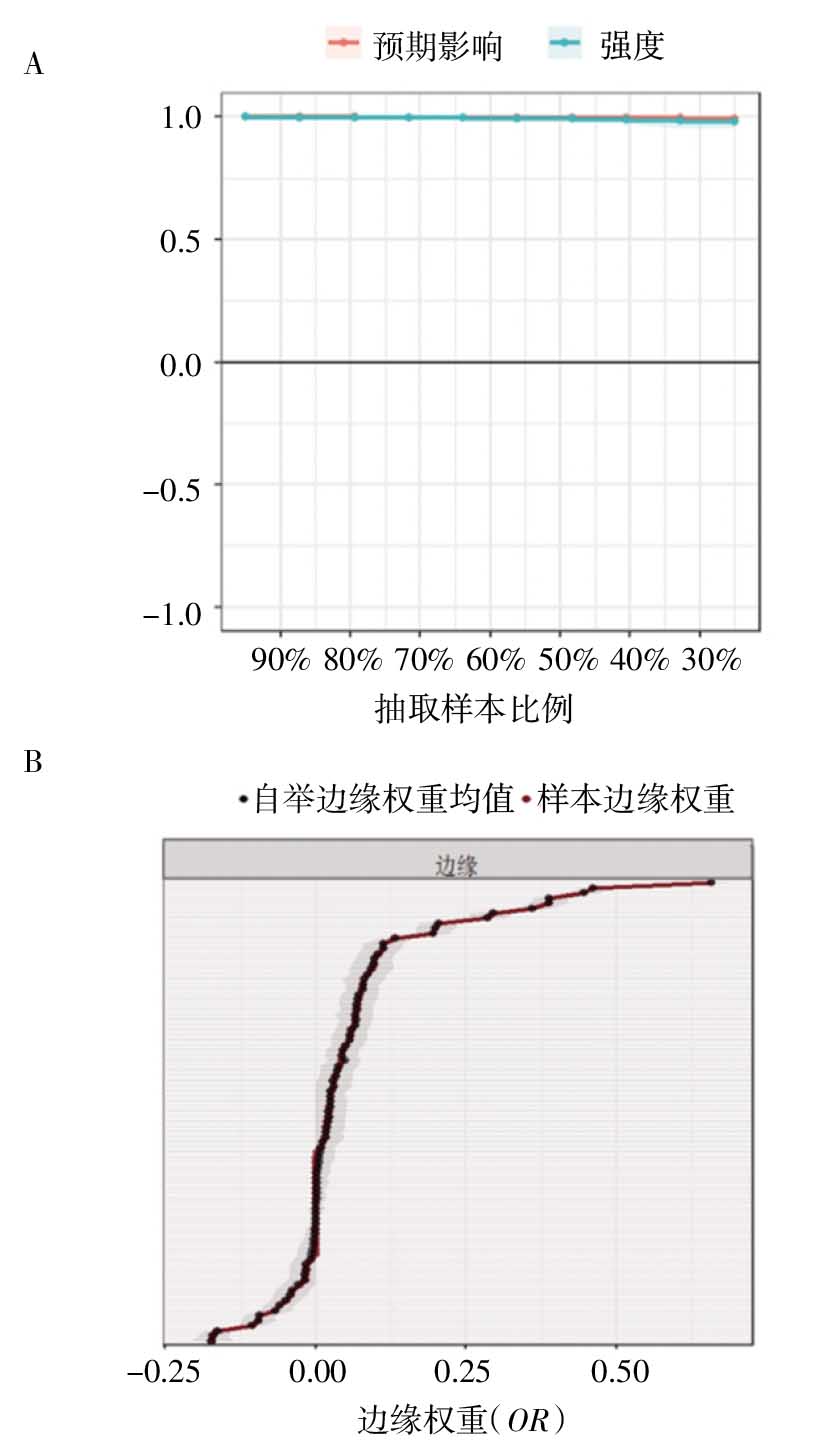
图3 武汉市大学生反刍性思维与自我控制及认知情绪调节策略的网络CS检验和边缘权重 注:CS—相关性稳定系数。
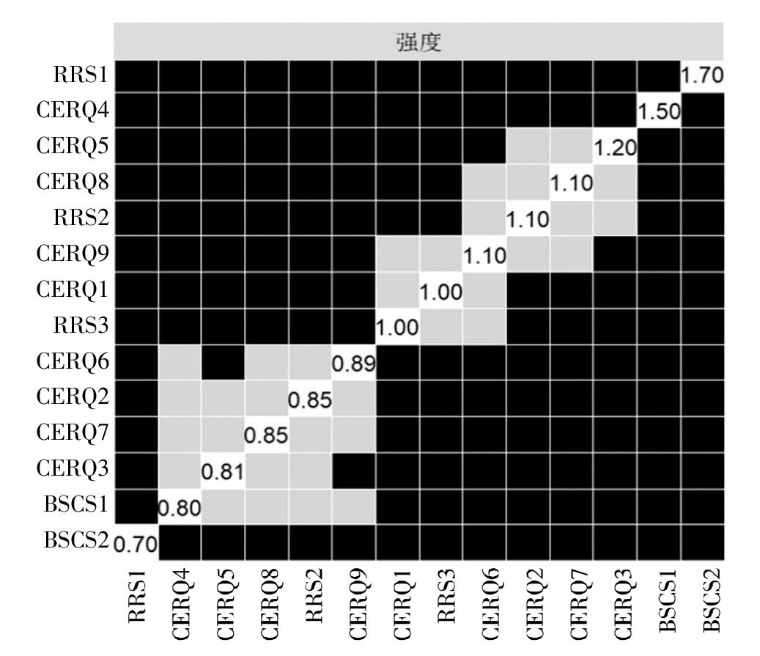
图4 武汉市大学生反刍性思维与自我控制及认知情绪调节策略的节点强度差异性检验 注:RRS1—症状反刍;RRS2—强迫思考;RRS3—反省沉思;BSCS1—自律性;BSCS2—冲动控制;CERQ1—接受;CERQ2—积极重新关注;CERQ3—理性分析;CERQ4—积极重新评价;CERQ5—重新关注计划;CERQ6—自我责难;CERQ7—责难他人;CERQ8—沉思;CERQ9—灾难化。
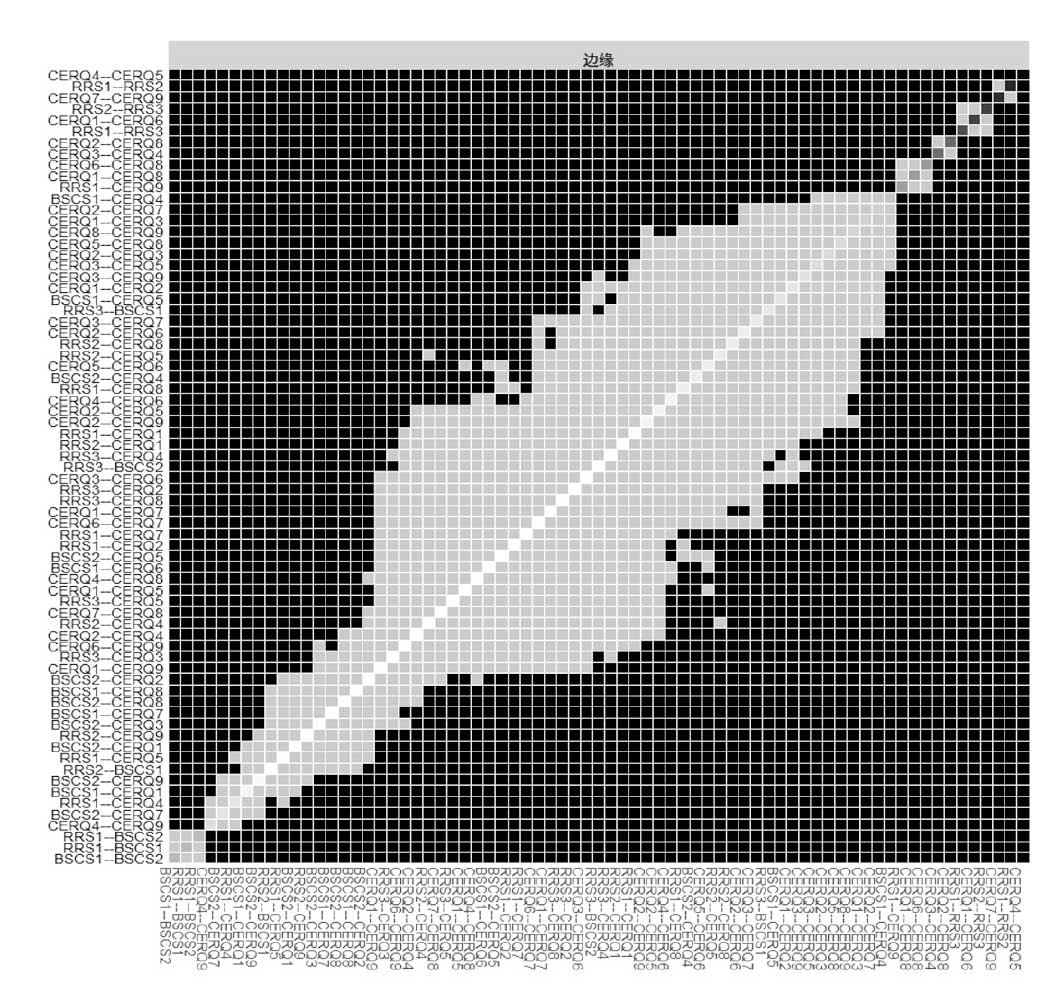
图5 武汉市大学生反刍性思维与自我控制及认知情绪调节策略的边缘权值差异性检验 注:RRS1—症状反刍;RRS2—强迫思考;RRS3—反省沉思;BSCS1—自律性;BSCS2—冲动控制;CERQ1—接受;CERQ2—积极重新关注;CERQ3—理性分析;CERQ4—积极重新评价;CERQ5—重新关注计划;CERQ6—自我责难;CERQ7—责难他人;CERQ8—沉思;CERQ9—灾难化。
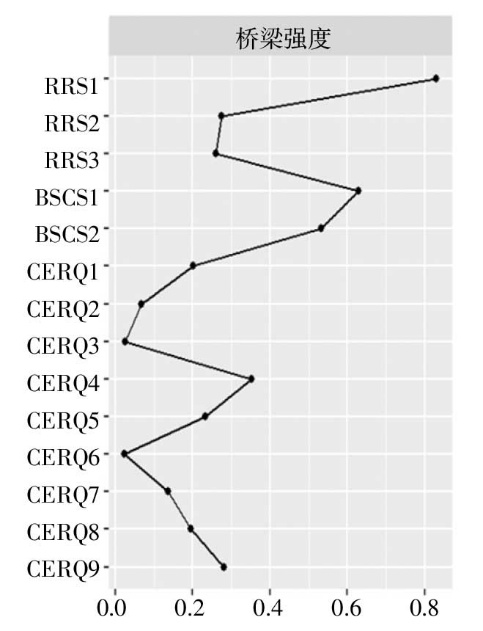
图6 武汉市大学生反刍性思维与自我控制及认知情绪调节策略的桥梁中心性指标 注:RRS1—症状反刍;RRS2—强迫思考;RRS3—反省沉思;BSCS1—自律性;BSCS2—冲动控制;CERQ1—接受;CERQ2—积极重新关注;CERQ3—理性分析;CERQ4—积极重新评价;CERQ5—重新关注计划;CERQ6—自我责难;CERQ7—责难他人;CERQ8—沉思;CERQ9—灾难化。
| [1] | 樊泽民, 朱红松, 高春柏. 贯彻落实专项行动计划全面加强和改进学生心理健康工作[J]. 中国学校卫生, 2023, 44(6):805-808. |
| [2] | INT-VEEN I, EHLIS A C, FALLGATTER A J, et al. On assessing trait rumination using the Ruminative Response Scale[J]. Front Psychol, 2024, 15:1368390. |
| [3] | 周扬, 蔡文鹏. 新入职(学)青年人群适应障碍与自杀意念的关系及反刍思维和负性情绪的中介效应[J]. 郑州大学学报(医学版), 2025, 60(2):265-269. |
| [4] |
NOLEN-HOEKSEMA S, WISCO B E, LYUBOMIRSKY S. Rethinking rumination[J]. Perspect Psychol Sci, 2008, 3(5):400-424.
DOI URL |
| [5] |
VAN ETTEKOVEN K M, RASING S P A, VERMULST A, et al. Cross-lagged associations between depressive symptoms and response style in adolescents[J]. Int J Environ Res Public Health, 2020, 17(4):1380.
DOI URL |
| [6] |
MCRAE K, GROSS J. Emotion regulation[J]. Emotion, 2020, 20(1):1-9.
DOI URL |
| [7] |
GUO J, PAN Y. Latent types of cognitive emotion regulation strategies among middle school students in China and its effect on depressive symptoms[J]. J Affect Disord, 2025, 381:381-387.
DOI URL |
| [8] | LIU J, ZHANG H, TAO S, et al. Centrality and bridge connections between cognitive emotion regulation strategies and professional identity among Chinese undergraduate nursing students:A network analysis[J]. Nurse Educ Pract, 2024, 80:104151. |
| [9] |
ŞIRIN A. Rumination mediates the relationship between childhood traumas with cognitive defusion,acceptance,and emotion regulation:A qualitative and quantitative study[J]. J Ration Emot Cogn Behav Ther, 2023, 41:1-28.
DOI |
| [10] |
FRIED E I, EPSKAMP S, NESSE R M, et al. What are 'good' depression symptoms? Comparing the centrality of DSM and non-DSM symptoms of depression in a network analysis[J]. J Affect Disord, 2016, 189:314-320.
DOI URL |
| [11] | 韩秀, 杨宏飞. Nolen-Hoeksema反刍思维量表在中国的试用[J]. 中国临床心理学杂志, 2009, 17(5):550-551. |
| [12] | 罗涛, 程李梅, 秦立霞, 等. 简式自我控制量表中文版的信效度检验[J]. 中国临床心理学杂志, 2021, 29(1):83-86. |
| [13] | 朱熊兆, 罗伏生, 姚树桥, 等. 认知情绪调节问卷中文版(CERQ-C)的信效度研究[J]. 中国临床心理学杂志, 2007, 15(2):121-124,131. |
| [14] |
BEARD C, MILLNER A J, FORGEARD M J, et al. Network analysis of depression and anxiety symptom relationships in a psychiatric sample[J]. Psychol Med, 2016, 46(16):3359-3369.
PMID |
| [15] | 赖湘瑜, 刘嘉琳, 赵耀, 等. 基于网络分析的青少年肥胖相关饮食行为与家庭健康的关系研究[J]. 现代预防医学, 2025, 52(1):2437-2443. |
| [16] |
CHU S A, TADAYONNEJAD R, CORLIER J, et al. Rumination symptoms in treatment-resistant major depressive disorder,and outcomes of repetitive Transcranial Magnetic Stimulation(rTMS) treatment[J]. Transl Psychiatry, 2023, 13(1):293.
DOI |
| [17] | 刘越. 感觉加工敏感性与大学生抑郁的关系:平衡时间洞察力与反刍思维的链式中介作用[J]. 心理学进展, 2025, 15(2):253-260. |
| [18] | WANG Z, XU Y, ZENG H. Trait rumination in post-stress growth among Chinese college students:The chain mediating effect of distress disclosure and perceived social support[J]. Front Public Health, 2023, 11:1265405. |
| [19] |
ROGERS A H, BAKHSHAIE J, DITRE J W, et al. Worry and rumination:Explanatory roles in the relation between pain and anxiety and depressive symptoms among college students with pain[J]. J Am Coll Health, 2019, 67(3):275-282.
DOI URL |
| [20] | YU X, LIU J, LIN Y, et al. The metacognitive experience of time passing in Chinese college students:Scale development,structure verification,and influencing factors[J]. Front Psychol, 2023, 14:1180863. |
| [21] |
FROSTADOTTIR A D, DORJEE D. Effects of Mindfulness Based Cognitive Therapy(MBCT) and Compassion Focused Therapy(CFT) on symptom change,mindfulness,self-compassion,and rumination in clients with depression,anxiety,and stress[J]. Front Psychol, 2019, 10:1099.
DOI URL |
| [22] | 李攀. 接纳承诺疗法对抑郁症反刍思维的干预研究[D]. 南昌: 南昌大学, 2024. |
| [23] |
HAGGER M S, WOOD C, STIFF C, et al. Ego depletion and the strength model of self-control:A meta-analysis[J]. Psychol Bull, 2010, 136(4):495-525.
DOI URL |
| [24] | 贾晓珊, 衡洋, 朱海东. 受欺凌经历对大学生网络欺凌行为的影响:反刍思维和自我控制的中介作用[J]. 兵团教育学院学报, 2025, 35(1):31-37,64. |
| [25] |
ZOCCOLA P M, DICKERSON S S. Assessing the relationship between rumination and cortisol:A review[J]. J Psychosom Res, 2012, 73(1):1-9.
DOI URL |
| [26] |
TEISMANN T, FORKMANN T. Rumination,entrapment and suicide ideation:A mediational model[J]. Clin Psychol Psychother, 2017, 24(1):226-234.
DOI URL |
| [27] | SHETTY T, KASHYAP H, MEHTA U M, et al. Executive function and emotion regulation in depressive and anxiety disorders:A cross-sectional study[J]. Indian J Psychol Med, 2025, 47:02537176251340586. |
| [28] |
WEBB T L, MILES E, SHEERAN P. Dealing with feeling:A meta-analysis of the effectiveness of strategies derived from the process model of emotion regulation[J]. Psychol Bull, 2012, 138(4):775-808.
DOI URL |
| [29] | 张雨, 李鑫, 李亚杰, 等. 医学硕士研究生心理脆弱现状及其影响因素研究[J]. 中国社会医学杂志, 2023, 40(4):395-398. |
| [30] | CAROLUS A E, STARR L R. Negative emotion differentiation in adolescents:Unpacking linkages with emotion regulation traits and behaviours,rumination,and depression[J]. Cogn Emot, 2025:1-7. |
| [31] |
WELLS A, MATTHEWS G. Modeling cognition in emotional disorder:The S-REF model[J]. Behav Res Ther, 1996, 34(11-12):881-888.
DOI URL |
| [32] | 冷佩洪, 李众, 李兵, 等. 贵州省中职生自我控制与睡眠质量的关系及其链式中介效应[J]. 贵州医科大学学报, 2024, 49(12):1787-1793. |
| [33] |
KING K M, FEIL M C, HALVORSON M A. Negative urgency is correlated with the use of reflexive and disengagement emotion regulation strategies[J]. Clin Psychol Sci, 2018, 6(6):822-834.
DOI URL |
| [34] |
DAVID V, PENELOPE H, GRAHAM M. The roles of emotion regulation and ruminative thoughts in non-suicidal self-injury[J]. Br J Clin Psychol, 2014, 53(1):95-113.
DOI PMID |
| [1] | 乃吉米耶·阿卜杜热西提, 宋美勤, 尹玲, 高发水. 新疆地区高校大学生抑郁、依恋及社会支持的关系分析[J]. 职业与健康, 2026, 42(2): 232-236. |
| [2] | 张超, 何顺发, 陈少鸿. 广东某高校女大学生特质自我客体化影响网络冲动性购买的有调节的链式中介作用[J]. 职业与健康, 2026, 42(18): 2540-2544. |
| [3] | 吴锦耀, 刘润华, 朱欣雨, 吴翠华, 李丹, 曹煜. 贵州大学生抑郁症状与应对方式的网络分析[J]. 职业与健康, 2026, 42(17): 2412-2416. |
| [4] | 黄贤颖, 李承龙, 王好好, 陈维, 蔡八元, 师敏. 乐山市综合医院医务人员广泛性焦虑症状与强迫症状的网络共存模式[J]. 职业与健康, 2025, 41(9): 1225-1228. |
| [5] | 向凤玲, 王小燕, 何圣洁, 杨修, 干锦华. 我国大学生高血压前期检出率的meta分析[J]. 职业与健康, 2025, 41(7): 971-975. |
| [6] | 顾赛男, 朱爱勇, 孙珊珊, 沈玲玲, 赵芳. 高校大学生心理健康素养的研究进展[J]. 职业与健康, 2025, 41(6): 860-864. |
| [7] | 张晶晶, 叶鸿蔚, 龙兴艳, 束晨晔. 核心自我评价对大学生就业焦虑的中介效应分析[J]. 职业与健康, 2025, 41(4): 521-525. |
| [8] | 李凤芹, 高磊, 孙莹, 李慧雯, 陈大方. 大学生的生活行为与抑郁症状的关联分析[J]. 职业与健康, 2025, 41(4): 526-531. |
| [9] | 胡欣琳, 梁晨, 周翔宇, 买尔哈巴·阿不力孜, 何丽娟. 大学生吸烟动机与尼古丁依赖程度相关性分析[J]. 职业与健康, 2025, 41(4): 532-536. |
| [10] | 钟中慈, 边佳, 胡欣兰, 邱晓乔, 赵壮, 董丽娟. 中国大学生睡眠障碍影响因素的meta分析[J]. 职业与健康, 2025, 41(4): 547-553. |
| [11] | 吴晓臣, 赵子博, 郭配谦, 韩加祥, 张薇. 核生化医学救援官兵心理弹性与知觉压力、认知情绪调节及家庭功能的相关性研究[J]. 职业与健康, 2025, 41(3): 369-372. |
| [12] | 邵小琴, 马晓菁, 宋相瑞, 杨琼, 史晓莹, 董薇. 护理人员风险感知与心理健康维度的网络分析[J]. 职业与健康, 2025, 41(24): 3383-3388. |
| [13] | 张超, 李娇娇, 杨明, 陈少鸿. 广东某高校大学生有恒性人格和不反应在父母科技干扰影响内化问题中的作用[J]. 职业与健康, 2025, 41(2): 254-258. |
| [14] | 陆丹燕, 杨雨涵, 姚茜诺, 陈晓雨, 王伟洪, 张庆华. 大学生传染病主动健康行为研究进展[J]. 职业与健康, 2025, 41(17): 2444-2448. |
| [15] | 党田恬, 周喜华. 自我职业生涯管理对大学生学习倦怠的影响及问题性社交媒体使用的中介作用[J]. 职业与健康, 2025, 41(14): 1964-1968. |
| 阅读次数 | ||||||
|
全文 |
|
|||||
|
摘要 |
|
|||||
 津公网安备12010202000831号 津ICP备11005889号-6
