职业与健康 ›› 2026, Vol. 42 ›› Issue (19): 2708-2712.

• 调查研究 • 上一篇    下一篇

中小学生近视影响因素的Logistic回归与随机森林模型对比研究

金丽娜1, 夏志伟2, 黄娜1, 王路2, 韦懿芸1(), 程若城1()   

  1. 1 北京市海淀区疾病预防控制中心北京 100094
    2 北京市疾病预防控制中心北京 100013
  • 收稿日期:2026-03-11 修回日期:2026-03-27 出版日期:2026-10-01 发布日期:2026-08-17
  • 通信作者: 韦懿芸,E-mail:vanilla_xy@126.com;程若城,E-mail:tom-andy@163.com
  • 作者简介:金丽娜,女,副主任医师,主要从事学校卫生与传染病防控工作。
  • 基金资助:
    高层次公共卫生技术人才建设项目培养计划(领军人才-01-09)

Comparative study of Logistic regression and random forest models on factors influencing myopia in primary and secondary school students

JIN Lina1, XIA Zhiwei2, HUANG Na1, WANG Lu2, WEI Yiyun1(), CHENG Ruocheng1()   

  1. 1 Beijing Haidian District Center for Disease Control and PreventionBeijing 100094, China
    2 Beijing Center for Disease Control and PreventionBeijing 100013, China
  • Received:2026-03-11 Revised:2026-03-27 Online:2026-10-01 Published:2026-08-17
  • Contact: WEI Yiyun,E-mail:vanilla_xy@126.com;CHENG Ruocheng,E-mail:tom-andy@163.com

摘要:

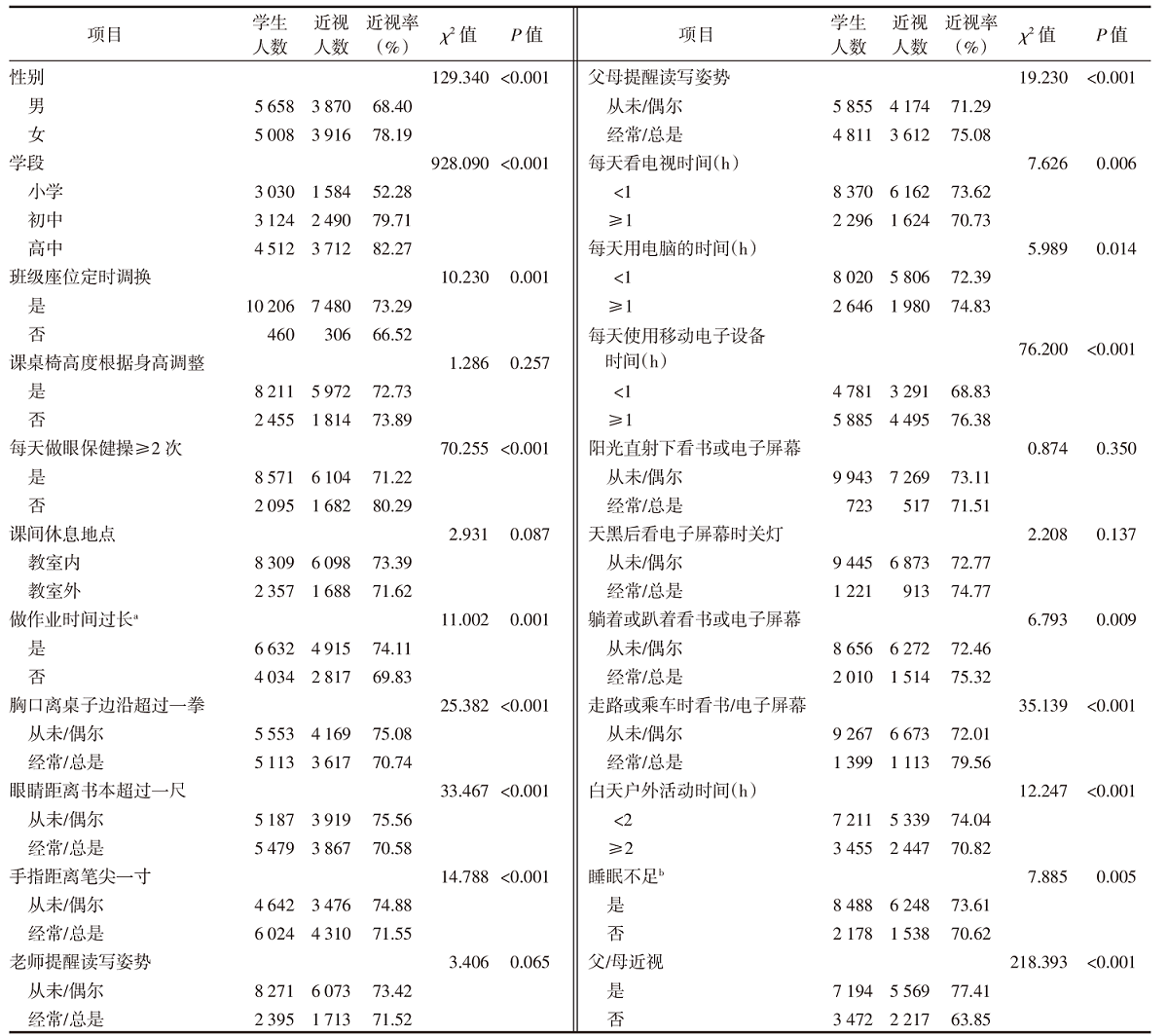
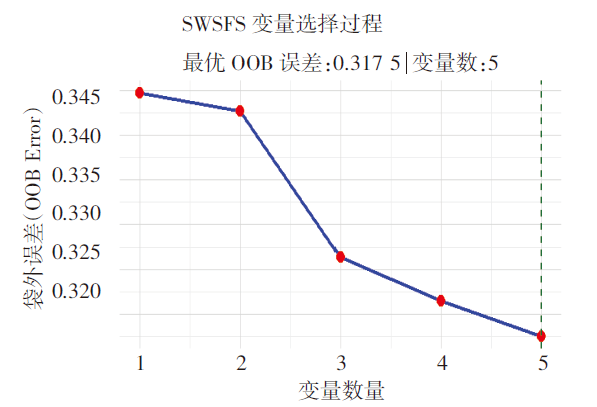
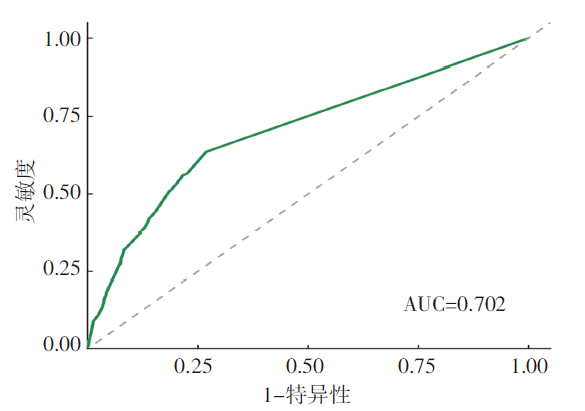
目的 采用多因素Logistic回归与随机森林模型分析中小学生近视的影响因素并对比两种模型结果,为近视防控提供多维度科学依据。方法 于2019—2024年,采用分层整群抽样方法,抽取北京市某区小学四年级至高中三年级共10 666名学生开展视力检查与问卷调查。单因素分析后进行Logistic回归分析识别近视的危险因素。利用随机森林模型对近视影响因素进行重要性排序,保留平均袋外误差率最低时的重要影响因素。结果 22个近视相关因素的单因素分析结果显示,不同性别、学段、班级座位调换、每天做眼保健操是否≥2次、做作业时间是否过长、胸口与桌子距离、眼睛与书本距离、手指与笔尖距离、父母提醒读写姿势、每天看电视时间、每天用电脑时间、每天使用移动电子设备时间、躺着或趴着看书或电子屏幕、走路或乘车时看书/电子屏幕、白天户外活动时间、睡眠情况及父母近视情况等17个因素的筛查性近视检出率比较,差异均有统计学意义(均P<0.05)。Logistic回归分析结果显示,高学段(初中OR=3.973,95%CI:3.519~4.484;高中OR=6.028, 95%CI:5.299~6.858)、父母近视(OR=2.561,95%CI:2.318~2.830)、女生(OR=1.710,95%CI:1.554~1.882)、父母经常/总是提醒读写姿势(OR=1.373,95%CI:1.232~1.530)、作业时间过长(OR=1.190,95%CI:1.080~1.312)、课间休息地点在教室内(OR=1.164,95%CI:1.041~1.303)是近视的显著危险因素。随机森林模型分析显示,当变量数为5时平均袋外误差率最低,受试者工作特征曲线(receiver operating characteristic curve,ROC曲线)下面积(area under the curve,AUC)为0.702,排序前5位的影响因素依次为学段、父母近视、做作业时间过长、父母提醒读写姿势、老师提醒读写姿势。结论 Logistic回归模型识别出6种危险因素,随机森林模型识别出5种重要因素,两种模型均将学段、父母近视、做作业时间过长、父母提醒读写姿势4种因素列为近视最突出的影响因素。两种模型的交叉验证为近视防控提供了稳健的科学依据。

关键词: 随机森林模型, 学生, 近视, 影响因素, 多因素

Abstract:

Objective To identify and compare factors associated with myopia among primary and secondary school students by means of multivariable Logistic regression and random forest analysis,so as to provide multidimensional scientific evidence for myopia prevention and control. Methods From 2019 to 2024,a stratified cluster sampling method was employed to recruit 10 666 students from Grade 4(primary) to Grade 12(senior high) in a district of Beijing City for visual acuity examinations and standardized questionnaires. After univariate screening,multivariable Logistic regression was used to detect risk factors for myopia. A random forest model was constructed to rank the importance of predictors,and variables retained at the point of minimum out-of-bag(OOB) error were regarded as key factors. Results Univariate analysis of 22 myopia-related factors revealed statistically significant differences in the detection rates of screening myopia across 17 factors,including gender,educational stage,classroom seat rotation,whether daily eye exercises ≥2 times or not,whether excessive homework duration,distance between chest and desk,distance between eyes and books,distance between fingers and pen tip,parental reminders regarding reading and writing posture,daily television viewing time,daily computer usage time,daily mobile electronic device usage time,reading or viewing electronic screens while lying or prone,reading or viewing electronic screens while walking or riding in vehicles,daytime outdoor activity duration,sleep status,and parental myopia status(all P<0.05). The results of Logistic regression analysis showed that higher educational stage(junior high OR=3.973,95%CI:3.519-4.484;senior high OR=6.028,95%CI:5.299-6.858),parental myopia(OR=2.561, 95%CI:2.318-2.830),female sex(OR=1.710,95%CI:1.554-1.882),frequent/constant parental reminders on reading-writing posture(OR=1.373,95%CI:1.232-1.530),excessive homework duration(OR=1.190,95%CI:1.080-1.312),and staying in the classroom during breaks(OR=1.164,95%CI:1.041-1.303) were significant risk factors for myopia. In the random forest model,the lowest OOB error was achieved with five variables,the area under the curve(AUC) of the receiver operating characteristic curve(ROC curve) was 0.702, and the top five predictors were educational stage,parental myopia,excessive homework duration,parental reminders on posture,and teacher reminders on posture. Conclusion The Logistic regression model identifies six risk factors,while the random forest model identifies five important factors. Both models consistently identify educational stage,parental myopia,excessive homework duration,and parental reminders on reading-writing posture as the most prominent risk factors for myopia. Cross-validation between the two analytical approaches provides robust scientific evidence for myopia prevention and control strategies.

Key words: Random forest model, Students, Myopia, Risk factors, Multifactorial

中图分类号: