职业与健康 ›› 2026, Vol. 42 ›› Issue (8): 1050-1056.

• 论著 • 上一篇    下一篇

银杏总黄酮对职业噪声暴露后大鼠分泌性中耳炎的治疗作用及耳蜗TLR9-Nrf2信号通路的影响

程鈺, 刘燕()   

  1. 重庆佑佑宝贝妇儿医院重庆 401120
  • 收稿日期:2025-06-12 修回日期:2025-07-07 出版日期:2026-04-15 发布日期:2026-05-18
  • 通信作者: 刘燕,E-mail:500234azjy6.cdb@sina.cn
  • 作者简介:程鈺,女,主治医师,主要从事耳鼻喉相关疾病的治疗工作。
  • 基金资助:
    重庆市科卫联合医学科研项目(2021MSXM284)

Therapeutic effect of total flavonoids from Ginkgo biloba on secretory otitis media in rats after occupational noise exposure and the impact on the cochlear TLR9-Nrf2 signaling pathway

CHENG Yu, LIU Yan()   

  1. Chongqing Youyou Baby Women's and Children's HospitalChongqing 401120, China
  • Received:2025-06-12 Revised:2025-07-07 Online:2026-04-15 Published:2026-05-18
  • Contact: LIU Yan,E-mail:500234azjy6.cdb@sina.cn

摘要:

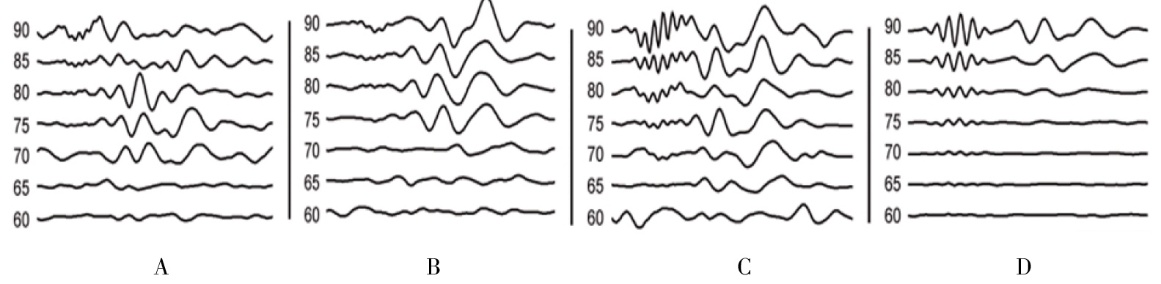
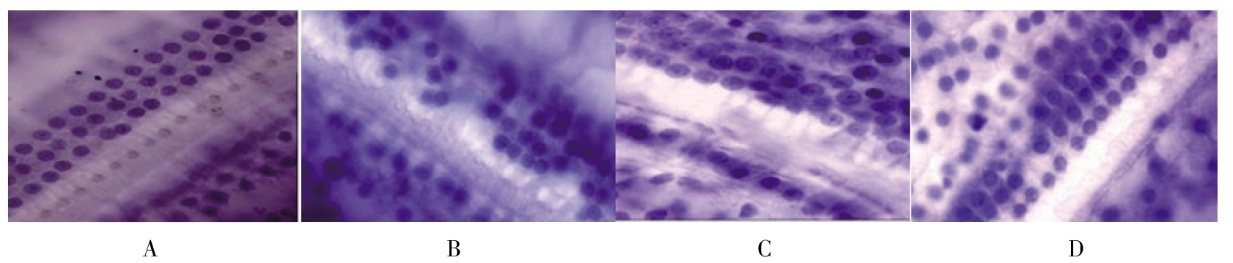
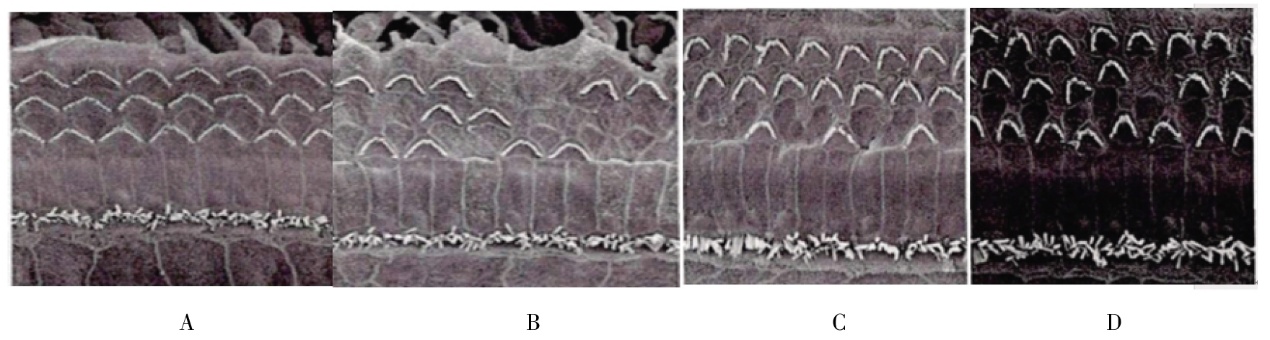
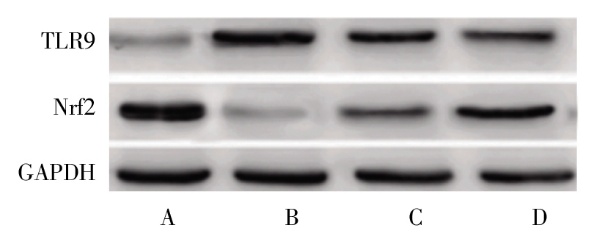
目的 探讨银杏总黄酮对职业噪声暴露后大鼠分泌性中耳炎的治疗作用及耳蜗Toll 样受体9(toll-like receptor 9,TLR9)-核红细胞2相关因子2(erythroid cell 2-related factor 2,Nrf2)信号通路的影响,为阐明职业噪声暴露对分泌性中耳炎的病理机制,为噪声暴露后分泌性中耳炎的治疗开发新型药物提供参考依据。方法 2024年2—6月进行动物实验,40只Wistar大鼠分为正常对照组、噪声暴露组、银杏总黄酮低、高剂量组,除正常对照组外,其余各组大鼠通过暴露在100 dB声压级(sound pressure level,SPL)的10 kHz倍频程噪声建立噪声暴露后分泌性中耳炎模型成功后,各药物组给予相应药物干预,正常对照组及噪声暴露组给予等体积的生理盐水,治疗周期为2周。治疗结束后,测定大鼠听性脑干反应(auditory brainstem response,ABR)阈值水平,耳蜗组织白细胞介素-6(interleukin-6,IL-6)、肿瘤坏死因子-α(tumor necrosis factor-α,TNF-α)、活性氧(active oxygen,ROS)、丙二醛(malondialdehyde,MDA)水平,实时荧光逆转录法及蛋白印迹法检测耳蜗组织TLR9、Nrf2 mRNA蛋白水平。结果 噪声暴露组ABR、耳蜗组织中IL-6、TNF-α、ROS及MDA水平分别升高至(90.04±3.23)dBSPL、(687.21±53.21)pg/mL、(459.56±40.00)pg/mL、(841.20±65.22)U/mg及(925.32±85.25)nmol/mg,显著高于正常对照组,差异均有统计学意义(均P<0.05);银杏总黄酮高剂量组则显著下调至(114.53±2.18)dBSPL、(232.25±30.22)pg/mL、(208.25±23.33)pg/mL、(426.39±38.54)U/mg及(469.55±44.94)nmol/mg,差异均有统计学意义(均P<0.05),且高剂量组调控效果显著优于低剂量组,差异均有统计学意义(均P<0.05)。噪声暴露显著上调耳蜗TLR9 mRNA(3.19±0.53 vs 0.38±0.07)及蛋白(1.25±0.12 vs 0.12±0.02)表达,显著高于正常对照组;同时抑制Nrf2 mRNA(0.47±0.09 vs 3.38±0.62)及蛋白(0.20±0.03 vs 1.25±0.08)水平,显著低于正常对照组,差异均有统计学意义(均P<0.05)。银杏总黄酮干预后,高剂量组TLR9 mRNA和蛋白分别降至1.63±0.29和0.56±0.04,而Nrf2 mRNA和蛋白则升高至2.63±0.44和0.86±0.07,差异均有统计学意义(均P<0.05),且高剂量组调控效果显著优于低剂量组,差异均有统计学意义(均P<0.05)。结论 银杏总黄酮能够显著改善噪声暴露引起的听力损失,减轻耳蜗和中耳的病理损伤,抑制炎症反应,增强抗氧化应激能力;其机制为银杏总黄酮阻断TLR9表达进而活化Nrf2表达。

关键词: 银杏总黄酮, 噪声, 分泌性中耳炎, Toll样受体4, 核红细胞2相关因子2

Abstract:

Objective To investigate the therapeutic effect of total flavonoids of Ginkgo biloba on secretory otitis media in rats after occupational noise exposure and its influence on the toll-like receptor 9(TLR9)-erythroid cell 2-related factor 2(Nrf2) signaling pathway in the cochlea,in order to elucidate the pathological mechanism of occupational noise exposure on secretory otitis media and provide reference for the development of new drugs for the treatment of secretory otitis media after noise exposure. Methods Animal experiments were conducted from February to June 2024,with 40 Wistar rats divided into a normal control group,a model control group,and a low-dose and high-dose group of total flavonoids of Ginkgo biloba. Except for the normal control group,the rats in the other groups were exposed to 10 kHz octave noise at 100 dB sound pressure level(SPL) to establish the secretory otitis media model after noise exposure. After that,the drug groups were given corresponding drug interventions,and the normal control group and the model control group were given an equal volume of normal saline. The treatment period was 2 weeks. After the treatment,the auditory brainstem response(ABR) threshold level,interleukin-6(IL-6),tumor necrosis factor-α(TNF-α),active oxygen(ROS),and malondialdehyde(MDA) levels in the cochlear tissue of the rats were measured,and the mRNA protein levels of TLR9 and Nrf2 in the cochlear tissue were detected by real-time fluorescence reverse transcription and Western blotting. Results The levels of ABR and IL-6,TNF-α,ROS and MDA in cochlear tissue in model control group were increased to (90.04±3.23)dBSPL,(687.21±53.21)pg/mL,(459.56±40.00)pg/mL,(841.20±65.22)U/mg and (925.32±85.25)nmol/mg,respectively,which were significantly higher than those in the normal control group,and the differences were statistically significant(all P<0.05). However,those in the high-dose group of Ginkgo flavonoids were significantly decreased to (114.53±2.18)dBSPL,(232.25±30.22) pg/mL,(208.25±23.33)pg/mL,(426.39±38.54)U/mg and(469.55±44.94)nmol/mg,the differences were statistically significant (all P<0.05),and the regulatory effect of the high-dose group was significantly better than that of the low-dose group,the differences were statistically significant(all P<0.05). Noise exposure significantly upregulated the expression of TLR9 mRNA(3.19±0.53 vs 0.38±0.07) and protein(1.25±0.12 vs 0.12±0.02) in the cochlea,significantly higher than the normal control group;Simultaneously inhibited the levels of Nrf2 mRNA(0.47±0.09 vs 3.38±0.62) and protein(0.20±0.03 vs 1.25±0.08),significantly lower than the normal control group,with statistically significant differences(all P<0.05). After intervention with total flavonoids from Ginkgo biloba,the mRNA and protein levels of TLR9 in the high-dose group decreased to 1.63±0.29 and 0.56±0.04,respectively,while the mRNA and protein levels of Nrf2 increased to 2.63±0.44 and 0.86±0.07,respectively,with statistically significant differences(all P<0.05). Moreover,the regulatory effect of the high-dose group was significantly better than that of the low-dose group,and the differences were statistically significant(all P<0.05). Conclusion Ginkgo total flavonoids can significantly improve hearing loss caused by noise exposure,reduce pathological damage to the cochlea and middle ear,inhibit inflammatory response,and enhance anti-oxidative stress ability. The mechanism is that ginkgo total flavonoids block TLR9 expression and then activate Nrf2 expression.

Key words: Ginkgo total flavonoids, Noise, Secretory otitis media, Toll-like receptor 4, Erythroid 2-related factor 2

中图分类号: