职业与健康 ›› 2026, Vol. 42 ›› Issue (6): 787-791.

• 论著 • 上一篇    下一篇

护理专业型硕士生宽恕倾向现状及影响因素

李茹凡, 曹英飞, 陈金燕, 牛亚荣, 安丽珺()   

  1. 空军军医大学唐都医院老年医学科陕西 西安 710038
  • 收稿日期:2025-06-19 修回日期:2025-07-15 出版日期:2026-03-15 发布日期:2026-04-03
  • 通信作者: 安丽珺
  • 作者简介:安丽珺,E-mail:1044203773@qq.com
    李茹凡,女,护士,主要从事老年护理及管理工作。

Current status and influencing factors of forgiveness tendencies among master's students in nursing profession

LI Rufa, CAO Yingfei, CHEN Jinyan, NIU Yarong, AN Lijun()   

  1. Department of GeriatricsTangdu Hospital of Air Force Military Medical University,Xi'anShaanxi 710038, China
  • Received:2025-06-19 Revised:2025-07-15 Online:2026-03-15 Published:2026-04-03
  • Contact: AN Lijun

摘要:

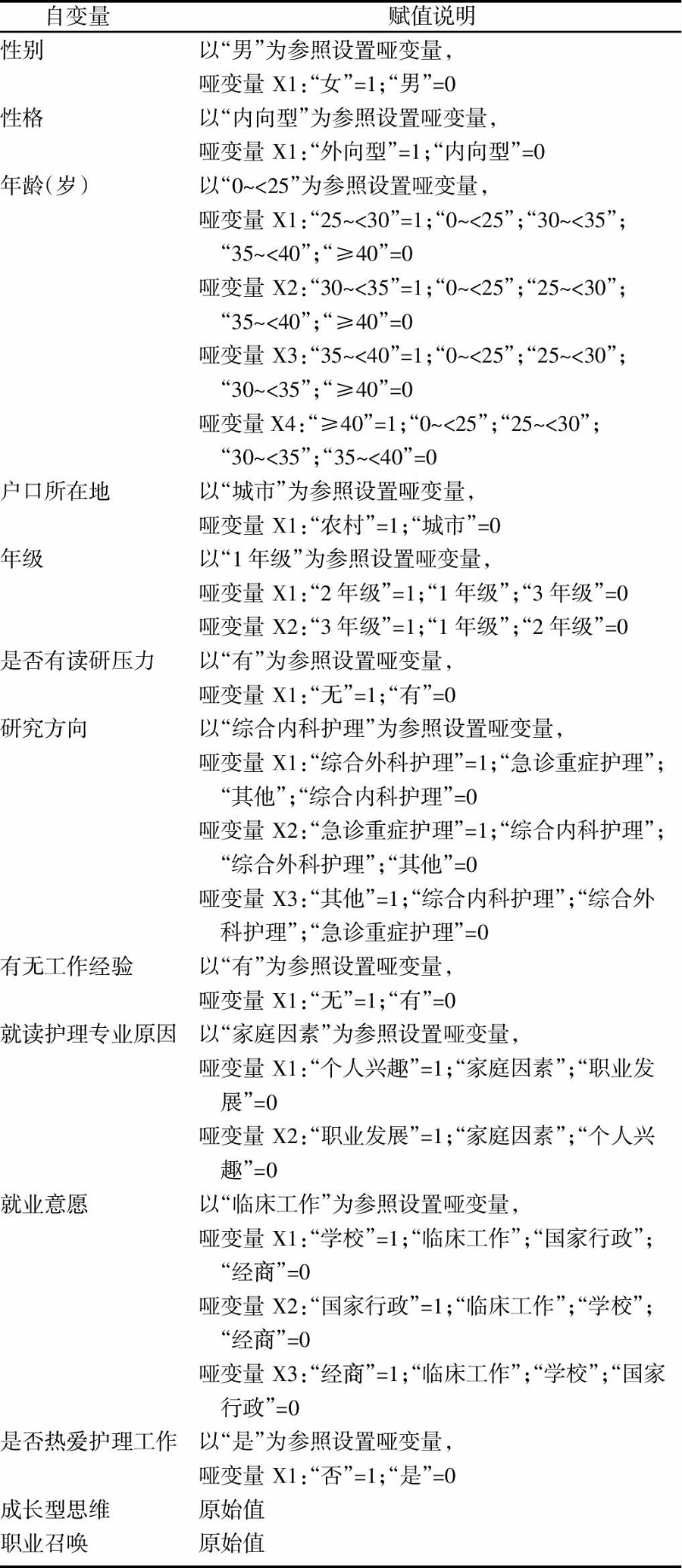
目的 了解西安市10所三级甲等医院护理专业型研究生宽恕倾向现状和影响因素,并分析宽恕倾向与成长型思维、职业召唤的关系,为护理专业型研究生积极心理学干预提供参考依据。 方法 2024年1—8月采用横断面调查方法,以便利抽样选择西安市10所三级甲等医院272名护理专业型研究生作为调查对象,采用一般资料调查表、宽恕倾向量表、成长型思维量表、职业召唤量表进行线上调查,通过单因素及多因素分析找出影响护理专业型研究生宽恕倾向水平的影响因素。 结果 西安市10所三级甲等医院272名护理专业型研究生宽恕倾向总分为(99.75±21.33)分,宽恕自己总分为(45.36±10.00)分,宽恕他人总分为(54.38±11.84)分。多因素分析显示,性格、成长型思维、职业召唤水平均是护理专业型研究生宽恕倾向水平的主要影响因素(均P<0.01)。 结论 西安市10所三级甲等医院护理专业型研究生宽恕倾向水平处于中等水平,管理者应重点关注内向型性格、成长型思维及职业召唤水平低的护理研究生,并对其进行多角度干预,提升其宽恕倾向水平,改善护理研究生的身心健康,促进其积极心理发展,从而提高护理团队质量。

关键词: 护理专业型研究生, 宽恕倾向, 成长型思维, 职业召唤, 影响因素

Abstract:

Objective To understand the current status and influencing factors of forgiveness tendencies among master's students in nursing profession in 10 tertiary grade A hospitals in Xi'an City,analyze the relationship between forgiveness tendencies and growth mindset,vocational calling,and provide the basis for positive psychology interventions for master's students in nursing profession. Methods From January to August 2024,a cross-sectional survey was conducted using a convenience sampling method to select 272 postgraduate nursing students from 10 tertiary grade A hospitals in Xi'an City. An online survey was administered,which included a general information survey form,the forgiveness tendency scale,the growth mindset scale,and the vocational calling scale. The univariate and multivariate analysis were employed to identify the primary influencing factors of forgiveness tendencies among these students. Results The average score for forgiveness tendency among the 272 postgraduate nursing students in 10 tertiary grade A hospitals in Xi'an City was (99.75±21.33)points,with a self-forgiveness score of (45.36±10.00)points and a forgiving others score of (54.38±11.84)points. The multivariate analysis indicated that personality traits,growth mindset,and vocational calling levels were the main influencing factors of forgiveness tendencies among postgraduate nursing students(all P<0.01). Conclusions The level of forgiveness tendency among master's students in nursing profession in 10 tertiary grade A hospitals in Xi'an City is at moderate level. The managers should focus on nursing graduate students with introverted personalities,growth mindset,and low professional calling levels,and implement multi-faceted interventions to enhance their forgiveness tendencies,improve their physical and mental health,promote their positive psychological development,and ultimately improve the quality of nursing teams.

Key words: Master's students in nursing profession, Forgiveness tendency, Growth mindset, Vocational calling, Influencing factors

中图分类号: